

Key Takeaways
- Off-season travel typically means fewer crowds and lower demand at popular US destinations.
- Many amenities, tours, and park facilities operate on reduced schedules during low season.
- Weather conditions vary dramatically by region — the off-season is not universally cold or unpleasant.
- Some destinations genuinely shine during their quieter months, offering a qualitatively different experience.
- Travelers should verify hours, reservation requirements, and conditions before committing to off-season plans.
Dramatically thinner crowds at popular sites
Iconic destinations like the Grand Canyon's South Rim or the Great Smoky Mountains, which see millions of visitors in summer, can feel almost private in January or February. Solitude changes the character of a place entirely.
Lower demand across accommodations
Hotels, vacation rentals, and campgrounds in popular areas typically see reduced demand in the off-season, giving travelers more options and less competition for their preferred stays.
Authentic local atmosphere
When tourist infrastructure scales back, traveler-to-resident ratios shift. Restaurants, markets, and neighborhoods return to a rhythm closer to everyday life, which many visitors find more engaging than a peak-season tourist economy.
Photography opportunities improve significantly
Empty landscapes, dramatic off-season light, and weather events like snow or coastal fog create conditions professional photographers actively seek. Many iconic viewpoints are unobstructed.
Wildlife behavior is often more accessible
In many US ecosystems, late fall and winter bring wildlife closer to accessible areas — elk rut in September, winter bear activity near Yellowstone, and migratory bird concentrations in coastal wetlands peak outside summer.
Reduced hours and seasonal closures
Visitor centers, shuttle systems, guided tours, and even some park roads operate on curtailed or suspended schedules in the off-season. Travelers should verify access for every specific activity they're planning.
Weather can be genuinely limiting
Off-season conditions aren't just cooler — they can include ice, flooding, extreme cold, or persistent rain that makes outdoor activities unsafe or impractical. This varies dramatically by region and should be researched specifically.
Fewer services in gateway towns
Small towns that exist primarily to serve park visitors often reduce their restaurant, lodging, and retail operations sharply in the off-season. Travelers may need to stock supplies or travel further for basic needs.
Some experiences are simply unavailable
Certain activities — whitewater rafting, alpine hiking above treeline, or boat-based wildlife tours — have hard seasonal cutoffs. If a specific experience is the reason for the trip, the off-season may not be viable.
Our Verdict
Off-season travel in the US rewards flexible, curious travelers willing to do a little extra homework. The trade-offs — reduced services, unpredictable weather, and some closures — are real, but so are the rewards: genuine solitude, lower demand, and a chance to see iconic places as locals know them. The strategy works best when matched to the right destination at the right time of year.
Ideal for independent travelers with schedule flexibility who prioritize atmosphere and authentic experience over guaranteed sunshine and full amenity access.
Why Off-Season Travel Deserves a Closer Look
Peak-season travel in the US has a well-known playbook: book early, pay more, and share every overlook and trailhead with hundreds of strangers. The alternative — arriving when demand drops — is often dismissed as settling for worse conditions. That characterization misses the point.
Off-season timing isn't a uniform experience. The shoulder and low months vary sharply by region and destination type. The climate patterns that shape each US region determine when a place is genuinely worth visiting outside peak windows — and for many destinations, the answer is more often than most travelers assume. For a full side-by-side comparison, see our breakdown of off-season vs. peak-season trade-offs.
Dramatically thinner crowds at popular sites
Iconic destinations like the Grand Canyon's South Rim or the Great Smoky Mountains, which see millions of visitors in summer, can feel almost private in January or February. Solitude changes the character of a place entirely.
Lower demand across accommodations
Hotels, vacation rentals, and campgrounds in popular areas typically see reduced demand in the off-season, giving travelers more options and less competition for their preferred stays.
Authentic local atmosphere
When tourist infrastructure scales back, traveler-to-resident ratios shift. Restaurants, markets, and neighborhoods return to a rhythm closer to everyday life, which many visitors find more engaging than a peak-season tourist economy.
Photography opportunities improve significantly
Empty landscapes, dramatic off-season light, and weather events like snow or coastal fog create conditions professional photographers actively seek. Many iconic viewpoints are unobstructed.
Wildlife behavior is often more accessible
In many US ecosystems, late fall and winter bring wildlife closer to accessible areas — elk rut in September, winter bear activity near Yellowstone, and migratory bird concentrations in coastal wetlands peak outside summer.
The Real Drawbacks to Weigh
Off-season travel is not without friction. Travelers who show up expecting a full-service experience at a reduced price often encounter surprises that weren't in the brochure.
Reduced hours and seasonal closures
Visitor centers, shuttle systems, guided tours, and even some park roads operate on curtailed or suspended schedules in the off-season. Travelers should verify access for every specific activity they're planning.
Weather can be genuinely limiting
Off-season conditions aren't just cooler — they can include ice, flooding, extreme cold, or persistent rain that makes outdoor activities unsafe or impractical. This varies dramatically by region and should be researched specifically.
Fewer services in gateway towns
Small towns that exist primarily to serve park visitors often reduce their restaurant, lodging, and retail operations sharply in the off-season. Travelers may need to stock supplies or travel further for basic needs.
Some experiences are simply unavailable
Certain activities — whitewater rafting, alpine hiking above treeline, or boat-based wildlife tours — have hard seasonal cutoffs. If a specific experience is the reason for the trip, the off-season may not be viable.
National Parks in the Off-Season: Know Before You Go
US national parks are a particularly nuanced case. Iconic sites like Zion and Yellowstone attract millions of visitors annually during summer. Winter visits can feel revelatory — but rangers, shuttles, and some trailheads may be unavailable. Our national park pre-trip checklist covers what to verify before you go. Always check the official NPS website for current road and facility status, as conditions change rapidly in shoulder and winter months.
US national parks are a particularly nuanced case. Iconic sites like Zion and Yellowstone attract millions of visitors annually during summer. Winter visits can feel revelatory — but rangers, shuttles, and some trailheads may be unavailable. Our national park pre-trip checklist covers what to verify before you go.
Destinations That Actually Reward Off-Season Visits
Not every place suffers in its low season. Some US destinations are objectively better — or simply different in ways many travelers prefer — when the crowds thin out.
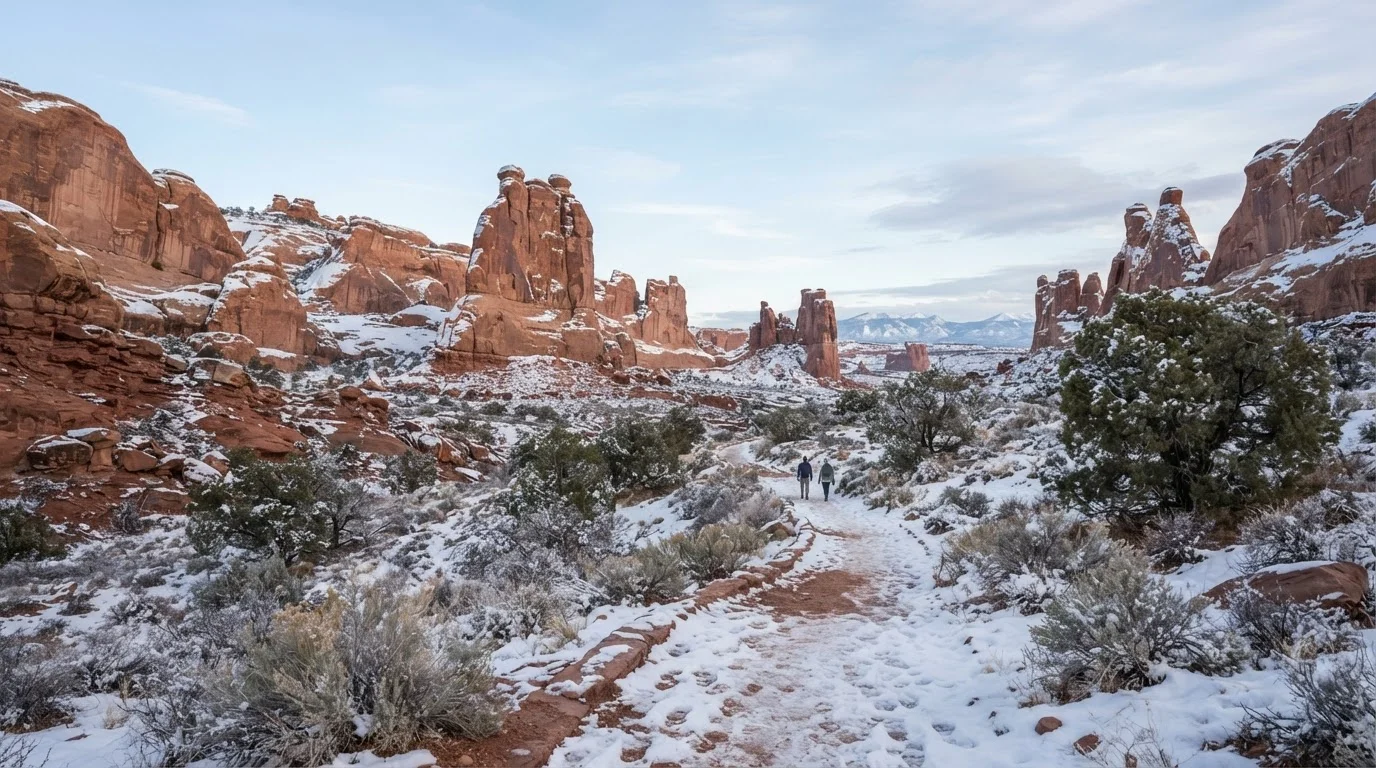
The Desert Southwest and Pacific Northwest illustrate this well. Arches National Park in Utah draws the majority of its visitors between April and October; winter months offer dramatically quieter conditions with snow-dusted arches and short but vivid days. The Pacific Northwest's rain-heavy winters deter many visitors, yet temperate rainforest trails and dramatic coastal scenery remain fully accessible. Meanwhile, lesser-known US cities often have no meaningful off-season at all — their cultural institutions, food scenes, and neighborhoods operate year-round with little fluctuation in access.
331M+
Annual US national park visits
The National Park Service recorded over 331 million recreational visits in a recent reporting year, with the majority concentrated between Memorial Day and Labor Day.
~10,000
State park units across the US
The National Association of State Park Directors estimates roughly 10,000 state park units exist nationwide, most of which operate year-round with lower visitor pressure than federal counterparts.
State parks are another overlooked option. America's state parks typically have lighter reservation pressure than national parks and remain accessible in all but the harshest weather, making them reliable off-season destinations across most regions.
How to Approach Off-Season Planning Practically
Success in the off-season depends on a different planning mindset than peak-season travel. Fewer things are pre-arranged for you, which means more responsibility falls on the traveler to verify conditions in advance.
Check official park and attraction websites — not third-party aggregators — for current operating hours and seasonal closures. Call ahead for smaller businesses like guided tours or ferry services that don't reliably update their online presence. Build flexibility into your itinerary; off-season weather windows can shift quickly, and having an alternate plan prevents a single bad forecast from derailing an entire trip. For travelers considering destinations with layered complexity — like Hawaii, which operates under different logistical conditions than mainland US trips even in the off-season — it pays to understand what you're committing to. Our guide on common misconceptions about visiting Hawaii outlines what often catches travelers off guard.
The travel planning fundamentals that apply to any trip — budgeting, packing for variable conditions, understanding cancellation policies — matter even more when you're operating outside the guardrails of peak-season infrastructure.