

Key Takeaways
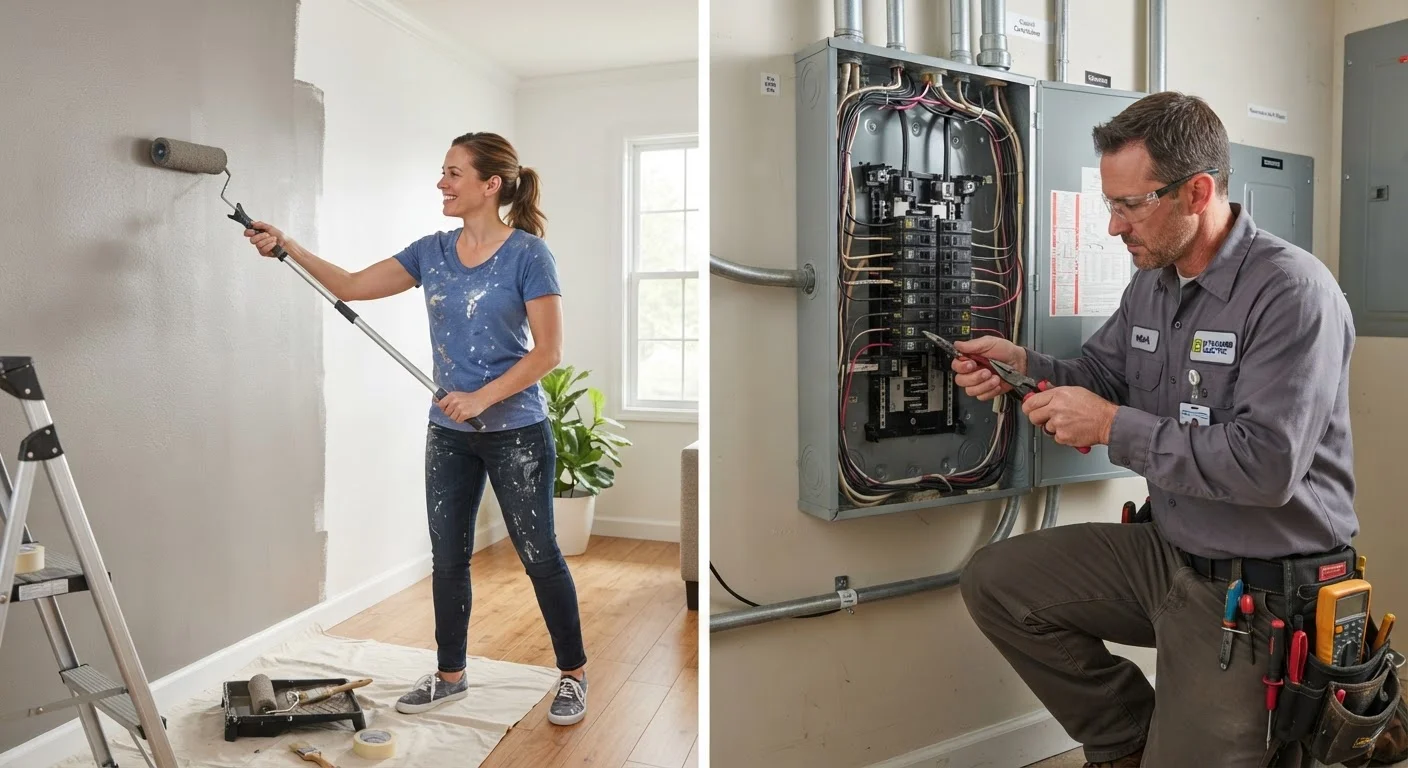
- Cosmetic and low-risk tasks like painting or caulking are generally safe for DIY homeowners.
- Electrical, gas, and structural work typically require licensed professionals and permits in most US jurisdictions.
- Misjudging your skill level on a complex repair can cost significantly more to fix than hiring out from the start.
- Local building codes and permit requirements should always be checked before starting any significant repair.
- Safety risk, legal liability, and tool availability are the three most important factors in the DIY-vs-pro decision.
Our Verdict
For most homeowners, the right answer is a hybrid approach: handle cosmetic, maintenance-level tasks yourself to save money and build confidence, and hire licensed professionals for anything involving electricity, gas, plumbing into mains, or structural integrity. The decision ultimately hinges on safety risk, permit requirements, and an honest assessment of your own skill set.
| Best for | Recommended |
|---|---|
| Those comfortable with basic tools and low-risk maintenance tasks | DIY |
| Projects involving permits, licensed trades, or safety-critical systems | Hiring a Professional |
| Homeowners with limited time but flexible budgets | Hiring a Professional |
| Budget-conscious homeowners tackling clearly cosmetic work | DIY |
The Core Decision Framework
Before picking up a tool or calling a contractor, every homeowner benefits from asking three foundational questions: How dangerous is this task if done incorrectly? Does it require a permit or licensed trade? Do I have the skills and tools to do it properly?
These three filters eliminate most of the guesswork. A task that scores low on all three — say, patching drywall or replacing a faucet aerator — is generally a reasonable DIY candidate. One that scores high on even a single factor warrants serious reconsideration. For a broader look at ranking projects by urgency and safety, see our guide to prioritizing home improvement projects.
Always Check Permit Requirements First
Most US municipalities require permits for electrical panel work, new plumbing runs, structural changes, and HVAC modifications. Skipping a permit isn't just a legal risk — it can affect your homeowner's insurance and complicate a future home sale. Always verify local code requirements before starting any significant repair or renovation.
Most US municipalities require permits for electrical panel work, new plumbing runs, structural changes, and HVAC modifications. Skipping a permit isn't just a legal risk — it can affect your homeowner's insurance and complicate a future sale. Always verify local requirements before starting.
What You Can Reasonably DIY
A wide range of home maintenance tasks fall well within the reach of a careful homeowner. These include:
- Painting interior and exterior surfaces — minimal risk, widely accessible tools
- Caulking around tubs, sinks, and windows — straightforward with proper prep
- Replacing outlet covers, light switch plates, or light fixtures — provided the circuit is switched off and no panel work is involved
- Installing new faucets or showerheads — typically requires only basic plumbing knowledge
- Patching small drywall holes — manageable with the right compound and technique
- Basic landscaping and garden maintenance — generally no licensing required
The common thread in DIY-safe tasks is that errors are either easily corrected or carry minimal safety consequences. The Home Improvement hub covers many of these projects in detail.
| DIY | Hiring a Professional | |
|---|---|---|
| Typical cost | Lower upfront (materials only) | Higher upfront (labor + materials) |
| Safety risk (complex jobs) | Higher if skill gap exists | Lower with licensed tradesperson |
| Permit handling | Homeowner's responsibility | Often managed by contractor |
| Time investment | Can be significant | Minimal for homeowner |
| Quality assurance | Varies by skill level | Backed by license and insurance |
| Best suited for | Cosmetic, maintenance tasks | Electrical, gas, structural work |
When to Hire a Licensed Professional
Certain categories of work are legally and practically reserved for licensed tradespeople in most US states. Attempting them without proper credentials — even if the physical task seems simple — can void your homeowner's insurance, create liability in a sale, or result in fines.
Always hire a licensed professional for:
- Electrical panel upgrades, new circuits, or rewiring — fire and electrocution risk; permits almost universally required
- Gas line work of any kind — leaks are life-threatening and invisible without specialized equipment
- Structural changes — removing walls, modifying load-bearing elements, or altering the roof line
- Main plumbing lines — tapping into mains or drain stacks typically requires a licensed plumber and inspection
- HVAC installation or major repairs — refrigerant handling is federally regulated
If you're unsure where a specific project falls, our detailed breakdown of DIY vs. hiring out provides task-specific guidance. And once you've decided to hire, knowing the right questions to ask a contractor protects your project and budget.
Hidden Costs on Both Sides
DIY repairs carry costs that aren't always obvious upfront. Tool rental or purchase, materials, and time all factor in — and a mistake can turn a $200 DIY attempt into a $1,500 professional fix. Research consistently suggests that botched DIY electrical and plumbing work accounts for a meaningful share of repair call-outs.
On the other side, hiring a professional for every minor task adds up quickly. Routine maintenance — filter changes, gutter cleaning, touch-up painting — is generally not cost-effective to outsource if you're capable of doing it safely.
Don't Underestimate the True DIY Cost
The most reliable way to estimate true DIY cost is to price out all materials, factor in your time at an honest hourly rate, and add a 20–30% contingency for errors or unexpected complications. Compare that total to two or three professional quotes before committing to either path.
The most reliable way to estimate true DIY cost is to price out all materials, factor in one full day of your time at an honest hourly rate, and add a 20–30% contingency for errors or unexpected complications. Compare that to two or three professional quotes before committing.