

Key Takeaways
- New Orleans has seven distinct neighborhoods beyond the French Quarter, each with a different cultural character.
- The city's food traditions — gumbo, red beans, jazz brunch — carry direct historical and cultural meaning.
- Mardi Gras is one of dozens of festivals; visiting outside peak season reveals a quieter, more authentic city.
- Understanding the city's Creole and African heritage shifts how you experience nearly every block.
- Heat, flooding risk, and uneven sidewalks require practical preparation often absent from standard travel guides.
Why New Orleans Defies Easy Categories
Most American cities can be summarized in a sentence. New Orleans cannot. It is simultaneously a Caribbean port city, a French and Spanish colonial outpost, a center of African American cultural innovation, and a deeply Southern municipality — all layered onto a geography that sits mostly below sea level. First-time visitors who arrive expecting a continuous street party frequently leave surprised by how contemplative, complicated, and genuinely strange the city is beneath its festival surface.
That complexity is the point. New Orleans is one of those rare domestic destinations where cultural preparation pays dividends that no amount of walking-tour narration can replicate. If you are building your trip framework from scratch, our first-timer's planning roadmap offers a useful starting structure before diving into destination specifics.
The History Beneath the Surface
Founded in 1718 by French colonists and later transferred to Spain, then briefly back to France before the Louisiana Purchase of 1803, New Orleans absorbed multiple colonial legal and cultural systems simultaneously. That overlap produced a Creole society — a blended culture of European, African, and Indigenous influences — that has no precise equivalent elsewhere in the United States.
The city's role in the domestic slave trade is central to its history and cannot be responsibly set aside. New Orleans was one of the largest slave-trading markets in North America, and much of its architectural wealth, agricultural infrastructure, and early cultural production was built on enslaved labor. Sites like the Whitney Plantation, roughly an hour's drive from the city center, engage this history directly and are worth the trip for visitors wanting substance over spectacle.
Visit the above-ground cemeteries during a licensed guided tour rather than independently — St. Louis Cemetery No. 1 requires it, and the context a knowledgeable guide provides transforms what might otherwise be a photo stop into a genuine historical encounter.
The cemeteries encode Catholic, Afro-Caribbean, and engineering history that is easy to walk past without interpretation; guided access also respects ongoing efforts to protect fragile tombs from vandalism.
Check the Social Aid and Pleasure Club Task Force schedule before you finalize your Sunday plans — catching a neighborhood second line parade is an experience that no ticketed attraction in the city can replicate.
Second lines are authentic community events, not tourism products, which means they run on community schedules and reward visitors who plan around local life rather than the reverse.
The St. Louis cemeteries — where above-ground tombs were built in response to the city's high water table — offer a compact lesson in both engineering necessity and the city's Catholic and Afro-Caribbean religious traditions. St. Louis Cemetery No. 1, the oldest surviving, requires a guided tour for entry and is worth the time.
Neighborhoods Worth Knowing Before You Arrive
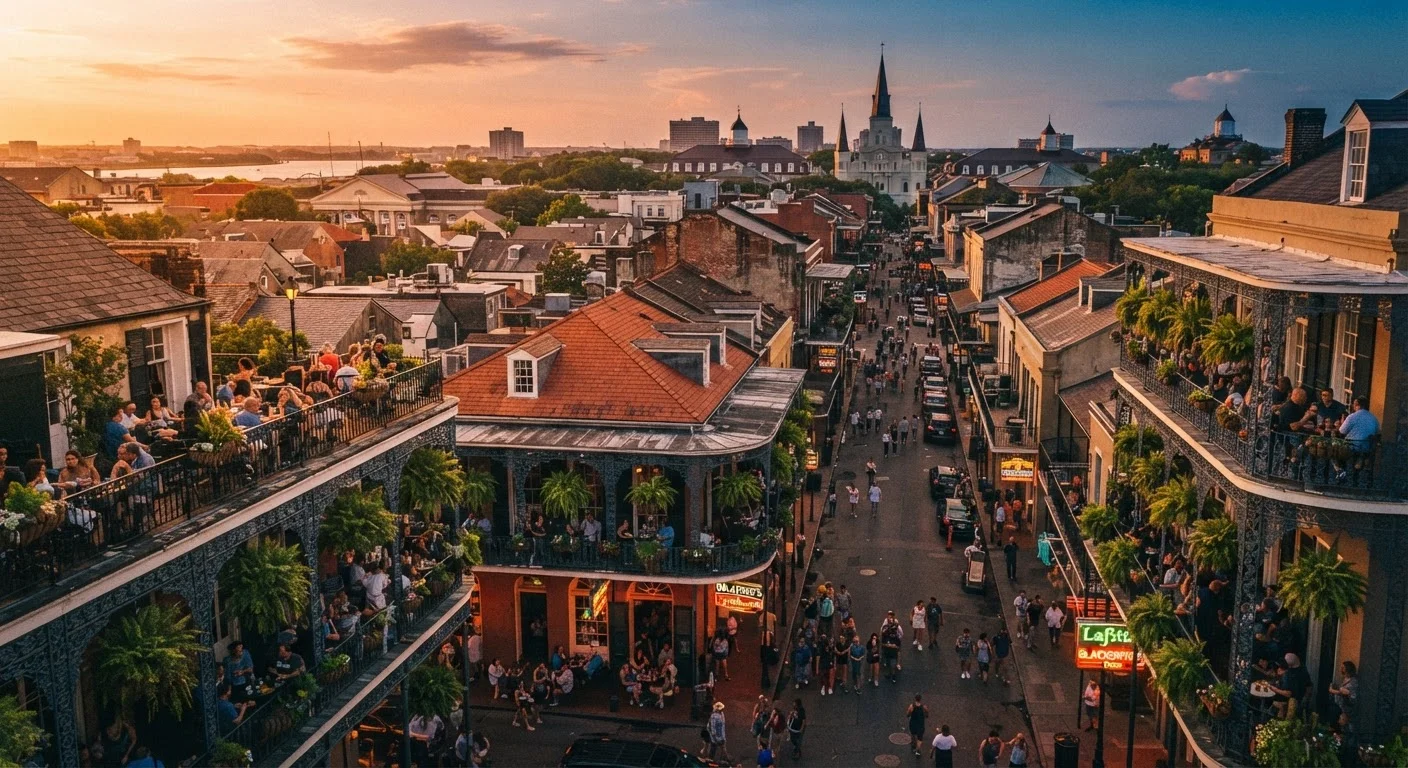
The French Quarter is the geographic and tourist center, but experienced visitors know it represents only a sliver of what the city offers. The neighborhoods that tend to reward curiosity most are:
- Tremé — widely considered the oldest African American neighborhood in the country, and the incubator of jazz as a distinct art form. Brass band performances here carry different weight than those on Bourbon Street.
- Bywater and the Ninth Ward — post-Katrina rebuilding has brought artists and long-term residents into complex coexistence; the neighborhood's murals and architecture document that tension honestly.
- Magazine Street corridor (Garden District) — Greek Revival and Italianate mansions set alongside local boutiques and one of the city's better restaurant concentrations outside the Quarter.
- Mid-City — where locals eat, shop, and live with little tourist infrastructure, anchored by City Park, one of the largest urban parks in the country.
For travelers interested in how other major American cities compare in terms of neighborhood navigation and cultural layering, our New York City orientation guide offers a useful contrast.
Food as Cultural Document
New Orleans cuisine is not fusion in the contemporary marketing sense — it is the historical record of who lived here and what they cooked under constraint and creativity. Red beans and rice on Mondays traces to wash-day traditions when the stove needed minimal attention. Gumbo reflects the West African technique of using okra as a thickener alongside French roux and Choctaw filé powder. A properly made muffuletta at Central Grocery on Decatur Street tells you something about Sicilian immigration patterns in the early 20th century.
Eat Where Locals Eat on Monday
Red beans and rice on Mondays is a citywide tradition with deep cultural roots. Seek out neighborhood spots rather than tourist-facing restaurants for an honest version. The dish costs a few dollars at most local counters and is a more reliable indicator of a kitchen's quality than the menu's headline items.
Eating well in New Orleans does not require expensive reservation-only restaurants. The city's culinary depth runs through neighborhood spots, po'boy counters, and the Creole cottage lunch places that rarely appear in top-ten lists. A bowl of red beans at a working-class diner on a Monday will tell you more about the city than most tasting menus.
The same cultural attentiveness that improves domestic travel applies internationally — understanding local customs and context shapes how you engage with any unfamiliar place, whether abroad or within the US.
What First-Timers Consistently Miss
Beyond neighborhood depth and culinary context, several things tend to catch unprepared visitors off guard:
- The music calendar outside Mardi Gras. Jazz Fest in late April and early May, Voodoo Fest in October, and the French Quarter Festival each draw substantial crowds and shift hotel pricing significantly. Visiting in shoulder months — late September, early November, or February outside Carnival — often means smaller crowds and lower accommodation rates, though summer humidity is legitimately oppressive.
- Infrastructure realities. Sidewalks in historic neighborhoods are uneven, sometimes dramatically so, due to tree roots and subsidence. Accessibility planning requires more advance research than in most American cities.
- The second line tradition. Weekly neighborhood second line parades — brass band processions organized by social aid and pleasure clubs — move through residential neighborhoods on Sunday afternoons from roughly September through June. They are public, free, and among the most genuine cultural experiences available. Schedules are typically posted by the Social Aid and Pleasure Club Task Force.
~400,000
Visitors during Mardi Gras season annually
The Louisiana Office of Tourism estimates Carnival season draws roughly 400,000 visitors, making shoulder-season visits considerably quieter.
Below sea level
Average elevation of New Orleans
Much of the city sits 1–6 feet below sea level, a geographic fact that shapes drainage, architecture, and storm preparedness throughout the metro area.
1835
Year St. Charles streetcar line began operating
The St. Charles Avenue streetcar is one of the oldest continuously operating street railway lines in the world, per the American Heritage project records.
Travelers who enjoy discovering less-visited American cities with comparable cultural density should consider the context offered in our guide to undervisited US cities.
Practical Orientation for a Thoughtful Visit
New Orleans is a walkable city in its core neighborhoods, but distances between areas like the French Quarter and the Garden District are more comfortable by streetcar — the St. Charles line is one of the oldest continuously operating streetcar lines in the world. The RTA (Regional Transit Authority) operates both streetcar and bus routes; single-ride fares and multi-day passes are available, though service frequency and reliability vary.
Weather demands respect. Summer temperatures regularly exceed 90°F with high humidity, and afternoon thunderstorms are common. Hurricane season runs June through November; travelers booking during that window should understand cancellation policies and monitor National Hurricane Center advisories.
Flooding remains a structural feature of life in New Orleans, not just a historical footnote. Visitors renting cars should be aware that even moderate rain can temporarily flood low-lying streets. Walking with awareness of drainage patterns is not alarmist — it is appropriate local knowledge.
Finally, the city's relationship with tourism is layered. Residents have strong opinions about which parts of the culture are genuinely shared versus performed for visitor consumption. Approaching the city with curiosity and humility — rather than as a backdrop for a personal itinerary — tends to produce a richer and more honest experience on both sides.
Travel conditions, entry requirements, and local regulations can change. Always verify current information with official city and state sources before your trip.