

Key Takeaways
- Several undervisited US cities offer world-class food, history, and culture with far fewer crowds than major metros.
- Smaller cities often provide more authentic local experiences and more affordable travel logistics.
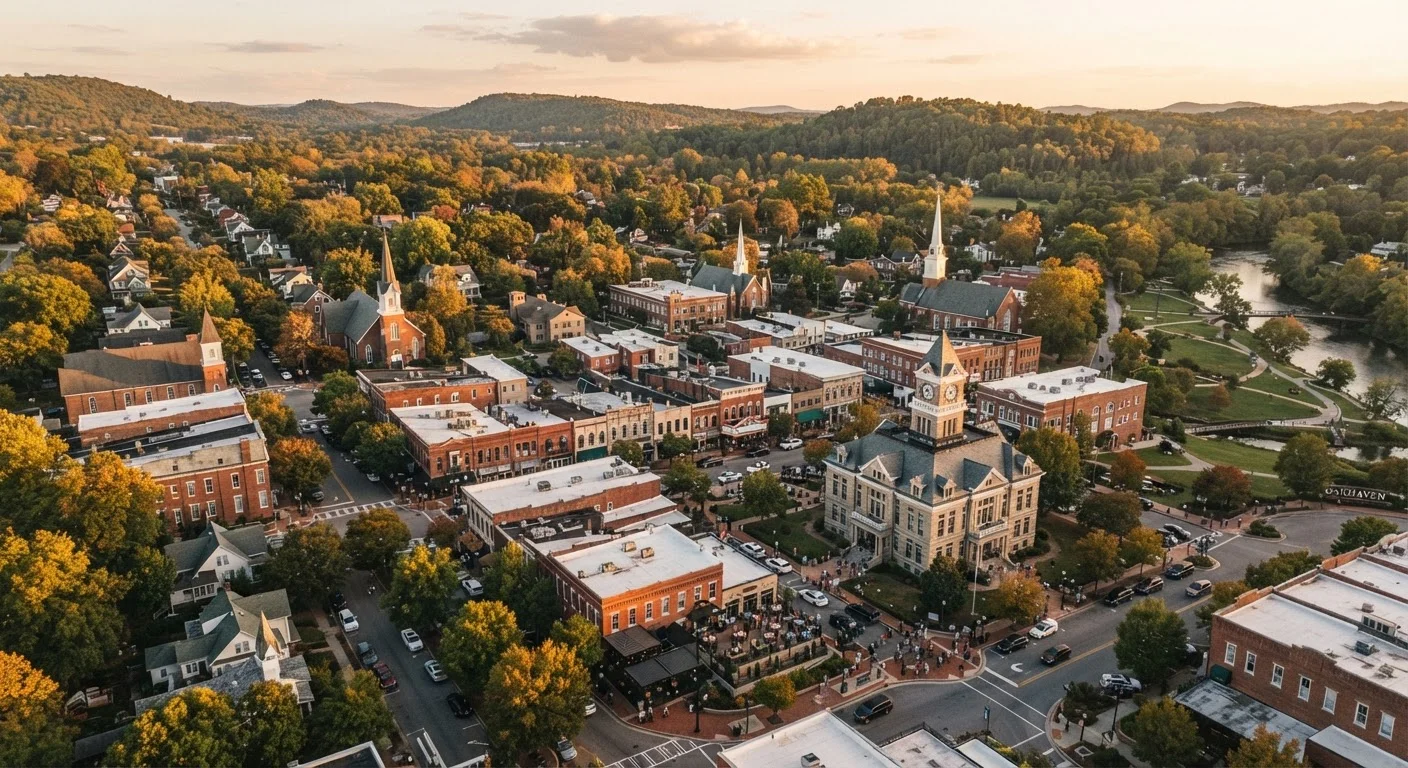
- Proximity to nature, distinct architecture, and strong arts scenes make these cities worth building a dedicated trip around.
- Off-season visits to these destinations can stretch your experience even further without sacrificing much.
Why These Cities Deserve a Dedicated Trip
The gravitational pull of New York, Los Angeles, and Chicago is understandable — those cities have earned their reputations. But a significant portion of America's most compelling cultural experiences exist in cities that don't dominate travel media. These are places with genuine identities: distinct food traditions, architectural character, arts institutions, and histories that aren't smoothed over for mass tourism. Compared to the major metros covered in resources like our New York City first-timer guide, smaller cities often allow for a more personal and less logistically demanding experience. The cities below reward travelers willing to look past the obvious itinerary.
Timing Your Visit to Smaller Cities
Many of these cities see notably different crowds depending on season. Asheville and Savannah, for instance, draw significant visitors in spring and fall. Traveling outside peak windows can meaningfully change the experience — see our analysis of off-season US travel for a balanced look at the trade-offs involved.
Cities Worth Rerouting Your Plans For
Savannah, Georgia
Few American cities wear their history as gracefully as Savannah. Its 22 oak-canopied squares form a walkable urban grid unlike anything else in the South — a design dating to 1733 that remains functional and strikingly beautiful. The Historic District is a genuine architectural showcase of Federal, Regency, and Victorian styles, and the city's food scene punches well above its size. Beyond the squares, the Savannah College of Art and Design (SCAD) has infused the city with a vibrant contemporary arts and gallery culture that surprises first-time visitors expecting purely antebellum nostalgia.
Savannah's 22 oak-shaded squares create one of America's most walkable and beautiful historic urban grids.
Asheville, North Carolina
Nestled in the Blue Ridge Mountains, Asheville earns its reputation as one of the Southeast's most culturally dynamic small cities. The downtown area contains the largest concentration of Art Deco architecture in the American South, and the local food and craft brewery scene is genuinely exceptional — a density of independent restaurants and breweries that rivals cities three times its size. The surrounding landscape offers accessible hiking and waterfall access year-round, making Asheville a strong base for both urban exploration and outdoor activity. It also benefits from a notably moderate mountain climate compared to surrounding lowland areas.
Asheville holds the largest concentration of Art Deco architecture in the entire American South.
Detroit, Michigan
Detroit's ongoing cultural renaissance is one of the most compelling urban stories in America. The city's contributions to music — specifically Motown and later techno — are well documented, and the Motown Museum on West Grand Boulevard is a genuinely moving experience. Beyond that, the Detroit Institute of Arts houses one of the most significant encyclopedic art collections in North America, including Diego Rivera's celebrated Detroit Industry Murals. Midtown and Corktown neighborhoods offer an evolving mix of preserved architecture, independent restaurants, and creative businesses that reflect a city actively remaking itself.
The Detroit Institute of Arts holds one of the most significant encyclopedic art collections in North America.
Providence, Rhode Island
Providence is easy to overlook on the Northeast corridor between Boston and New York, but that's precisely what keeps it relatively uncrowded. Brown University and the Rhode Island School of Design (RISD) anchor an intellectual and arts community that sustains excellent museums, galleries, and independent bookstores. The RISD Museum alone merits a stop, with collections spanning ancient to contemporary work. The Federal Hill neighborhood is regarded by many food writers as one of the finest Italian-American dining districts in the country, and WaterFire — a public art installation on the city's rivers — runs seasonally and is free to attend.
Providence's Federal Hill is regarded as one of the finest Italian-American dining districts in the country.
Tucson, Arizona
While Phoenix gets more visitor attention, Tucson offers something richer for travelers drawn to the desert Southwest. The city sits within the Sonoran Desert — the most biologically diverse desert in North America — and is flanked by two sections of Saguaro National Park, making it uniquely positioned for accessible desert hikes without leaving the metro area. Downtown Tucson's historic Barrio Viejo and 4th Avenue districts reflect deep Mexican-American and Indigenous cultural heritage. The city's food scene is UNESCO-recognized as a City of Gastronomy, with distinctive Sonoran-style Mexican cuisine that differs noticeably from what most Americans encounter elsewhere. For context on exploring desert landscapes more broadly, see our guide on desert Southwest vs. Pacific Northwest travel.
Tucson is a UNESCO City of Gastronomy, recognized for Sonoran cuisine distinct from any other regional Mexican food tradition.
Pittsburgh, Pennsylvania
Pittsburgh confounds expectations at almost every turn. The city's dramatic geography — built across hills and river confluences — produces skyline views that rival much larger American cities. Its museum landscape is extraordinary for its size: the Carnegie Museums campus includes a natural history museum, an art museum with a major contemporary collection, and the Andy Warhol Museum, the largest single-artist museum in the US. The neighborhoods of Lawrenceville and Bloomfield have developed into densely interesting areas for independent food and retail, and the city's overall cost of travel remains relatively low compared to East Coast metros.
The Andy Warhol Museum in Pittsburgh is the largest single-artist museum in the United States.
Boise, Idaho
Boise has grown substantially in recent years, but it retains the character of a city that rewards explorers rather than checklist tourists. The Basque Block downtown reflects one of the largest Basque communities outside of Spain, with cultural institutions and restaurants that offer a genuinely distinctive experience. The Boise River Greenbelt — a 25-mile paved path along the river through the city — is a civic asset that outdoor-minded visitors can use immediately on arrival. The Treefort Music Fest each spring has established the city on a regional arts calendar, and proximity to the Owyhee Mountains and Sawtooth Range makes it a logical basecamp for Idaho's wilder landscapes.
Boise's Basque Block hosts one of the largest Basque communities outside of Spain, with food and culture to match.
Combine Cities with Nearby Natural Areas
Several cities on this list sit near significant protected land. Tucson borders Saguaro National Park, and Asheville is steps from Blue Ridge Parkway access. Pairing an urban base with day trips into natural areas can dramatically extend the value of a single trip. Our guide to understanding America's national parks is a useful companion resource.
Planning Your Visit
Most of these cities are well-served by regional airports, Amtrak routes, or are within reasonable driving distance of major hubs. Accommodation options span the full range, though independent boutique hotels and short-term rentals often reflect local character more than chain properties. None of these cities require deep advance planning in the way that peak-season national park visits do — though specific museums, restaurants, or events may benefit from reservations. Before traveling, verify any visa, entry, or health requirements through official government sources if combining with international travel, and check current local advisories for any destination. Prices, hours, and conditions noted in travel research can change; confirming directly with venues before arrival is always advisable.