

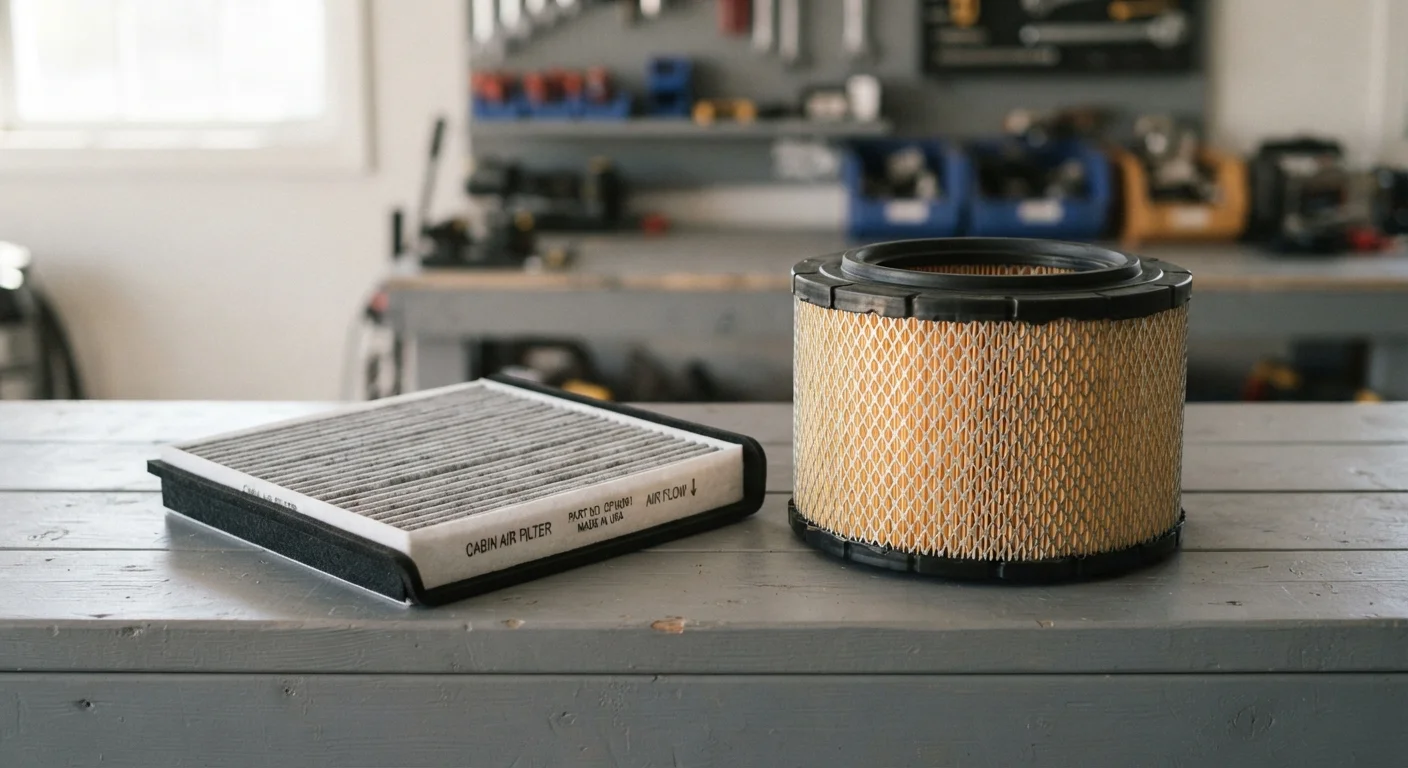
Key Takeaways
- Cabin air filters protect occupants from dust, pollen, and pollutants entering through the HVAC system.
- Engine air filters prevent contaminants from entering the combustion chamber, directly affecting performance.
- Typical replacement intervals differ: cabin filters around every 15,000-25,000 miles, engine filters every 15,000-30,000 miles.
- Both filters show clear symptoms when overdue - don't wait for a warning light that may never come.
- Driving environment matters: dusty or high-pollen areas accelerate wear on both filters.
Option A
Cabin Air Filter
The filter that protects the people inside.
Best for: Drivers who prioritize air quality, allergy relief, and a functioning HVAC system inside the vehicle.
Option B
Engine Air Filter
The filter that keeps your engine breathing clean.
Best for: Anyone who wants to protect engine performance, fuel efficiency, and long-term mechanical health.
If you or your passengers suffer from allergies or respiratory sensitivities
Cabin Air Filter
A fresh cabin filter significantly reduces pollen, dust, and particulate matter circulating through your vehicle's interior air supply.
If you've noticed reduced acceleration or declining fuel economy
Engine Air Filter
A clogged engine air filter restricts airflow to the combustion chamber, which can hurt throttle response and fuel efficiency over time.
If you drive frequently on unpaved roads or in dusty conditions
Engine Air Filter
Dirt and fine particles accelerate engine filter clogging much faster than highway driving, making more frequent inspection essential.
If your air conditioning or heat output has weakened noticeably
Cabin Air Filter
A blocked cabin filter restricts airflow through the HVAC system, reducing heating and cooling effectiveness regardless of refrigerant levels.
Two Filters, Two Completely Different Jobs
Most drivers know their car has an air filter - but many don't realize there are actually two, each serving a completely separate function. Mixing them up is understandable, but the distinction matters when diagnosing problems or planning maintenance.
The cabin air filter sits inside the HVAC (heating, ventilation, and air conditioning) system, typically behind the glove box or under the dashboard. Its job is to clean the air that flows into the passenger compartment - filtering out pollen, dust, mold spores, exhaust particles, and other airborne contaminants before they reach your lungs.
The engine air filter lives in the engine bay inside the air intake housing. It protects the combustion chamber from dirt, debris, and particles that could damage cylinder walls, pistons, and fuel injectors. Without it, even small amounts of grit can cause accelerated internal wear.
Think of it this way: one filter protects the people in the car, the other protects the car itself. Both are maintenance items with real consequences when ignored. See how these fit into the broader picture with our car maintenance schedule guide.
| Criterion | Cabin Air Filter | Engine Air Filter |
|---|---|---|
| Location | HVAC system, behind glove box | Engine bay, air intake housing |
| What It Filters | Pollen, dust, pollutants (for occupants) | Dirt, debris, particles (for engine) |
| Typical Replacement Interval | 15,000-25,000 miles | 15,000-30,000 miles |
| Key Symptom of Neglect | Weak airflow, musty odors | Sluggish acceleration, reduced efficiency |
| Impact on Performance | HVAC efficiency, cabin air quality | Engine power, fuel economy |
| DIY Accessibility | Generally easy, often no tools needed | Easy to moderate, varies by vehicle |
Replacement Intervals and Warning Signs
Neither filter has a dashboard warning light in most vehicles, so neglect is easy - and common. Replacement intervals are generally mileage-based, but your driving environment can shorten those windows considerably.
Cabin Air Filter
Most manufacturers recommend replacement every 15,000-25,000 miles, though drivers in high-pollen regions or urban areas with heavy traffic may need to change theirs more frequently. Symptoms of a clogged cabin filter include:
- Reduced airflow from vents even at high fan settings
- Musty or stale odors inside the cabin
- Increased dust accumulation on the dashboard
- Worsening allergy symptoms during drives
Engine Air Filter
Replacement intervals typically fall between 15,000-30,000 miles, with off-road or dusty driving cutting that range significantly. Warning signs include:
- Sluggish acceleration or reduced throttle response
- Slightly decreased fuel efficiency over time
- A visibly gray or black filter when inspected
- Rough idling in some cases
Inspecting both filters is straightforward and often takes just a few minutes. Many drivers who do their own visual checks catch problems well before they become expensive. For a broader look at wear components that often get skipped, see our guide on spark plugs, belts, and hoses.
15,000-25,000
Miles between cabin filter replacements
Most vehicle manufacturers recommend this interval, though dusty or high-pollen environments may require more frequent changes.
25%
Potential drop in engine airflow when filter is severely clogged
Automotive engineers note that heavily restricted air intake can meaningfully reduce combustion efficiency and throttle response over time.
2
Air filters in every modern passenger vehicle
Both the cabin and engine air filter require periodic replacement as part of routine vehicle maintenance - neither is a one-time install.
What Happens When You Skip the Replacement
Delaying either filter replacement isn't catastrophic overnight - but the cumulative effect adds up. A severely clogged engine air filter can measurably reduce engine efficiency, and in extreme cases, fine particles that bypass a deteriorated filter can contribute to internal engine wear. The engine has to work harder to draw air, which affects combustion quality.
On the cabin side, a saturated filter becomes a breeding ground for mold and bacteria, which can worsen air quality rather than improve it. HVAC motors also work harder against restricted airflow, which can add strain over time.
The good news: both filters are among the most accessible and affordable maintenance items on most vehicles. Replacement is often something mechanically comfortable owners can handle themselves after checking their owner's manual - though a technician can do it quickly during routine service if preferred.
It's also worth noting that some maintenance advice overstates urgency. Our article on car maintenance myths helps separate genuine needs from outdated rules of thumb. When in doubt, your vehicle's owner's manual and a trusted mechanic are your most reliable sources for interval guidance specific to your make and model.