

Key Takeaways
- Flying to Hawaii takes 5–6 hours from the West Coast and much longer from the East Coast.
- A car rental is often essential — Oahu excepted — because public transit is extremely limited.
- Each Hawaiian island has a distinct character; treating them as interchangeable leads to poor trip planning.
- Hawaii's cost of living is among the highest in the US, and travel budgets should reflect that reality.
- Cultural protocols around sacred sites and natural areas are serious obligations, not optional etiquette.
Why Hawaii Defies the 'Easy Domestic Trip' Assumption
Hawaii is unambiguously a US state, which leads many travelers to assume planning a trip there is roughly equivalent to booking a flight to Denver or Miami. That assumption causes real friction. Hawaii sits roughly 2,400 miles from the California coast — farther from the continental US than most Americans intuitively grasp — and arriving there involves a transoceanic flight, a meaningful time-zone shift, and a destination where the logistics of getting around resemble an international trip more than a domestic one.
Understanding where the common misunderstandings lie is the most practical starting point. The myths below aren't obscure edge cases; they're patterns that show up regularly and reliably disrupt otherwise well-intentioned trips. For a broader look at planning gaps that surface mid-trip, see overlooked planning details that cause real problems.
Myth
Because Hawaii is a US state, you don't need a passport or any special documentation.
Fact
US citizens don't need a passport to travel to Hawaii, but that doesn't mean documentation is irrelevant — and it certainly doesn't mean logistics are simple.
While a valid government-issued ID suffices for US citizens, the practical complexity of Hawaii travel has nothing to do with immigration checkpoints. Flight times from the East Coast routinely exceed 10 hours with connections. The state operates across multiple islands with no road or bridge connections between them, meaning inter-island travel requires additional flights or ferry services where available. Treating this as a "quick domestic hop" sets up travelers for budget and itinerary miscalculations from the start.
Myth
All the Hawaiian islands are essentially the same — just pick whichever has the cheapest flights.
Fact
Each major island has a genuinely distinct landscape, character, and travel infrastructure that makes them non-interchangeable.
Oahu is home to Honolulu, Waikiki, and the most developed tourism infrastructure in the state — including the only real urban transit network. Maui is known for road-to-Hana drives and Haleakalā. The Big Island (Hawaii Island) spans active lava fields, rainforests, and snow-capped Mauna Kea. Kauai is the most rugged and least developed. Choosing an island based purely on airfare without understanding what each offers is a common source of post-trip regret.
Myth
Hawaii is expensive for hotels, but food and activities are roughly mainland prices.
Fact
Hawaii has one of the highest costs of living in the United States, and that reality extends well beyond accommodation.
Nearly all goods are shipped or flown to the islands, which structurally elevates prices across the board. Grocery runs, restaurant meals, gas, and activity fees all tend to run noticeably higher than mainland equivalents. Travelers who budget only for flights and hotels often find themselves underprepared once they're on the ground. Building a realistic daily spending estimate — including meals, transportation, and park or activity fees — is essential, not optional.
Myth
You can wing transportation once you land — there will always be cabs or rideshares available.
Fact
Outside of Oahu, rideshare coverage is inconsistent and public transit is minimal; a rental vehicle is often the only practical option.
On islands like Kauai and the Big Island, rideshare availability can be genuinely sparse, particularly in rural or coastal areas where many sought-after destinations are located. Visitors who arrive without a rental vehicle reserved — particularly during busy travel periods — can find themselves stranded or paying significantly elevated last-minute rates. Planning ground transportation before arrival is one of the most consequential logistical decisions a Hawaii traveler makes.
Myth
Hawaii's natural sites and cultural locations are open access — you can visit whenever and however you like.
Fact
Many natural areas require advance permits, and Hawaiian cultural sites carry protocols that visitors are expected to understand and respect.
Haleakalā National Park requires advance reservations for the popular sunrise experience. The Haiku Stairs (Stairway to Heaven) on Oahu has been legally closed to the public for years, yet trespass attempts persist — carrying real legal consequences. Beyond access logistics, Hawaii has a living Indigenous culture, and sacred sites throughout the islands are not simply scenic backdrops. Behaving respectfully — and following posted guidance — is both a legal and an ethical obligation, not a suggestion.
What Smart Hawaii Planning Actually Looks Like
Once the myths are cleared away, a clearer picture of Hawaii planning emerges. The islands reward travelers who treat the destination with the same seriousness they'd apply to an international trip — researching the specific island rather than "Hawaii" as a monolith, budgeting accurately for accommodation and food costs that routinely exceed mainland expectations, and building enough time into the itinerary to actually experience a place rather than race through a checklist.
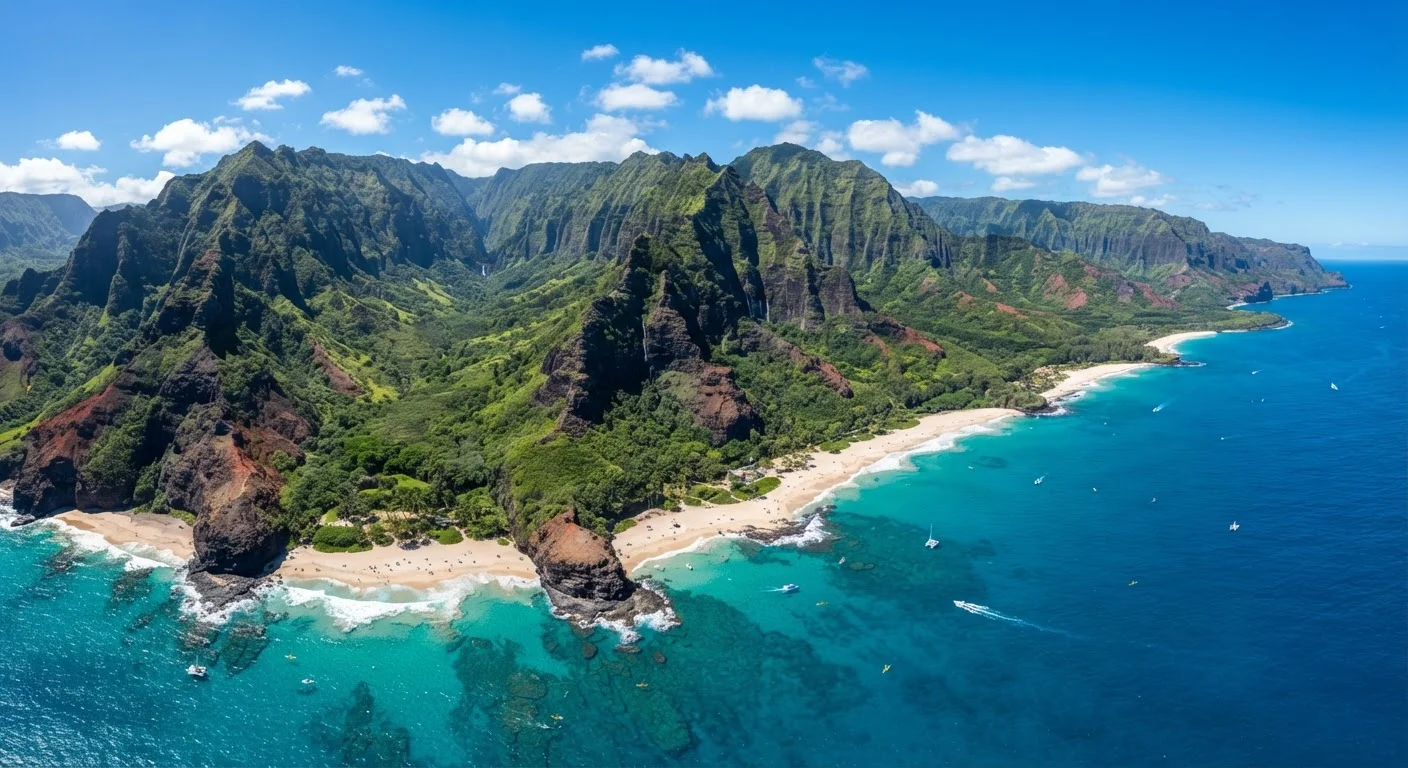
One underappreciated decision point is timing. Hawaii doesn't have a dramatic off-season the way some continental destinations do, but shoulder periods — typically spring and fall — can mean meaningfully smaller crowds at places like Haleakalā National Park on Maui or the Na Pali Coast on Kauai. The trade-offs of off-season US travel are worth understanding before you commit to dates.
2,390 mi
Distance from Los Angeles to Honolulu
This approximate distance makes Hawaii the most geographically isolated US state and one of the longest domestic flight routes in the country.
#1
Hawaii's cost of living rank among US states
Hawaii consistently ranks as the most expensive state in which to live and travel, according to cost-of-living indices compiled by organizations such as the Missouri Economic Research and Information Center.
6
Major islands with distinct travel profiles
Oahu, Maui, the Big Island, Kauai, Molokai, and Lanai each offer substantially different landscapes, infrastructure, and visitor experiences.
Transportation planning deserves particular emphasis. Outside of Honolulu — where TheBus network is genuinely functional — most visitors will need a rental vehicle to reach trailheads, beaches, and towns that define the experience. Waiting until arrival to arrange transportation is one of the habits that make US travel more frustrating than necessary. Reserve early, especially during peak periods when inventory runs short.
Trespassing at Closed Natural Sites Has Real Consequences
Closed trails and restricted cultural areas in Hawaii are not suggestions — violations can result in fines, arrest, and contribute to environmental and cultural damage. Before visiting any natural attraction, check current access status through the relevant county, state, or National Park Service source. Conditions and closures can change; verify before you travel, not after you arrive.
Finally, Hawaii's national parks — Volcanoes on the Big Island and Haleakalā on Maui — deserve the same research investment as any major continental park. The context that makes national park visits more meaningful applies fully here, from permit requirements to seasonal access considerations.