

Key Takeaways
- Underestimating driving distances between US destinations is one of the most common trip-wrecking mistakes.
- Many national parks and popular trails now require timed-entry permits that must be reserved weeks in advance.
- Overpacked itineraries leave no buffer for delays, weather changes, or spontaneous discoveries.
- Assuming cell service is reliable in rural and wilderness areas leads to avoidable navigation emergencies.
- Peak season crowds at iconic sites can be dramatically reduced by adjusting arrival times or choosing shoulder-season dates.
The Distance Problem Nobody Talks About
Domestic travel feels familiar in a way that breeds overconfidence. There's no passport to worry about, no currency to convert, and no language barrier — so travelers often shortchange the logistics. The result is a trip that spends more time in the car or at the airport than at the destination.
Distance is the most consistent culprit. The American West in particular deceives travelers who plot routes on a phone screen and see what looks like a manageable gap between, say, Bryce Canyon and the Grand Canyon. In practice, that drive involves elevation changes, two-lane roads, and limited fuel options. Applying the six-hour rule — no more than six to seven realistic driving hours per day — and padding each leg prevents the kind of exhaustion that poisons an otherwise good trip.
331M+
Annual US national park visits
The National Park Service recorded over 331 million recreational visits across the system in recent years, driving widespread adoption of timed-entry and permit systems at the most popular sites.
~3,000 mi
Width of the contiguous United States
The contiguous US spans roughly 2,800 to 3,000 miles coast to coast, making distance miscalculation one of the most consequential planning errors for road trip itineraries.
For structured travel planning across any domestic itinerary, distance calculations should happen before accommodation is booked, not after.
Permit Systems Have Changed How You Access America's Most Iconic Places
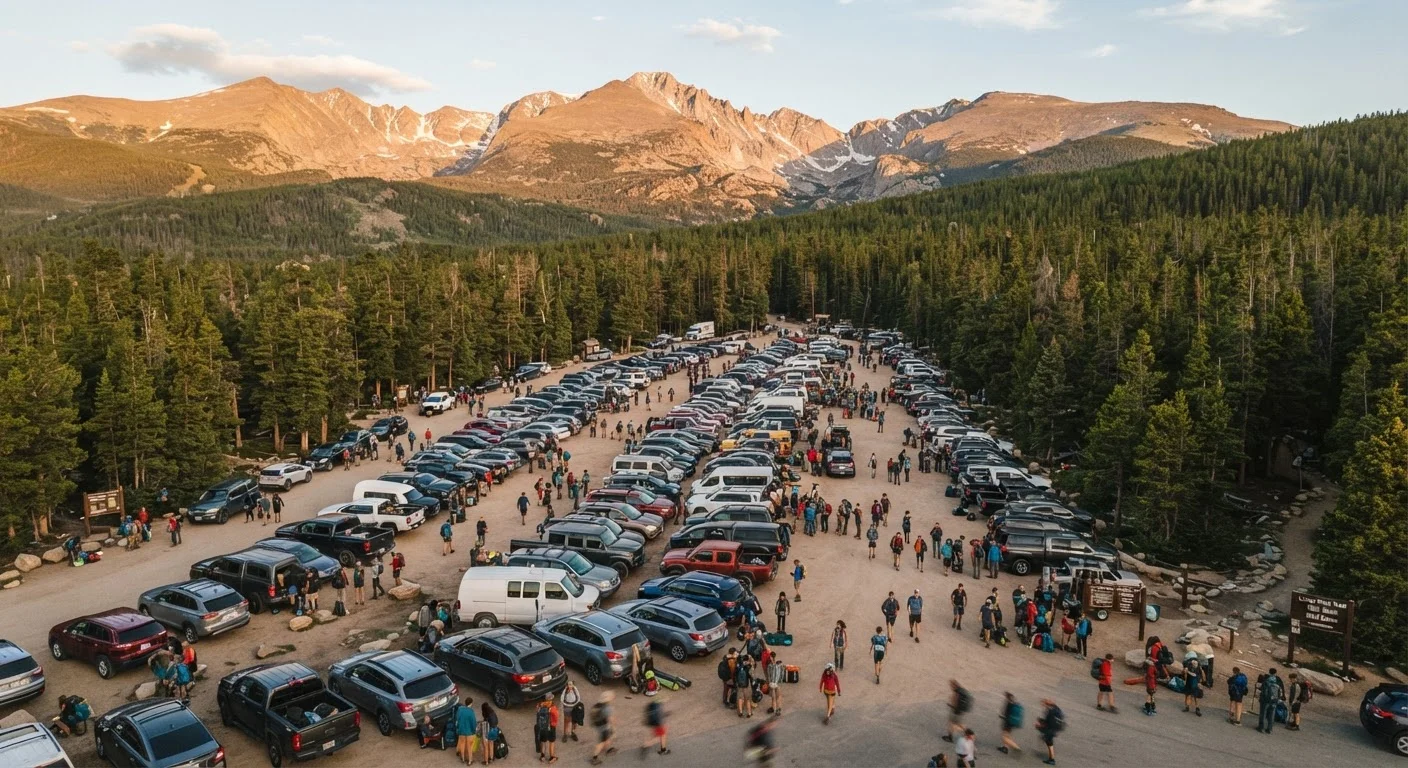
The assumption that national parks are always open on a drive-up basis is now outdated for a significant number of destinations. Zion Canyon's shuttle-only policy, Yosemite Valley's reservation windows, Rocky Mountain's timed-entry system, and permit-required trails like the Havasupai route into the Grand Canyon all require advance action — sometimes months ahead.
Permit Deadlines Are Non-Negotiable
Several of the most visited US parks and wilderness areas — including parts of Zion, Yosemite, and Rocky Mountain — use permit or timed-entry reservation systems that open weeks or months before your travel date. Showing up without a required permit can result in being turned away at the entrance, regardless of how far you drove. Always check the official federal land management agency websites for current reservation requirements before booking flights or lodging.
The shift toward managed access reflects genuine conservation needs and visitor safety concerns, not bureaucratic inconvenience. Travelers who treat permit research as optional frequently arrive to find the experience they drove hundreds of miles for is inaccessible. Checking Recreation.gov and the relevant NPS page early — ideally when the trip is first conceived — protects both your itinerary and your investment in getting there.
For those planning a trip with unique entry considerations, visiting Hawaii offers a useful parallel: familiar US context, but more planning requirements than most travelers anticipate.
Itinerary Overload and the Connectivity Assumption
Two habits tend to compound each other on domestic trips: overpacked schedules and the assumption that reliable infrastructure will be everywhere. Travelers stuff itineraries with too many stops, then discover they can't navigate between them because cell service has dropped.
Don't Rely Solely on Mobile Navigation
Cell service disappears quickly once you leave major corridors — especially in the Mountain West, rural Appalachia, and across large stretches of the Great Plains. Downloading offline maps before departure and carrying a paper backup for remote legs of any road trip is a practical safeguard, not an overcaution. Getting lost without signal in a national forest or desert region is a genuine safety concern.
Itinerary discipline matters as much as logistics preparation. Scheduling three major activities per day in a region that requires significant driving between each one is a recipe for frustration rather than enjoyment. Leaving genuine gaps — half-days with no fixed plan — consistently produces the most memorable moments, whether that's a roadside diner in rural New Mexico or a spontaneous detour into a state park that wasn't on the original list.
Packing habits often reinforce itinerary problems: overstuffed bags slow airport transit, limit vehicle space on road trips, and add friction to every move between locations. Adaptable packing frameworks that account for trip length and climate make every stage of a domestic trip run more smoothly — and leave room, literally, for what you discover along the way.