

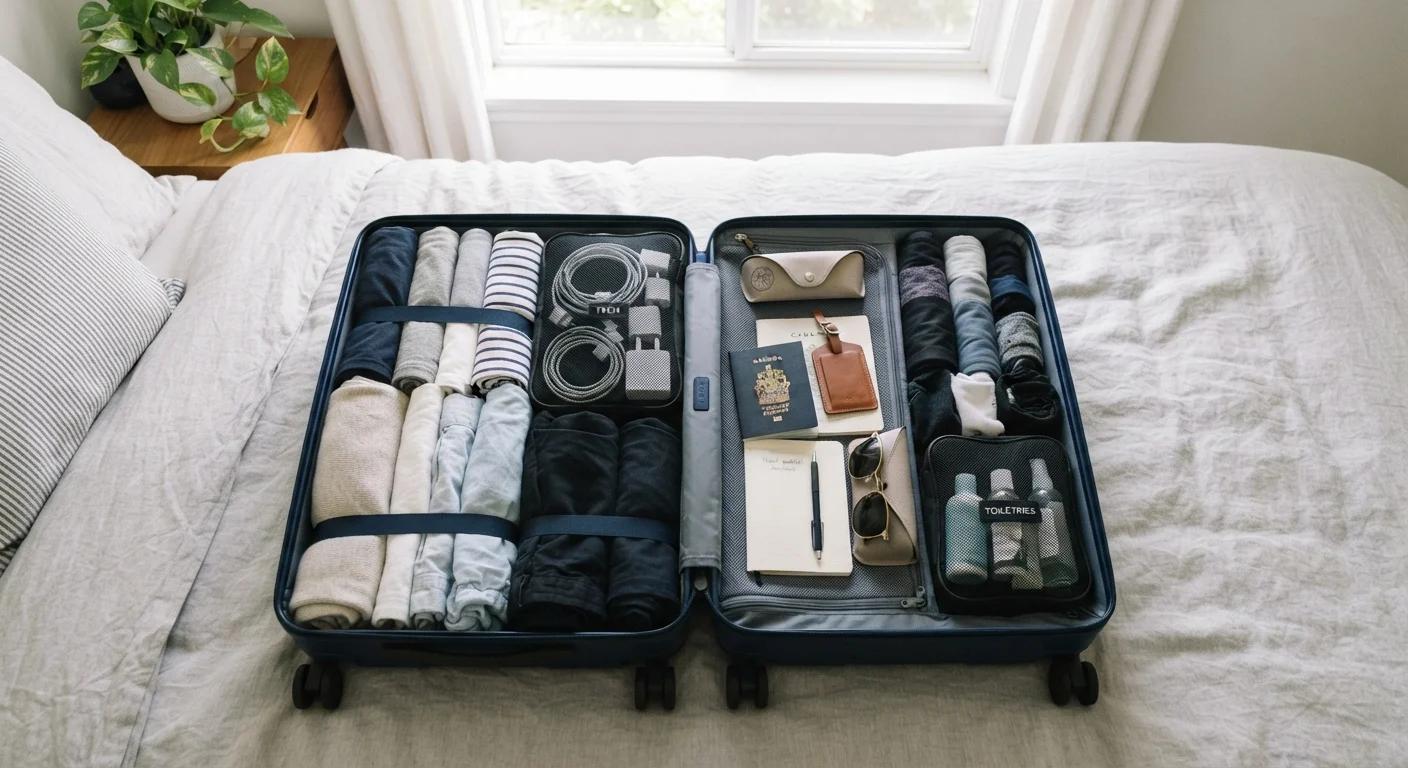
Key Takeaways
- Building a versatile capsule wardrobe around neutral, layerable pieces works across nearly every trip type.
- Packing cubes and compression bags meaningfully reduce volume and keep bags organized throughout multi-stop trips.
- Matching your bag size to your actual trip length is one of the most effective ways to prevent overpacking.
- A pre-trip checklist reviewed 48 hours before departure catches gaps without last-minute stress.
- Climate research and planned laundry access should both factor into how much clothing you pack.
Why Most Packing Advice Fails You
Generic packing lists assume a single trip type — five nights at a beach resort, say — and break down the moment your travel life gets more varied. A framework that holds up across a long weekend road trip, a two-week international circuit, and a business trip to a cold-weather city requires different thinking: less about what to pack and more about how you decide what goes in the bag.
The core problem most travelers encounter is described in detail in our piece on why carry-ons always end up overpacked — decision fatigue, fear of going without, and a failure to account for actual itinerary demands. A reliable packing strategy fixes the process, not just the pile on your bed.
Set your bag size before you start packing, not after.
Choosing your luggage first creates a hard constraint that prevents the common pattern of filling whatever space is available. A carry-on forces discipline; a large checked bag invites excess. Matching the vessel to the trip length is a structural decision that shapes every choice downstream.
Build your clothing around a neutral, layerable capsule of five to seven pieces.
Neutral tones mix and match, reducing the number of items needed for visual variety. Layering handles temperature variation across climates or between indoor and outdoor environments without requiring separate full outfits for each condition.
Use a written checklist reviewed 48 hours before departure.
A checklist reviewed in advance — not the morning of — allows you to identify genuine gaps and source missing items without stress. It also prevents the reflex additions that happen when packing under time pressure, which is when bags grow heaviest.
Pack toiletries and electronics in dedicated, extractable pouches.
Dedicated pouches speed up security screening, keep liquids contained if a bottle leaks, and make it easy to locate items without unpacking everything. They also transfer cleanly between bags when your luggage setup changes mid-trip.
Plan for one wear per outfit per day, not one outfit per activity.
Over-counting outfit changes is the most common source of excess clothing. Unless an activity is genuinely strenuous or messy, most clothing can span multiple low-key daytime activities before needing a wash.
Climate and Itinerary Research as a Packing Input
Effective packing starts well before you open the suitcase. Understanding the temperature range, precipitation likelihood, and activity mix at your destination lets you make defensible clothing choices instead of hedging with duplicates. A trip that moves from a coastal city to a mountain town in the same week demands layering, not two separate wardrobes.
Research your daily activity schedule alongside the weather. Hiking, business meetings, and dinners at upscale restaurants each carry different dress requirements. When you build an itinerary you'll realistically follow, you also know precisely how many outfit changes you actually need — which is almost always fewer than your initial instinct suggests.
Laundry access is an underused planning variable. Many hotels and hostels offer laundry for a modest fee, and knowing you can wash clothes mid-trip may allow you to cut your clothing count by a third or more on longer journeys.
~30%
Clothing reduction possible with mid-trip laundry
Travel packing experts and frequent travelers broadly estimate that planned laundry access can reduce clothing volume by roughly a third on trips lasting a week or more.
50%+
Travelers who report overpacking on most trips
Multiple consumer travel surveys have found a majority of leisure travelers consistently pack more than they use, with clothing being the most frequently cited category of excess.
Core Practices That Apply to Every Trip Length
Whether you're packing for three days or three weeks, a consistent underlying method prevents the chaotic last-minute additions that bloat bags and create airport stress. The practices below scale with trip length — apply more of them as trips grow longer and more complex.
Adapting Your System for International Travel
International trips introduce variables that domestic packing ignores: voltage differences, local customs around dress, documentation requirements, and longer gaps between opportunities to restock. Our guide on what Americans commonly overlook when packing internationally covers the specifics — adapter types, emergency ID copies, and local emergency number access — all of which are easy to miss until you need them.
For longer international itineraries, consider your accommodation type as a packing factor. Hostels with shared facilities may require a towel and flip-flops; vacation rentals often provide more kitchen access, reducing the need for restaurant-only clothing. Long-haul flights also warrant dedicated comfort items in your personal item bag — a strategy covered thoroughly in our long-haul flight survival guide.
Entry and safety documentation travels separately
Keep a digital copy of your passport, travel insurance summary, and emergency contacts stored in a secure cloud location and accessible offline on your phone. Physical photocopies stored separately from your passport provide a backup if the original is lost. For specifics on what international travel insurance typically covers, see our overview of international travel insurance. Always verify current entry requirements with official government sources before departure, as rules can change.