

Key Takeaways
- The Desert Southwest offers iconic canyon scenery and reliable sunshine, but summer heat above 100°F demands careful planning.
- The Pacific Northwest delivers dramatic rainforests, volcanic peaks, and rugged coastline, with the driest conditions from June through September.
- Desert destinations like Moab and Sedona suit road-trippers; Pacific Northwest parks often require more hiking-oriented logistics.
- Both regions have distinct shoulder seasons that reward flexible travelers willing to trade peak conditions for thinner crowds.
- Your trip length, heat tolerance, and activity preferences are the clearest factors in choosing between the two regions.
Our Verdict
Neither region outright wins — they appeal to fundamentally different traveler profiles. The Desert Southwest rewards those drawn to open skies, geological drama, and warmer temperatures across a longer travel window. The Pacific Northwest suits hikers and nature photographers who prioritize dense forest, diverse ecosystems, and cooler air, and who can plan around a narrower dry season.
| Best for | Recommended |
|---|---|
| Travelers who prefer warm, dry weather and canyon landscapes | Desert Southwest |
| Hikers and wildlife watchers seeking lush, temperate wilderness | Pacific Northwest |
| Road-trippers covering multiple parks in one loop | Desert Southwest |
| Visitors prioritizing dramatic coastline alongside mountain scenery | Pacific Northwest |
What Each Region Actually Offers
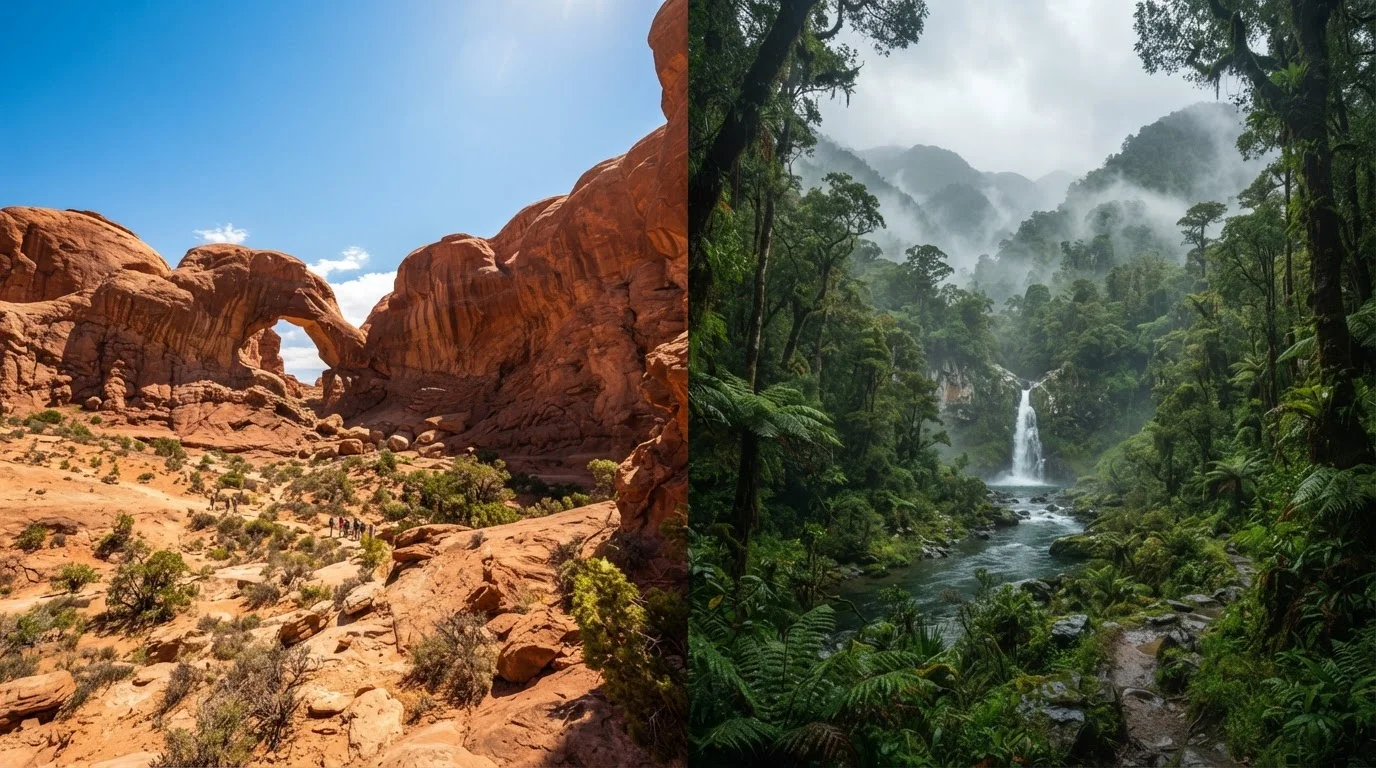
The Desert Southwest spans roughly Utah, Arizona, Nevada, and New Mexico — a landscape defined by layered sandstone, deep river canyons, and sweeping high-desert plateaus. Anchor destinations include Grand Canyon National Park, Zion, Bryce Canyon, Arches, and Monument Valley. The region also encompasses culturally rich cities like Santa Fe and Sedona, where Indigenous heritage and contemporary arts intersect with the natural scenery.
The Pacific Northwest covers Washington and Oregon, with distinct ecosystems stacked remarkably close together: temperate rainforests in Olympic National Park, volcanic peaks along the Cascades (including Mount Rainier and Crater Lake), and some of the most dramatic coastline in the continental US along the Oregon Coast. Portland and Seattle serve as practical gateways with strong food and culture scenes.
For a broader overview of how these parks compare nationally, see our guide to major US national parks.
Climate and Seasonality: The Deciding Factor
Climate is where the two regions diverge most sharply, and it often becomes the deciding factor for trip planning. Understanding regional weather patterns before booking can prevent significant logistical headaches.
The Desert Southwest is genuinely hot from June through August — daytime temperatures in canyon country regularly exceed 100°F, and hiking in direct sun at the Grand Canyon's inner gorge can become dangerous. Spring (March–May) and fall (September–October) are the consensus sweet spots: temperatures settle between 60°F and 85°F, crowds are more manageable, and the light for photography is exceptional. Winters are mild at lower elevations and cold at higher ones, with some parks seeing snow.
The Pacific Northwest operates on a nearly inverted calendar. Winters are overcast and wet; the famous green lushness comes at the cost of persistent rain from October through May. July and August deliver reliably dry and mild conditions — Crater Lake and the Olympic Peninsula are genuinely spectacular in this window — but that same window attracts the heaviest crowds. Shoulder-season Pacific Northwest travel (May or September) requires rain-readiness but offers real rewards.
| Desert Southwest | Pacific Northwest | |
|---|---|---|
| Peak season | Spring & Fall (Mar–May, Sep–Oct) | Summer (Jul–Aug) |
| Typical summer temps | 90–110°F in canyon country | 65–80°F in most park areas |
| Primary landscape | Sandstone canyons, mesas, red rock | Rainforest, volcanoes, rugged coast |
| Road trip friendliness | High — parks cluster naturally | Moderate — destinations more spread out |
| Permit complexity | Moderate (select trailheads) | Higher (timed entry more common) |
| Fitness requirement | Low to moderate | Moderate to high |
| Rainfall risk | Low (spring/fall travel) | Moderate to high outside summer |
Travelers with flexible schedules who want to avoid peak demand in either region should review the trade-offs of off-season US travel before committing to dates.
Logistics, Access, and Trip Structure
Both regions reward road trips, but the logistics differ in meaningful ways. In the Desert Southwest, major parks are often within a few hours of each other along well-established routes — the Utah Mighty Five corridor (Zion, Bryce, Capitol Reef, Canyonlands, Arches) is a natural loop that can be covered in seven to ten days with a rental car. Lodging options range from in-park campgrounds to gateway towns like Moab and Springdale. Cell service is sparse; paper maps and downloaded offline navigation remain useful.
Pacific Northwest itineraries tend to be more geographically spread. Seattle to Olympic National Park is roughly two hours; the Oregon Coast requires a separate southward push. Crater Lake sits in the southern Oregon Cascades, several hours from Portland. A meaningful Pacific Northwest trip covering both the rainforest and volcano terrain realistically needs ten days or more. Many trailheads require timed-entry permits — particularly at Mount Rainier and select Olympic zones — so advance planning is critical.
Before heading into either region's protected wilderness, consult this pre-trip planning checklist for national parks to confirm permit requirements, reservation windows, and gear essentials.
Combine Both Regions on One Trip
Travelers with two weeks and a flexible itinerary can link the two regions via a loop through Nevada: fly into Las Vegas, road-trip Utah's canyon country, then fly from Salt Lake City to Portland or Seattle for a Pacific Northwest leg. This approach captures geological contrast without retracing miles and keeps driving distances reasonable.
Activities, Terrain, and Traveler Fit
The Desert Southwest tends toward geology-first experiences: slot canyon hikes, rim-edge overlooks, stargazing at dark-sky designated sites, and multi-day river trips through the Colorado Plateau. The terrain is dramatic but often accessible — many iconic viewpoints at Bryce Canyon and the Grand Canyon's South Rim are reachable with minimal exertion, making the region relatively inclusive for travelers with varying fitness levels.
The Pacific Northwest skews more intensively toward active outdoor recreation. Reaching the best of Mount Rainier or the Hoh Rainforest interior involves sustained hiking on uneven, often muddy terrain. The payoff — old-growth Sitka spruce, glacier-fed rivers, and wildflower meadows above treeline — is extraordinary, but the terrain favors prepared hikers over casual sightseers. Kayaking, tide-pooling along the Oregon Coast, and wildlife watching (black bears, elk, and in coastal areas, gray whales on migration) add variety.
If you're weighing either region against an international trip, our comparison of international travel regions puts both domestic options into a broader context of what foreign destinations actually demand logistically.