

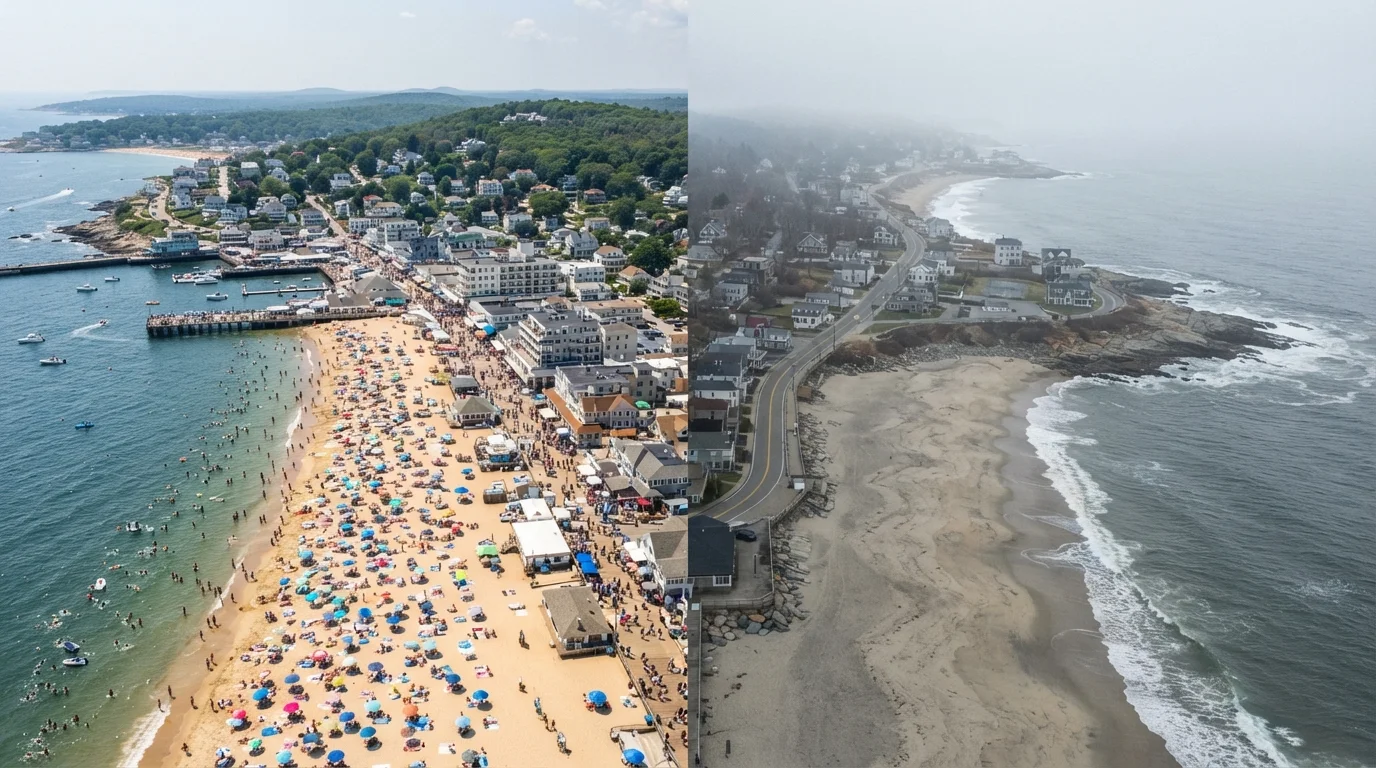
Key Takeaways
- Off-season travel typically offers lower prices and fewer crowds, but some attractions and services may be closed or reduced.
- Peak-season travel guarantees full access to amenities and activities, often at significantly higher cost.
- Weather is the most unpredictable variable — neither season guarantees ideal conditions.
- Shoulder season — the weeks just before or after peak — often provides the best balance of price and availability.
- Your travel priorities (cost, comfort, experience quality) should drive the timing decision more than general rules.
Significantly lower accommodation and flight costs
Demand-based pricing means hotels and airlines frequently drop rates by 20–50% during low season. For longer trips, those savings can be substantial across a travel budget.
Fewer crowds at major attractions
Popular landmarks, national parks, and museums are far more manageable without peak-season queues. Visitors often describe a qualitatively different — and more rewarding — experience.
More authentic local atmosphere
With fewer tourists, destinations revert closer to their everyday rhythm. Local restaurants, markets, and neighborhoods feel less staged and more genuinely connected to the community.
Greater accommodation flexibility and negotiation room
Properties with vacant inventory are more likely to offer upgrades, flexible check-in, or favorable cancellation terms during slow periods.
Easier access to reservations and bookings
Popular restaurants, guided tours, and permits that require months of advance planning during peak season are often available on short notice during off-season.
Closures and reduced hours are common
Seasonal businesses — beach resorts, mountain lodges, tourist-facing restaurants — may close entirely or operate on skeleton schedules. Verifying what's open before you go is essential.
Weather can be genuinely challenging
Destinations have off-seasons for reasons tied to climate. Monsoons, extreme heat, cold, or hurricane risk can disrupt plans and reduce enjoyment in ways that savings don't offset.
Limited transport options and frequency
Airlines reduce route frequency and local transit services may thin out during low season, complicating connections and adding travel time.
Peak season provides guaranteed full access
All attractions, tours, and services are operational during high season. Families or first-timers who can't afford disappointments often benefit from that reliability.
Safety and support infrastructure can be thinner
Some remote destinations reduce staffing, emergency services, or tourist-facing resources during off-season — a consideration especially for less-experienced travelers.
Our Verdict
Neither off-season nor peak-season travel is universally superior — the right choice depends on your destination, travel style, and what you're willing to trade. Off-season rewards flexible, patient travelers with lower costs and authentic local experiences; peak season suits those who want guaranteed access and predictable weather, and are prepared to pay for it. Shoulder season, where it exists, often threads the needle most effectively.
Off-season travel suits budget-conscious or experience-driven travelers; peak season is better for families with fixed school schedules or first-time visitors to a destination.
What 'Season' Actually Means for Your Destination
Peak and off-season aren't universal categories — they're defined by each destination's demand curve, which is shaped by weather, school calendars, local festivals, and regional travel patterns. Ski resorts peak in winter; beach destinations peak in summer; some cities, like New Orleans or New York during the holidays, have multiple mini-peaks throughout the year.
Before making a timing decision, it's worth mapping the specific season calendar for your intended destination. A month that's considered off-season in one place may be peak season in another. For international destinations, this requires extra research — school holiday schedules and national holidays vary significantly by country. See our broader resource on international travel planning for destination-specific context.
Once you understand the local demand cycle, you can weigh trade-offs with actual specificity rather than generalities.
The Real Advantages of Traveling Off-Season
Significantly lower accommodation and flight costs
Demand-based pricing means hotels and airlines frequently drop rates by 20–50% during low season. For longer trips, those savings can be substantial across a travel budget.
Fewer crowds at major attractions
Popular landmarks, national parks, and museums are far more manageable without peak-season queues. Visitors often describe a qualitatively different — and more rewarding — experience.
More authentic local atmosphere
With fewer tourists, destinations revert closer to their everyday rhythm. Local restaurants, markets, and neighborhoods feel less staged and more genuinely connected to the community.
Greater accommodation flexibility and negotiation room
Properties with vacant inventory are more likely to offer upgrades, flexible check-in, or favorable cancellation terms during slow periods.
Easier access to reservations and bookings
Popular restaurants, guided tours, and permits that require months of advance planning during peak season are often available on short notice during off-season.
The financial argument for off-season travel is straightforward: when demand drops, prices follow. That pattern extends beyond flights and hotels to car rentals, guided tours, and even some attractions. For travelers building a realistic trip budget, timing alone can shift the math considerably. Our article on where your travel money actually goes explains where those savings tend to have the most impact.
Beyond cost, the experiential difference is often underestimated. Standing inside a historic cathedral or hiking a trail without shoulder-to-shoulder crowds changes the nature of the experience. Many frequent travelers report that off-season visits to destinations they'd found disappointing during peak season completely changed their impression of the place.
The Genuine Drawbacks You Should Plan For
Closures and reduced hours are common
Seasonal businesses — beach resorts, mountain lodges, tourist-facing restaurants — may close entirely or operate on skeleton schedules. Verifying what's open before you go is essential.
Weather can be genuinely challenging
Destinations have off-seasons for reasons tied to climate. Monsoons, extreme heat, cold, or hurricane risk can disrupt plans and reduce enjoyment in ways that savings don't offset.
Limited transport options and frequency
Airlines reduce route frequency and local transit services may thin out during low season, complicating connections and adding travel time.
Peak season provides guaranteed full access
All attractions, tours, and services are operational during high season. Families or first-timers who can't afford disappointments often benefit from that reliability.
Safety and support infrastructure can be thinner
Some remote destinations reduce staffing, emergency services, or tourist-facing resources during off-season — a consideration especially for less-experienced travelers.
The most common off-season frustration isn't bad weather — it's discovering that the thing you traveled to see is closed. Seasonal closures can affect restaurants, museums, ferry services, national park facilities, and entire resort towns. Calling ahead and verifying current operating schedules is non-negotiable for off-season trips, particularly in smaller or more seasonal destinations.
Weather risk deserves honest assessment rather than optimism. Travelers choosing the Caribbean in September to save money need to factor in that it's historically the peak of hurricane season. That's not a reason to avoid the trip entirely, but it warrants travel insurance consideration and flexible booking policies. For guidance on when trade-offs like these are worth it, our analysis of US off-season destinations offers grounded destination-level examples.
Shoulder Season: Often the Overlooked Option
The weeks immediately before and after peak season — commonly called shoulder season — frequently offer a pragmatic middle ground. Prices have begun to ease, most services remain operational, and crowd levels drop noticeably. For many destinations, shoulder season represents the most favorable overall combination of conditions. It's worth researching the specific calendar for each destination rather than applying blanket rules.
Making the Decision Based on Your Priorities
The framing of off-season versus peak season as a binary choice obscures what's actually a prioritization exercise. Start with three questions: What is the primary purpose of this trip? How flexible is your travel window? What's your tolerance for uncertainty?
Families constrained by school calendars often have little choice but to travel peak season — and that's a legitimate constraint, not a mistake. Solo travelers or couples with flexible schedules have more room to optimize. For those in the latter category, planning a trip alone vs. with a group explores how group dynamics further shape timing decisions.
Flight pricing is its own variable, and the relationship between booking timing and fare levels is more nuanced than common advice suggests. Common myths about booking flights breaks down what the data actually supports on that front. For travelers using points or miles, understanding travel rewards programs can reveal whether award availability changes by season — it often does.
Ultimately, the travelers who navigate this decision well are those who define their priorities clearly before consulting a calendar, rather than letting the calendar define their trip.