

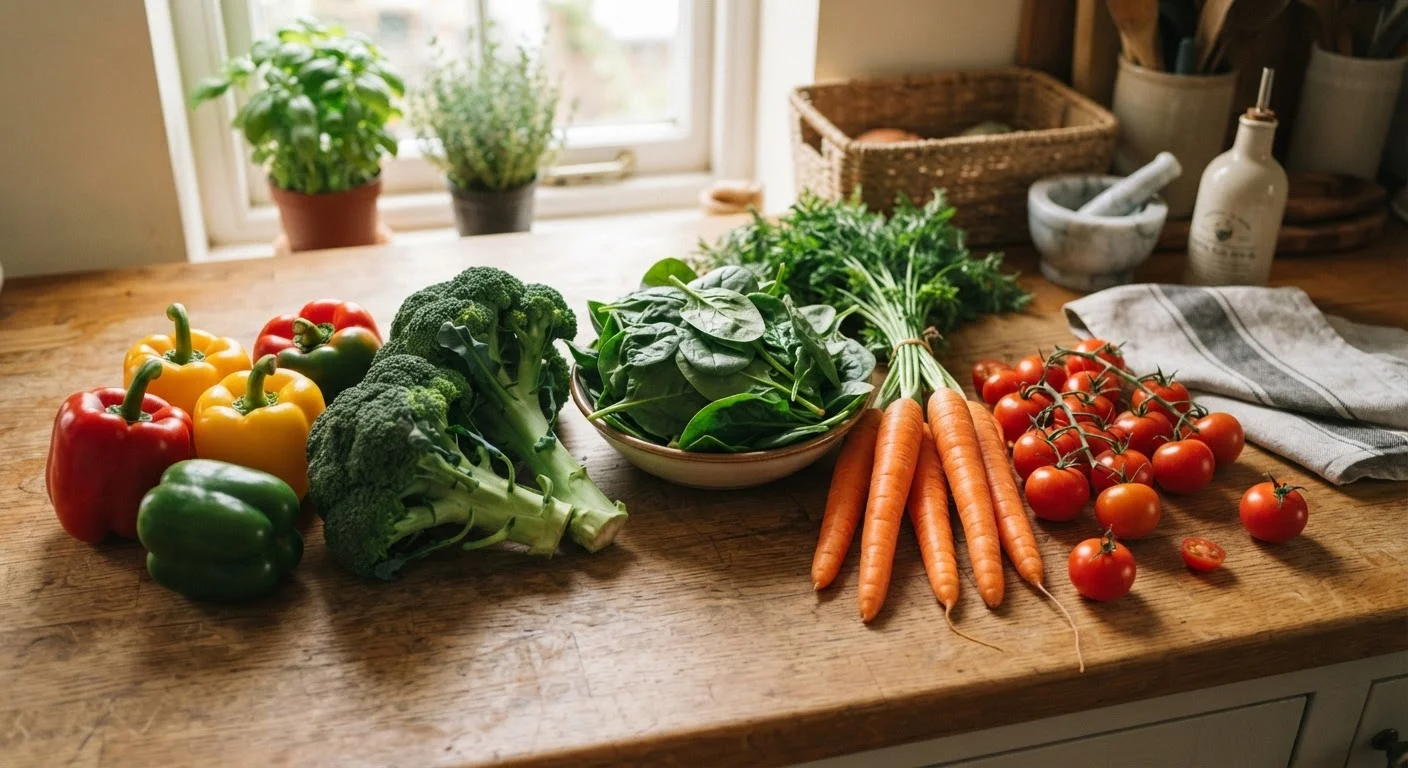
Key Takeaways
- Small, incremental additions are more sustainable than attempting a complete diet overhaul.
- Frozen and canned vegetables offer comparable nutrition to fresh and fit tight budgets.
- Pairing vegetables with familiar flavors significantly reduces resistance to eating them.
- Batch prepping vegetables once or twice a week saves time on busy weeknights.
- Visible, accessible storage of vegetables increases how often people actually eat them.
What you will need
Why Small Additions Work Better Than Big Overhauls
Most people know they could eat more vegetables. The gap isn't usually knowledge - it's friction. Dramatic dietary changes tend to feel unsustainable within weeks, while small, consistent additions quietly accumulate into meaningful habit shifts over time. Research in behavioral nutrition consistently supports gradual modification over wholesale replacement when the goal is long-term adherence.
The good news: you don't need to reinvent your meals. Stirring a handful of spinach into eggs, adding frozen peas to pasta, or including a side of roasted broccoli requires almost no additional planning. For a broader framework on structuring your weekly eating, see our guide to meal planning for beginners.
Visible Vegetables Get Eaten More Often
Store prepped vegetables in clear containers at eye level in your refrigerator rather than tucked away in the crisper drawer. Behavioral research consistently shows that visibility is one of the strongest predictors of whether a food gets consumed. Make the healthier choice the easier choice by putting it directly in your line of sight when you open the fridge.
It's also worth being aware of the habits that can quietly offset good intentions. Our article on nutrition habits that undermine healthy diets covers common patterns worth watching for.
What You'll Need Before You Start
No specialized equipment is required, but a few basics will make it significantly easier to follow through consistently.
What you will need
Step-by-Step: Building Vegetables Into Your Current Routine
Each of the following steps is designed to layer onto meals you already make - not to replace them. Work through them at whatever pace feels manageable.
Audit your three most common meals
Write down the meals you actually eat most often - not the ones you intend to eat. For each, identify one natural insertion point: a sauce, a grain dish, a soup, a scramble. This audit prevents the mistake of planning around hypothetical meals you rarely make.
Start with one vegetable per meal, not a full side dish
Rather than adding a separate vegetable dish, fold a single vegetable into something already on your plate. A handful of chopped kale into a soup, diced zucchini into ground meat sauce, or frozen corn into rice all require minimal effort. The goal is integration, not addition.
Pair vegetables with flavors you already enjoy
Texture and flavor compatibility reduce resistance significantly. If you enjoy garlic and olive oil, roast broccoli or asparagus in them. If you use hot sauce regularly, add it to sautéed greens. Vegetables prepared in ways that match your existing palate are far more likely to become habitual than those prepared neutrally or according to someone else's preference.
Batch prep two or three vegetables once a week
Choose a low-effort window - Sunday afternoon, for example - to wash, chop, and partially cook two or three vegetables. Roasted sweet potato cubes, blanched broccoli, and sliced bell peppers stored in clear containers make weeknight assembly fast enough to compete with ordering takeout. Decision fatigue is a genuine barrier; removing the prep step at mealtime removes a meaningful obstacle.
Stock at least one frozen vegetable as a no-excuse backup
On nights when planning fails entirely, a bag of frozen edamame, peas, or mixed vegetables can go from freezer to bowl in under five minutes. Keeping at least one option in the freezer at all times removes the excuse of having nothing available. This is the lowest-friction version of eating more vegetables - and on genuinely difficult days, it counts.
Budget, Storage, and Making It Stick
Cost is a real concern for many households. Frozen vegetables are nutritionally comparable to fresh in most cases - freezing locks in nutrients at peak ripeness - and they're substantially cheaper per serving. Canned vegetables (low-sodium varieties when possible) are another practical option for long shelf life and minimal prep. For a practical aisle-by-aisle approach to building a nutrition-supportive kitchen on a real-world budget, our grocery shopping with nutrition in mind walkthrough is a useful companion.
Storage matters more than most people realize. Vegetables stored at eye level in the refrigerator - rather than buried in the crisper drawer - are consumed significantly more often, according to behavioral research on food environment design. Keeping washed, cut vegetables in clear containers is one of the highest-leverage changes you can make. If growing your own vegetables is something you're curious about, our guide to starting a vegetable garden from scratch covers everything you need for a first season.
Finally, remember that vegetables don't have to carry the whole nutritional load. Pairing them with adequate protein - including often-overlooked sources - creates more satisfying, balanced meals. See our overview of protein sources beyond meat for ideas. For the longer view on building habits that actually hold, our piece on sustainable eating habits offers evidence-informed principles worth knowing.
This article is for general informational and educational purposes only and is not a substitute for professional medical or dietary advice. Consult a qualified healthcare provider or registered dietitian for guidance specific to your health situation.