

Key Takeaways
- Six or more hours of direct sunlight per day is the minimum requirement for most vegetable crops.
- Improving soil with compost before planting is one of the highest-impact steps a beginner can take.
- Easy-to-grow crops like lettuce, zucchini, and green beans reward first-time gardeners with reliable harvests.
- Consistent, deep watering at the base of plants reduces disease and encourages strong root growth.
- Setbacks in the first season are normal - treat them as learning, not failure.
Start here
Choosing the Right Spot
Next
Preparing Your Soil
Then
Selecting Your First Vegetables
Almost there
Planting, Spacing, and Watering
Finally
What to Expect in Your First Season
Choosing the Right Spot
Before you buy a single seed, spend a few days observing your yard. Vegetable crops - especially fruiting plants like tomatoes and peppers - require a minimum of six hours of direct sunlight daily, and eight or more hours produces the most reliable yields. Walk your property at different times of day to identify which areas receive the most consistent sun.
Avoid low-lying spots where water pools after rain, since waterlogged soil suffocates roots and breeds disease. Proximity to a water source matters too: dragging a hose across the yard becomes a real deterrent to consistent care. Flat or gently sloped ground is easiest to work with for a first garden.
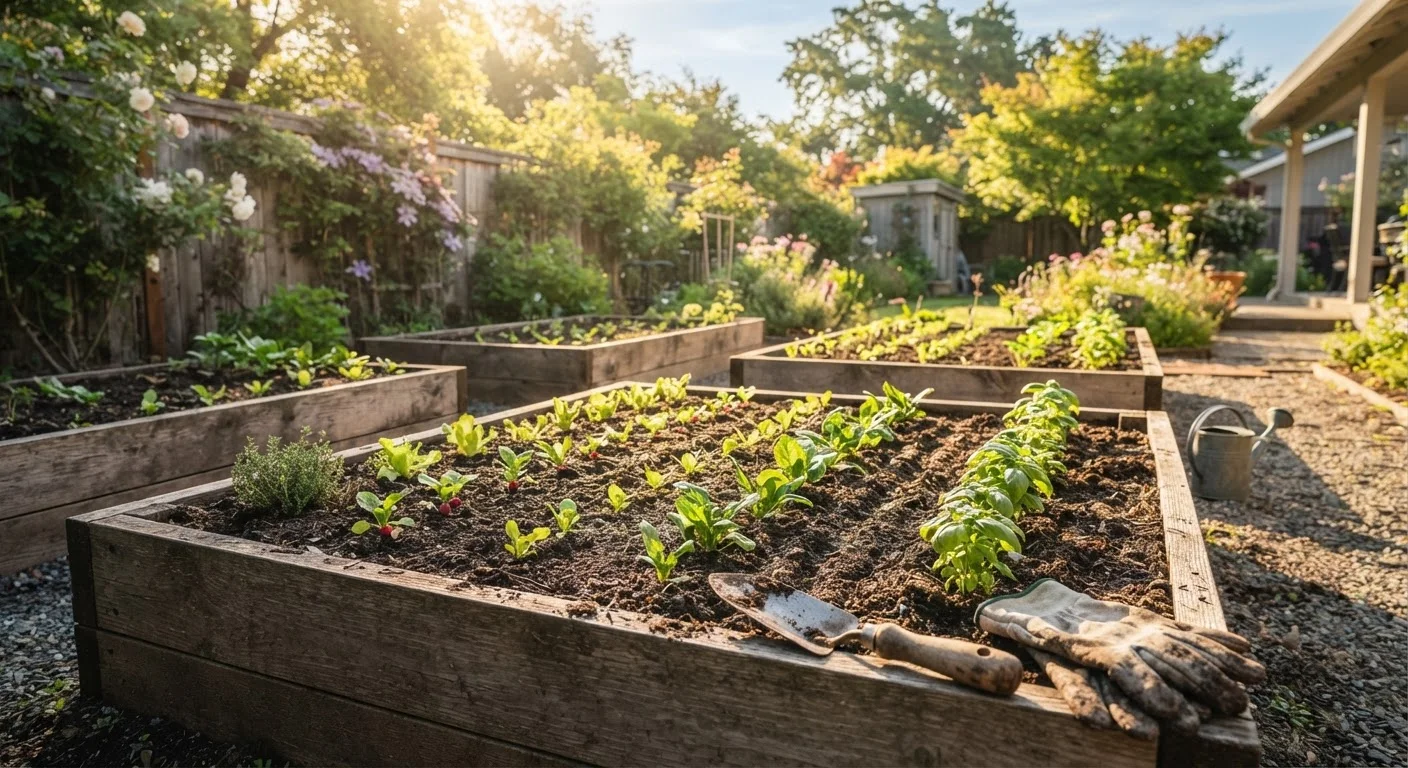
If your available space is limited or your native soil is poor, a raised bed is worth considering. Our guide on raised garden beds covers the honest trade-offs - including drainage benefits and the added watering commitment they require.
Check Local Regulations Before You Build
If you plan to build a raised bed, fence in your garden plot, or bring in significant quantities of soil or fill, check with your local municipality first. Some jurisdictions have rules about structures near property lines or import of soil materials. Your county cooperative extension office is a good starting point for region-specific guidance.
Preparing Your Soil
Soil quality is the single most important factor in how well your vegetables grow. Most native lawn or yard soil is too compacted and nutrient-poor to support a productive vegetable garden without amendment. Before planting, loosen the top 10 to 12 inches of soil with a garden fork, then work in a generous layer of compost - roughly 2 to 3 inches mixed throughout.
Compost improves drainage in clay soils, helps sandy soils retain moisture, and feeds beneficial soil organisms that break down nutrients for plant roots. If you want to build your own supply over time, our article on composting at home explains what materials to include and how the process works.
Consider getting a basic soil test from your local cooperative extension office before your first season. A test tells you your soil's pH and nutrient levels, so you can amend only what's actually needed rather than guessing.
Soil amendment
Any material mixed into soil to improve its structure, drainage, or nutrient content. Compost is the most commonly used amendment in vegetable gardens.
Soil pH
A measure of how acidic or alkaline your soil is, on a scale of 1 to 14. Most vegetables grow best in slightly acidic soil, roughly between pH 6.0 and 7.0.
Last frost date
The average date in spring after which frost is unlikely in your area. Warm-season crops should not be planted outdoors until after this date.
Hardiness zone
A USDA geographic designation based on average minimum winter temperatures. It helps gardeners determine which plants are likely to survive and thrive in their region.
Transplant shock
Temporary stress a plant experiences when moved from one growing environment to another. Watering well and planting in mild conditions helps reduce its impact.
Mulch
A layer of material - such as straw, wood chips, or shredded leaves - spread over soil around plants to retain moisture, suppress weeds, and regulate soil temperature.
Selecting Your First Vegetables
Choosing crops that match your climate, schedule, and preferences makes a real difference in first-season success. For beginners, prioritize vegetables with a reputation for reliability over those you find most interesting to cook with - you can expand variety once you've built confidence.
- Lettuce and salad greens: Fast-maturing, tolerant of partial shade, and harvestable in as little as 30 days.
- Radishes: Among the quickest crops in the garden - often ready in under a month.
- Green beans: Bush varieties need no staking and produce steadily with minimal attention.
- Zucchini: Prolific producers that are very forgiving of beginner errors.
- Cherry tomatoes: More disease-tolerant and faster to ripen than larger slicing types.
For a deeper look at how to source your plants, see our article on seed starting vs. transplants - it covers the real cost and time trade-offs of each approach.
Planting, Spacing, and Watering
Crowded plants compete for light, air, and nutrients, so follow the spacing guidelines on seed packets or transplant tags - they exist for good reason. As a general rule, large plants like tomatoes and zucchini need 18 to 36 inches between them, while compact crops like lettuce and radishes can be spaced as close as 6 inches apart.
Plant on a cloudy day or in the late afternoon to reduce transplant shock from heat. Water in new transplants immediately and deeply at the base of each plant. Overhead watering - especially in the evening - leaves foliage wet overnight and invites fungal disease.
Aim for roughly one inch of water per week total, adjusting for rainfall. Push a finger two inches into the soil: if it's dry at that depth, it's time to water. Mulching around plants with straw or wood chips conserves moisture, suppresses weeds, and moderates soil temperature.
Water at the Base, Not the Leaves
Direct water to the soil at the base of each plant rather than spraying foliage from above. Wet leaves, especially overnight, create conditions where fungal diseases like powdery mildew and blight thrive. A soaker hose or drip irrigation system makes this easy and consistent.
What to Expect in Your First Season
Expect a mix of successes and surprises. Nearly every gardener loses something in their first season - a crop to pests, a plant to unexpected frost, a row to poor drainage. These are learning experiences, not indicators that you lack ability.
Keep simple notes: what you planted, when you planted it, what problems appeared, and what thrived. A small notebook or a phone note is enough. This record becomes genuinely valuable when planning the following season.
Harvesting at the right time matters as much as growing. Many vegetables - particularly zucchini, beans, and lettuce - produce more when harvested regularly. Letting produce over-mature on the plant signals it to stop producing.
When the season winds down, use the end-of-season garden checklist to protect your soil and tools before winter. The work you do in fall directly affects how productive your garden will be the following spring.