

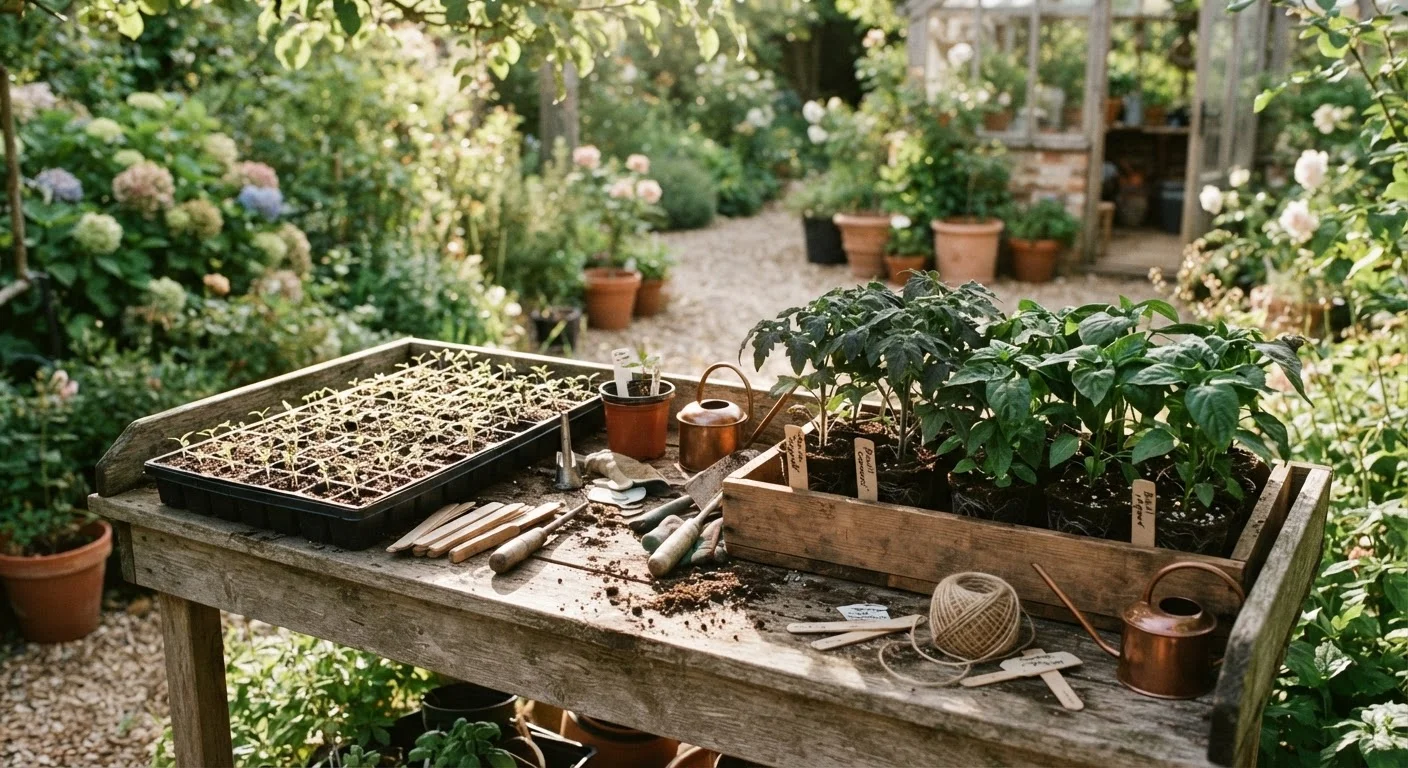
Key Takeaways
- Seeds offer far greater variety selection; transplants are limited to what local nurseries carry each season.
- Starting seeds indoors requires equipment, attention, and weeks of lead time before outdoor planting.
- Transplants reduce time to harvest but typically cost more per plant than a full seed packet.
- Some crops — like carrots, beets, and beans — perform better sown directly and don't transplant well.
- Your local frost dates determine whether seed starting or transplants make more practical sense for your climate.
- Both approaches can be combined within the same garden to balance variety, cost, and convenience.
Option A
Starting from Seed
The patient grower's path to maximum variety and lower cost.
Best for: Gardeners who want access to a wide range of plant varieties and are willing to invest time in early-season indoor growing.
Option B
Using Transplants
The time-saver's shortcut to a productive garden bed.
Best for: Homeowners who want to skip the early growing stages and get plants in the ground with a shorter time to harvest or bloom.
If you want unusual or heirloom varieties not sold at garden centers
Starting from Seed
Seed catalogs offer hundreds of variety options unavailable as transplants locally, giving you full control over what grows in your garden.
If you have a short growing season or limited indoor growing space
Using Transplants
Transplants arrive already weeks ahead in development, helping you make the most of a compressed outdoor window without the indoor setup.
If you're growing on a tight budget across a large garden
Starting from Seed
A single seed packet costing a few dollars can yield dozens of plants, whereas purchasing the equivalent number of transplants adds up quickly.
If you're a first-time or time-strapped gardener
Using Transplants
Transplants eliminate the most failure-prone stages of plant development, making it easier to get a productive garden without prior experience.
If you're planning a mixed kitchen garden with vegetables and flowers
Starting from Seed
Seeding offers the flexibility to grow crops like squash, beans, and sunflowers alongside rare flower varieties all tailored to your exact plan.
The Core Trade-Off: Time vs. Variety
Every spring, gardeners face the same early decision: invest the time to start plants from seed, or buy transplants from a nursery and skip ahead? Neither approach is universally better — they serve different goals and different schedules.
Starting from seed puts you in full control. You choose from a vastly wider range of cultivars, including heirloom tomatoes, specialty peppers, and cut flowers that nurseries rarely stock as transplants. The trade-off is time: most vegetables need six to twelve weeks of indoor growing before they're ready for outdoor conditions. That means setting up grow lights or a sunny south-facing window, managing watering carefully, and hardening off seedlings before transplanting — a gradual acclimatization process where you expose indoor-grown plants to outdoor conditions over seven to ten days.
Transplants, by contrast, hand you weeks of head start. A nursery flat of tomato or pepper starts represents indoor growing that someone else did for you. For gardeners with limited space, no grow-light setup, or simply a busy schedule, transplants can be the practical choice that makes gardening actually happen.
| Criterion | Starting from Seed | Using Transplants |
|---|---|---|
| Variety selection | Hundreds of cultivars available | Limited to nursery stock |
| Upfront cost | Low (per-plant cost) | Higher per plant |
| Time investment | High — 6–12 weeks indoors | Minimal — plant out directly |
| Equipment needed | Trays, lights, heat mats | No special equipment |
| Risk of failure | Higher (germination, damping off) | Lower — plants already established |
| Best for direct-sow crops | Yes (beans, carrots, squash) | Not applicable |
| Best for slow-maturing crops | Requires early indoor start | Ideal (tomatoes, peppers) |
What Seeds Do Better
Certain crops actively prefer being sown directly into the ground — and for these, transplants aren't just unnecessary, they can be counterproductive. Root vegetables like carrots, parsnips, and beets develop taproots that don't survive transplanting well. The same goes for beans, peas, corn, and squash, which germinate quickly and prefer to grow undisturbed from the start.
Beyond those direct-sow crops, starting your own transplants from seed gives you meaningful advantages in plant selection. Seed catalogs carry hundreds of tomato varieties, while a typical garden center might stock ten. If you're building a raised bed with specific goals — disease resistance, compact growth habit, flavor profile — seeds let you match the plant to your conditions rather than choosing from whatever arrived on the delivery truck. For more on maximizing a raised bed setup, see what homeowners should know before building a raised garden bed.
Cost is also a real advantage. A packet of fifty tomato seeds costs a fraction of what five individual transplants would at retail. If you're planting at any meaningful scale, those savings compound quickly.
6–12 weeks
Indoor lead time before outdoor planting
Most warm-season vegetables require six to twelve weeks of indoor growing before they are ready to transplant outdoors after last frost.
10–15x
Potential plants per seed packet vs. transplants
A standard seed packet containing 50+ seeds can yield many times more plants than the same dollar amount spent on individual nursery transplants.
7–10 days
Hardening-off period for seedlings
Cooperative extension guidelines generally recommend a seven- to ten-day gradual acclimatization period before moving indoor-started seedlings to full outdoor conditions.
Where Transplants Win
For crops with long growing seasons — tomatoes, peppers, eggplant, and many herbs — purchasing transplants can be the difference between a successful harvest and a plant that never matures before frost. In northern US regions with short summers, starting from seed indoors requires reliable heat sources and grow lights to maintain the eight to twelve weeks of growth needed before outdoor conditions are safe.
Transplants also lower the barrier for newer gardeners. Seed starting introduces variables — germination failures, damping off (a fungal condition that kills seedlings at the soil line), uneven watering — that can be discouraging early on. A healthy transplant from a reputable nursery comes past those risks.
Timing flexibility is another underappreciated benefit. If you miss your seed-starting window by a few weeks, your homegrown seedlings may be too immature to plant on schedule. Transplants let you hit the ground running even if your spring planning started late. Once your plants are established, good soil practices — like those covered in our composting guide — will support them regardless of how they started.
Choosing Based on Your Garden's Reality
The most practical approach for most homeowners isn't a binary one. A hybrid strategy — purchasing transplants for slow-starting crops like tomatoes and peppers while direct-sowing beans, squash, and greens — captures the advantages of both methods. It reduces your indoor growing commitment while still saving money on high-volume plantings.
Your local frost dates should anchor every decision. The USDA Plant Hardiness Zone Map and resources from your state's cooperative extension service can help you determine the right window for both seed starting and outdoor transplanting. Getting those dates wrong in either direction — too early or too late — is one of the most common causes of poor results regardless of which method you choose.
Think also about your setup. Do you have south-facing windows, a cold frame, or grow lights? Can you check seedlings consistently for moisture? If not, transplants are likely the more reliable path. If you do have the setup and the patience, seeds unlock a level of variety and economy that transplants simply can't match. Once you've settled your planting approach, don't forget that fall preparation matters just as much — the end-of-season garden checklist can help you close out the year with next spring in mind.
Check Your Local Extension Service
State cooperative extension services offer free, region-specific planting calendars and seed-starting schedules based on your local frost dates. These are among the most reliable resources available to home gardeners and are updated regularly to reflect local conditions. Search for your state's land-grant university extension program to find guides tailored to your growing zone.