

Key Takeaways
- Compost needs a balanced mix of carbon-rich "browns" and nitrogen-rich "greens" to break down efficiently.
- Meat, dairy, and diseased plants should stay out of a backyard compost pile.
- Regular turning and consistent moisture are the two biggest factors in compost speed.
- Finished compost looks and smells like dark, crumbly soil - not rotting waste.
- Home compost can significantly improve soil structure and reduce the need for purchased amendments.
What you will need
Understanding What Goes Into a Compost Pile
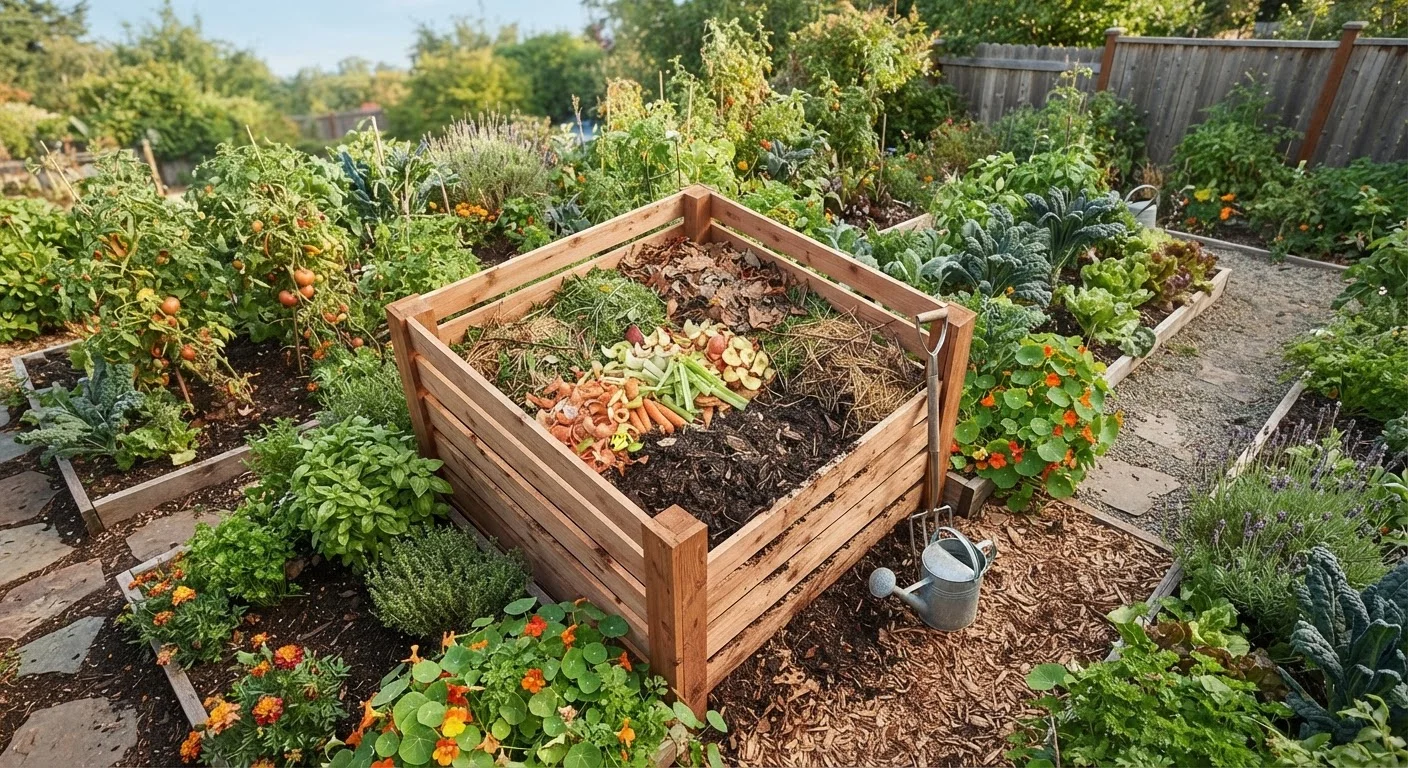
Composting works by feeding a community of microorganisms - bacteria, fungi, and invertebrates - that break organic matter down into a stable, nutrient-rich material called humus. For that process to work efficiently, the pile needs two categories of ingredients in roughly the right proportions.
Browns (carbon sources) provide energy for microbial activity. Common browns include dry leaves, cardboard (torn into pieces, tape removed), newspaper, straw, paper bags, and wood chips. These materials tend to be dry and bulky.
Greens (nitrogen sources) supply the protein microbes need to reproduce. Greens include vegetable and fruit scraps, coffee grounds and paper filters, tea bags (check for plastic-free bags), fresh grass clippings, and plant trimmings.
A rough guideline is a 3:1 ratio of browns to greens by volume - though it's more forgiving than many guides suggest. If the pile smells bad, add more browns. If it's stalling and barely breaking down, add more greens and moisture.
Never Compost These Materials
Meat, fish, bones, dairy products, and fats should never go into a backyard compost pile - they attract rodents and produce foul odors. Diseased plant material and invasive weeds with mature seeds are also off-limits, as a home pile may not reach temperatures high enough to neutralize pathogens or kill seeds. Pet waste (dog, cat, or bird feces) carries harmful bacteria and should be disposed of through municipal systems or dedicated pet-waste composters only.
Eggshells are a useful addition - they break down slowly but add calcium and help aerate the pile. Avoid adding large amounts of high-acid materials like citrus peel in one go, as they can temporarily slow microbial activity, though modest amounts are fine.
Compost works hand in hand with other soil health strategies. If you're building new garden beds, see our guide to soil pH for context on how finished compost interacts with soil chemistry.
Managing the Pile: Airflow, Moisture, and Heat
The three variables that control how quickly compost matures are oxygen, moisture, and temperature. Neglect any one of them and the process slows dramatically or produces unpleasant results.
Airflow: Oxygen is essential for the aerobic microbes doing most of the work. Turning the pile - physically mixing it with a pitchfork - is the primary way to reintroduce air. For a hot, active pile, turning every one to two weeks is ideal. For a slower, low-maintenance approach, turning monthly still works; it just takes longer.
Watch Moisture Levels Carefully
A pile that's too wet will turn anaerobic and produce a sulfur-like odor; too dry and decomposition stalls entirely. The goal is the moisture level of a wrung-out sponge - damp but not dripping. In rainy periods, cover the pile or move it under an overhang; in dry spells, water it lightly during each turning.
Heat: An actively decomposing pile generates noticeable internal heat - often between 130°F and 160°F in the center. This heat speeds decomposition and kills many weed seeds and pathogens. A compost thermometer helps you track this, but it's optional for most homeowners. If the pile feels warm to the touch after a day or two of being turned and moistened, the process is working.
For homeowners who garden in raised beds, finished compost is one of the most practical soil amendments available. Our article on raised garden beds covers how to incorporate compost into bed preparation.
How to Know When Compost Is Ready
Finished compost is dark brown, crumbly, and earthy-smelling - similar to rich forest floor soil. You should not be able to identify the original ingredients. If you can still recognize food scraps or leaves, the pile needs more time.
A practical readiness test: fill a sealed bag with a small sample and leave it for three days. If it still smells like soil after opening, it's ready. If it smells sour or like ammonia, it needs more decomposition time.
Speed Up Decomposition Naturally
Shredding or chopping materials into smaller pieces - ideally under 2 inches - dramatically accelerates breakdown by increasing surface area for microbes. Coffee grounds added to the pile are a reliable nitrogen boost and can help kick-start a sluggish heap. Mixing in a shovelful of finished compost or garden soil introduces beneficial microorganisms to get the process going faster.
Most backyard piles take two to six months to produce finished compost under active management (regular turning, balanced ingredients, appropriate moisture). Passive piles left mostly undisturbed can take a year or longer.
Once ready, compost can be worked into garden beds before planting, top-dressed around established plants as a slow-release amendment, or blended into potting mixes. It also pairs well with mulch - our overview of mulch options explains how the two work differently on the soil surface.
If you're growing your own vegetables, finished compost is particularly valuable during bed preparation. See our guide to starting a vegetable garden for how to incorporate it at each stage.