

Key Takeaways
- Soil pH controls how well plants can absorb nutrients, regardless of how much fertilizer you apply.
- Most vegetables and lawn grasses prefer a slightly acidic pH between 6.0 and 7.0.
- A simple soil test — available at garden centers or through your local cooperative extension — reveals your pH quickly.
- Lime raises pH in acidic soil; sulfur or acidifying amendments lower pH in alkaline soil.
- pH changes happen gradually; adjusting too aggressively or too quickly can harm plants.
- Some plants, like blueberries and azaleas, specifically require acidic soil to thrive.
Soil pH
Soil pH is a measure of how acidic or alkaline your soil is, expressed on a scale from 0 to 14. A pH of 7 is neutral; numbers below 7 indicate acidic soil, and numbers above 7 indicate alkaline soil. Most garden plants thrive in a range between 6.0 and 7.0, where essential nutrients are most available to roots.
pH stands for 'potential of hydrogen' and reflects the concentration of hydrogen ions in the soil solution. This directly influences how soluble — and therefore how accessible — key nutrients like nitrogen, phosphorus, iron, and manganese are to plants.
The pH Scale: What the Numbers Actually Mean
The pH scale runs from 0 to 14. Soil with a pH of 7 is perfectly neutral. Anything below 7 is acidic — the lower the number, the more acidic. Anything above 7 is alkaline (sometimes called basic). Each whole number step represents a tenfold change in acidity or alkalinity, so a soil with pH 5 is ten times more acidic than one at pH 6.
For most home gardens, the target range is 6.0 to 7.0. Within this window, the widest variety of nutrients are chemically available to plant roots. Lawns, vegetables, and most flowering perennials do well here. Step outside this range and even a well-fertilized bed can underperform — not because nutrients are absent, but because the soil chemistry locks them away.
6.0–7.0
Optimal pH range for most garden plants
This range is widely cited by university extension services as the window where nutrient availability and microbial activity are best balanced.
10×
Acidity change per pH unit step
Because the pH scale is logarithmic, a shift from pH 7 to pH 6 represents a tenfold increase in acidity — meaning small numbers represent large chemical differences.
4.5–5.5
Preferred pH for blueberries and acid-loving shrubs
Blueberries, azaleas, and rhododendrons consistently underperform in soils above pH 6.0, according to cooperative extension guidelines.
Why pH Affects Nutrient Availability
Nutrients in soil exist in different chemical forms depending on pH. At a low (acidic) pH, certain nutrients like iron, manganese, and aluminum become highly soluble — sometimes to the point of toxicity. Others, especially phosphorus, become locked into compounds roots can't absorb. At a high (alkaline) pH, iron, zinc, and manganese become scarce even if they're present in the soil, causing telltale yellowing between leaf veins called chlorosis.
This is why applying more fertilizer doesn't always solve a nutrient deficiency. If your pH is off, the fertilizer may simply become unavailable before plants can use it. Understanding pH first saves money and prevents frustration. See our guide to common fertilizer myths for more on why more isn't always better.
Soil Type Affects How pH Shifts
Clay soils have a higher 'buffering capacity' than sandy soils, meaning they resist pH change and require larger amounts of amendment to shift noticeably. If your soil is heavy clay, expect the process to take longer and require more product than the same adjustment in a sandier bed. Your cooperative extension soil report will account for this in its recommendations.
How to Test Your Soil pH
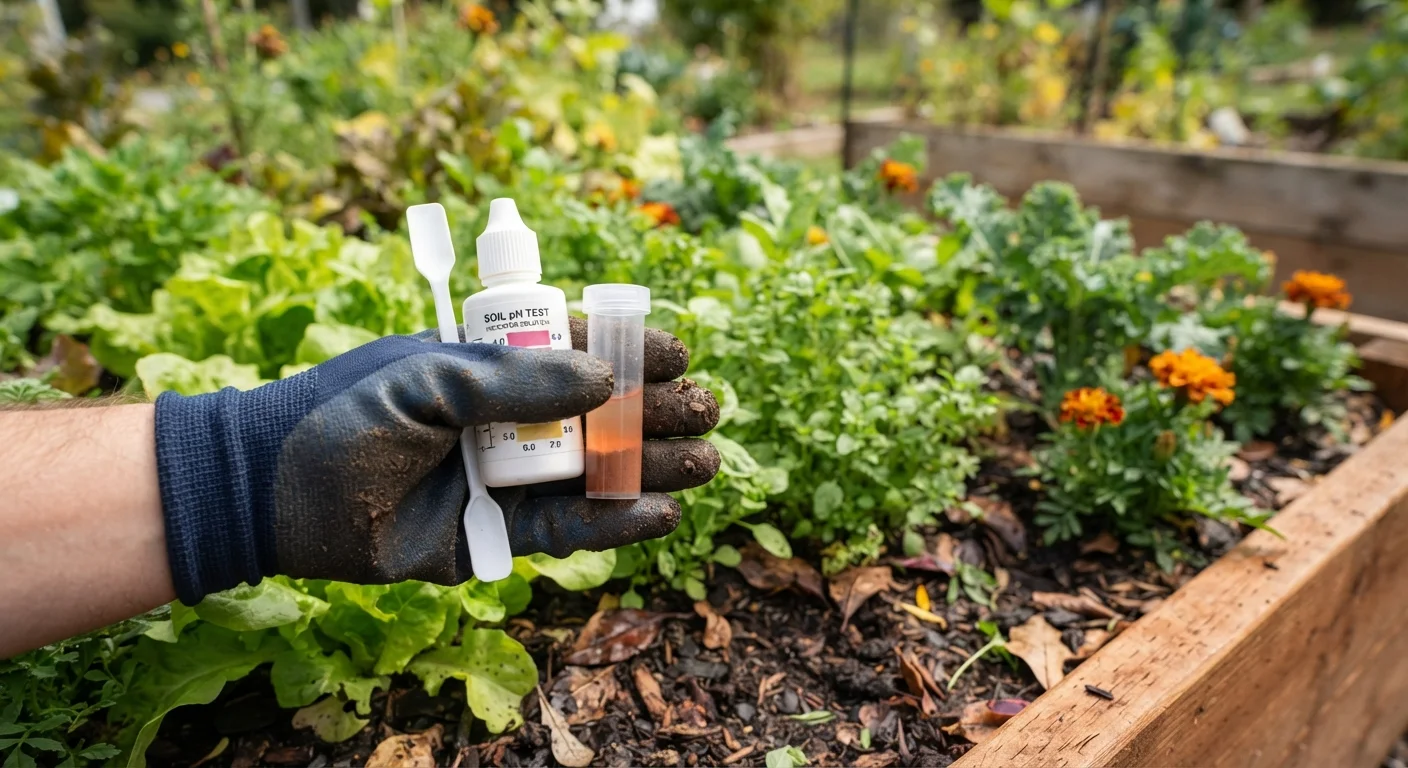
Testing is straightforward and inexpensive. Garden centers sell basic pH test strips and liquid kits. Digital pH meters, which you insert directly into moist soil, offer more precision. For the most comprehensive picture — one that includes nutrient levels alongside pH — consider mailing a sample to your state's cooperative extension service. Most land-grant universities offer this through local extension offices for a small fee, and the resulting report includes specific amendment recommendations for your soil type.
To get an accurate reading, collect samples from several spots in the same bed at a depth of 4 to 6 inches, mix them together, and test the combined sample. A single scoop from one corner can be misleading. Retest every two to three years, or after any major amendment, to track changes over time. If you're starting a vegetable garden from scratch, testing before you plant is one of the highest-value steps you can take.
Adjusting pH: Raising and Lowering
To raise pH (make soil less acidic): Ground limestone is the standard tool. It reacts slowly with soil, so fall application gives it time to work before spring planting. The amount needed varies by how far off your pH is and whether your soil is sandy or clay-heavy — clay soils require more lime to shift pH than sandy ones.
To lower pH (make soil less alkaline): Elemental sulfur is the most common choice. Soil bacteria convert it to sulfuric acid over time, which acidifies the soil. The process is gradual and most effective in warm, moist conditions. Incorporating organic matter — including finished compost — can also help modestly lower pH over time. Learn more about building soil health through composting at home.
In both cases, apply amendments in modest amounts and retest before adding more. Overcorrecting can create new problems. Large pH swings are stressful for plants and can take seasons to stabilize.
Test Before You Treat
Never apply lime or sulfur without first knowing your baseline pH. Guessing and over-amending is one of the most common soil mistakes homeowners make — and it can take multiple growing seasons to correct. A soil test costs a few dollars and gives you a precise starting point.
Plants With Specific pH Needs
While the 6.0–7.0 range suits most plants, some species are notably particular. Blueberries, azaleas, rhododendrons, and camellias thrive in acidic soil, typically between pH 4.5 and 5.5. Growing these in neutral or alkaline soil almost always results in poor growth and yellowing foliage, no matter how carefully you water and fertilize.
On the other end, asparagus, lavender, and many ornamental grasses tolerate or prefer slightly alkaline conditions. Knowing your plants' preferences before you amend is essential — it prevents unnecessary work and protects your soil biology.
If you're working with raised beds, you have more control over starting pH by choosing your soil mix carefully. Our overview of raised garden beds covers what to consider before building. The choice of mulch can also play a minor role — see our comparison of organic vs. inorganic mulch options for context.