

Key Takeaways
- Organic mulches decompose over time, adding nutrients and improving soil structure.
- Inorganic mulches last longer but do not contribute to soil health.
- Mulch depth, material, and placement all affect weed suppression and moisture retention.
- Vegetable gardens typically benefit most from organic options like straw or wood chips.
- Decorative areas or slopes may suit inorganic mulches such as gravel or landscape fabric.
Our Verdict
Neither organic nor inorganic mulch is universally better - the right choice depends on your garden's purpose, your soil goals, and how much upkeep you're prepared to do. Organic mulches gradually improve soil and suit most planting beds, while inorganic options offer durability with minimal ongoing work in areas where soil amendment isn't a priority.
| Best for | Recommended |
|---|---|
| Vegetable and annual flower beds | Organic mulch (straw or wood chips) |
| Paths, slopes, and decorative areas | Inorganic mulch (gravel or crushed stone) |
| Homeowners who want low long-term maintenance | Inorganic mulch (landscape fabric or rubber) |
| Those focused on soil improvement over time | Organic mulch (compost or aged bark) |
What Mulch Actually Does in a Garden
Mulch serves several practical functions regardless of its type: it slows moisture evaporation from soil, regulates soil temperature, and suppresses weed germination by blocking light. A 2-4 inch layer applied around plants - but kept a few inches away from stems and trunks - is the generally recommended depth for most garden applications.
The key distinction between mulch categories is what happens over time. Organic mulches are derived from once-living materials and break down gradually, feeding soil microbes and adding organic matter. Inorganic mulches are made from mineral or synthetic materials that remain largely unchanged for years. Understanding this difference is the foundation for choosing wisely.
If you're building a new growing space, see our guide to starting a vegetable garden from scratch for advice on soil preparation before you mulch.
Organic Mulch Options: Benefits and Limitations
Common organic mulches include wood chips, shredded bark, straw, grass clippings, pine needles, and compost. Each has a slightly different nutrient profile and decomposition rate, but they share the same core advantage: as they break down, they improve the soil underneath.
- Wood chips and shredded bark decompose slowly, making them a good fit for perennial beds and around trees and shrubs. Fresh wood chips can temporarily tie up nitrogen during decomposition, so a brief aging period is often recommended before use near vegetables.
- Straw is lightweight, affordable, and widely used in vegetable gardens. It breaks down within a season or two. Note that straw (dried stems) differs from hay (dried grass) - hay often contains seeds that can introduce new weeds.
- Grass clippings work well in thin layers; thick applications can mat and restrict airflow. Avoid clippings from lawns recently treated with herbicides.
- Compost does double duty as both mulch and soil amendment but tends to be pricier and breaks down quickly. Pairing it with a coarser mulch on top can extend its benefit. Learn more in our guide to composting at home.
The main drawback of organic mulch is that it requires periodic replenishment - typically once or twice a year - and can harbor slugs or other moisture-loving pests in damp climates.
Avoid Applying Mulch to Wet or Dry-Stressed Soil
For best results, apply mulch when soil is already moist - ideally after a good rain or watering session. Mulching over very dry soil can lock out moisture rather than retain it. Similarly, avoid mulching immediately after a heavy rain if the area is prone to waterlogging, as trapped moisture can contribute to root disease.
Inorganic Mulch Options: Benefits and Limitations
Inorganic mulches include gravel, crushed stone, river rock, landscape fabric, and recycled rubber. Their durability is the primary appeal - once installed, most inorganic mulches remain effective for several years without replenishment.
- Gravel and crushed stone drain well and are well-suited to rock gardens, pathways, and slopes where erosion is a concern. They can absorb heat during the day and radiate it at night, which may suit Mediterranean-climate plants but can stress moisture-sensitive ones in hot summers.
- Landscape fabric suppresses weeds by blocking light while allowing water through. However, over time, debris accumulates on the surface and weeds can root into the fabric itself, making removal difficult. It is generally more useful as a base layer beneath stone than as a standalone solution.
- Rubber mulch, typically made from recycled tires, is long-lasting and commonly used in playground areas. It does not improve soil and raises concerns among some gardeners about potential chemical leaching, particularly near edible plants. Its use in food gardens is a debated topic, and many extension services recommend caution.
The tradeoff with inorganic materials is that they provide no nutritional benefit to plants. Soil health must be managed through other means, such as periodic fertilization or amendment. For gardens on raised beds, raised bed considerations may also affect your mulch choice.
| Wood Chips / Bark | Straw | Gravel / Stone | Landscape Fabric | Rubber Mulch | |
|---|---|---|---|---|---|
| Improves soil over time | Yes | Yes | No | No | No |
| Weed suppression | Good | Moderate | Good | Good | Good |
| Moisture retention | Good | Good | Moderate | Moderate | Moderate |
| Longevity before replenishment | 1-3 years | 1 season | 5+ years | 2-5 years | 5+ years |
| Best suited for | Trees, shrubs, beds | Vegetable gardens | Paths, slopes | Under stone | Playgrounds |
| Upfront cost (general range) | Low-moderate | Low | Moderate-high | Low | Moderate-high |
Matching Mulch to Your Garden's Needs
The most practical approach is to match the mulch to the function of the planting area rather than treating the whole yard the same way.
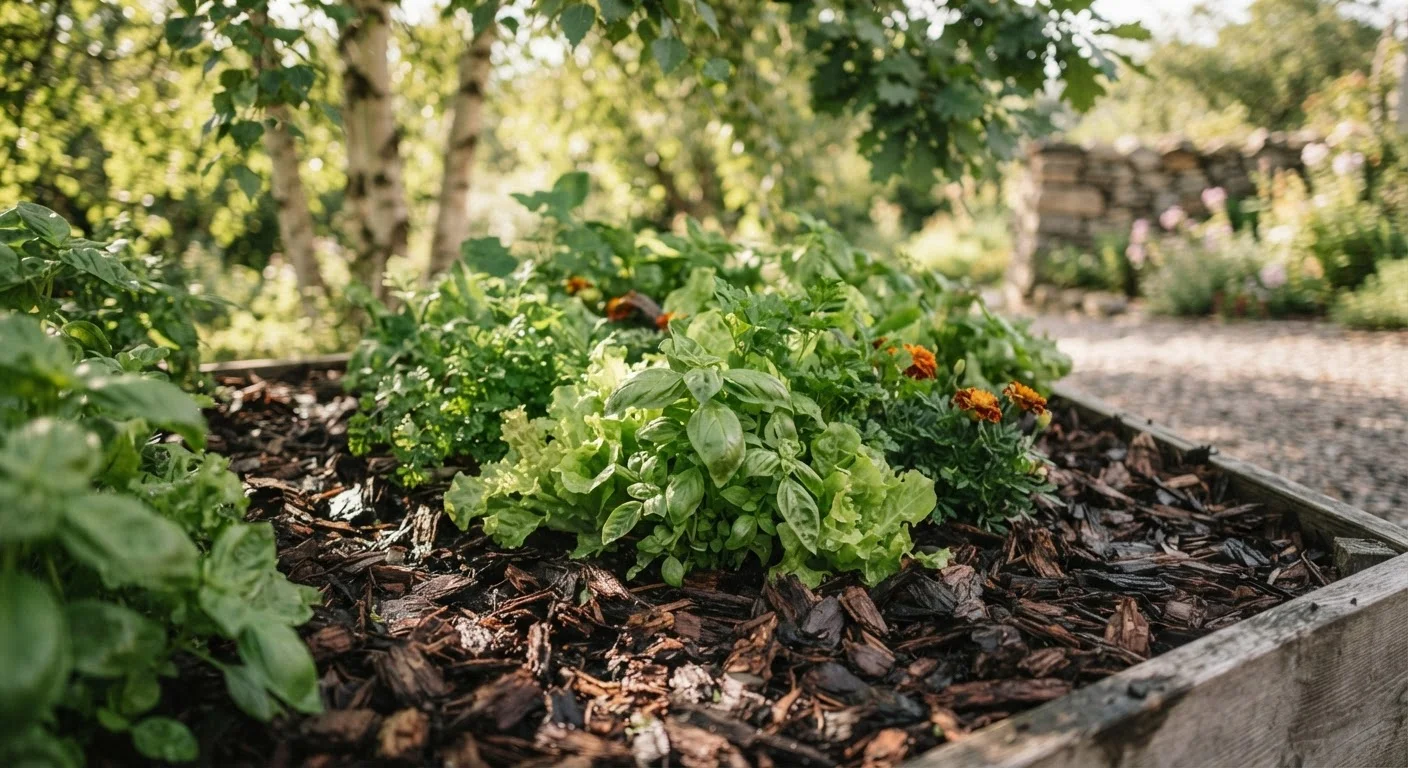
For vegetable gardens and annual beds, organic mulch is generally the stronger choice. Soil improvement is an ongoing need, and annual turnover of the bed gives you a natural opportunity to replenish the mulch. Straw and wood chips are common, cost-effective picks. Keep an eye on soil pH if you use pine needles, which can be mildly acidic over time.
For perennial borders, foundation plantings, and trees, shredded bark or wood chips layered 3 inches deep offer long-lasting coverage with less frequent replacement. Avoid piling mulch directly against plant stems or tree trunks, sometimes called "volcano mulching," which can encourage rot and pest damage.
For paths, driveways, and decorative zones, gravel or crushed stone provides a stable, attractive surface with minimal upkeep. Pair it with landscape fabric underneath for added weed control.
Mulch also plays a useful role at the close of the growing season. See our end-of-season garden checklist for guidance on winterizing your beds with the right materials.