

Key Takeaways
- Match highway traffic speed on the on-ramp before merging - never slow down at the merge point.
- The three-second rule is the minimum safe following gap at highway speeds; extend it in poor conditions.
- The left lane is for passing, not cruising - returning to the right after overtaking reduces conflict and crash risk.
- Blind spots grow significantly at high speeds; check mirrors frequently and use head checks before changing lanes.
- Consistent lane discipline reduces rear-end crashes and makes your behaviour predictable to other drivers.
Start here
Why Highway Driving Demands Different Skills
Next
Merging onto the Highway
Then
Following Distance at Speed
Deepen your skills
Lane Discipline on Multi-Lane Roads
Bring it together
Putting It All Together
Why Highway Driving Demands Different Skills
City driving is reactive - stop signs, pedestrians, and traffic lights constantly slow the flow. Highway driving is different: speeds are high, gaps close fast, and errors have far less time to correct. A mistake that might be a minor fender-bender at 25 mph becomes a serious crash at 70 mph because kinetic energy increases with the square of speed.
Most highway crashes fall into three categories: improper merging, insufficient following distance, and poor lane management. Understanding each one - and building the habits to avoid them - is the foundation of confident, safer highway travel. For a broader framework, see defensive driving principles that apply across all road types.
Three-second rule
A method for measuring following distance: count at least three seconds between when the car ahead passes a fixed point and when you reach the same point.
Blind spot
The area beside and slightly behind your vehicle that mirrors do not fully cover. A head-check - physically glancing over your shoulder - is needed to confirm it is clear.
On-ramp
The acceleration lane that connects a surface road to a highway, designed to let you build speed before joining highway traffic.
Lane discipline
The practice of staying in the correct lane for your speed and purpose - typically the right lane for travel, left only for passing - to keep traffic predictable and flowing.
Stopping distance
The total distance a vehicle travels from the moment a hazard is spotted to when the vehicle comes to a full stop, including both reaction time and braking distance.
Kinetic energy
The energy a moving vehicle carries. It increases with the square of speed, meaning a car at 60 mph carries four times the energy of the same car at 30 mph - making crashes far more severe at highway speeds.
Merging onto the Highway
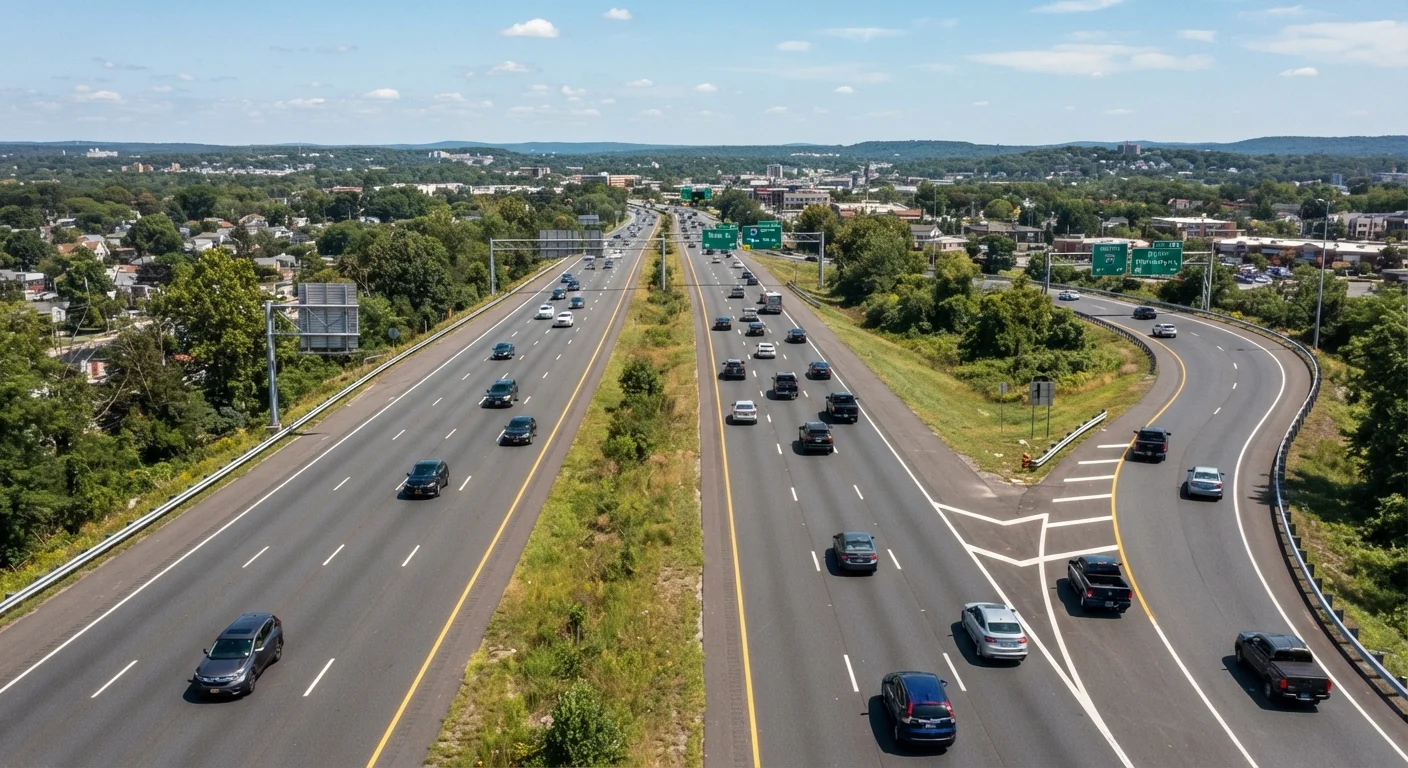
The on-ramp exists for one purpose: to give you enough distance to match highway traffic speed before joining it. Many drivers make the mistake of treating the merge point as a yield sign and arriving at low speed, forcing highway drivers to brake or swerve around them. That disruption at 65+ mph is a significant crash trigger.
The correct merging sequence
- Accelerate progressively along the full length of the ramp - don't hold back speed in reserve.
- Signal early so drivers in the right lane know your intention.
- Find a gap in traffic that gives you at least three or four seconds of clearance, using your mirrors and a quick head-check over your right shoulder.
- Blend in smoothly at the same speed as surrounding traffic - no sudden braking once you cross the white line.
If the ramp is short or merging traffic is heavy, it may be necessary to briefly yield at the end of the ramp - but this should be a last resort, not a first move. Also note: distraction is a major contributor to merge errors. Distracted driving habits are particularly hazardous during the active attention demands of merging.
Following Distance at Speed
The three-second rule is the standard minimum following gap taught in US driver education. Choose a stationary roadside object - a sign, overpass, or mile marker - and count the seconds between when the vehicle ahead passes it and when your front bumper reaches the same point. Fewer than three seconds means you are following too closely.
Increase Your Gap in Bad Conditions
Three seconds is the clear-weather minimum on dry pavement. In rain, reduce speed and extend your gap to at least four seconds. In fog or icy conditions, five or more seconds may still not feel like enough - slow down further and prioritise a safe gap over keeping pace with surrounding traffic.
Why three seconds? At 65 mph you cover about 95 feet per second. Add a typical reaction time of 1.5 seconds before your foot even reaches the brake, and you need well over 200 feet just to begin slowing. In rain, fog, or at night, four to five seconds is more appropriate - conditions that significantly extend stopping distance. Night driving visibility explains how reduced sight lines change the equation further. Tailgating is the single most common factor in rear-end crashes on US interstates. It also pressures the driver ahead, creating a chain reaction of braking that can cascade through dozens of vehicles.
Lane Discipline on Multi-Lane Roads
Most US highways use a straightforward convention: right lanes for travel, left lane for passing. Yet left-lane camping - driving continuously in the left lane at or below traffic speed - is a persistent problem that forces faster-moving drivers to pass on the right, which is statistically less safe and in many states a traffic violation.
Core lane discipline habits
- Keep right unless overtaking. After you complete a pass, signal and return to the right lane.
- Check mirrors every 5-8 seconds. At highway speeds your surroundings change quickly; a static mirror check is already outdated by the time you look away.
- Use the full signal-mirror-head-check sequence before every lane change. Blind spots at highway speed can conceal a vehicle that wasn't visible moments ago.
- Avoid weaving between lanes. Multiple lane changes in quick succession reduce your predictability to other drivers and compress the margin for error.
Modern vehicles increasingly include lane-keeping assist and lane centering systems. Understanding what these systems do - and where they fall short - matters. Lane keeping assist vs. lane centering breaks down how each technology intervenes and why neither replaces attentive lane discipline.
Putting It All Together
Safe highway driving is less about individual manoeuvres and more about consistent, predictable behaviour. Drivers who merge at speed, maintain generous following gaps, and stay right except to pass create a calmer, more readable traffic environment - which benefits everyone around them, not just themselves.
Before a long highway journey, a thorough vehicle check is also worth the time. A pre-trip safety check covers tyres, brakes, fluids, and other factors that affect how your car responds in demanding highway conditions. And if you drive in variable weather, driving in adverse weather outlines how each condition changes what following distance and lane choices you need.
Highway confidence comes with deliberate practice. Start by focusing on one habit at a time - perhaps following distance this week, then lane discipline the next. Small, consistent improvements compound into meaningfully safer driving over time.