

Automotive

Before a Long Road Trip: A Safety Check Rundown

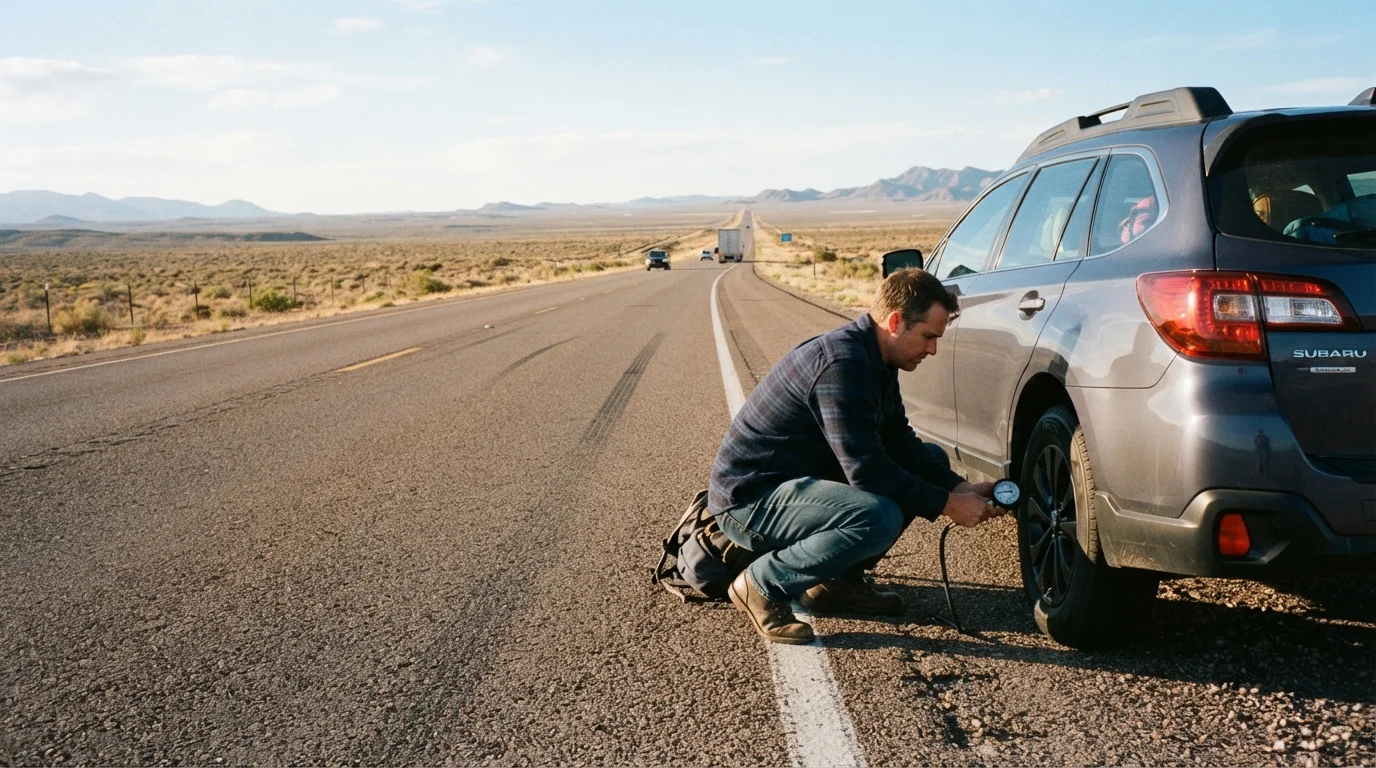
Driver kneeling beside a car tire checking tire pressure before a long road trip.

Key Takeaways

  • Tires, fluids, brakes, and lights are the four systems most likely to cause roadside trouble on long trips.
  • A fully stocked emergency kit can be the difference between a minor inconvenience and a dangerous situation.
  • Driver readiness — rest, medications, and route familiarity — matters as much as vehicle condition.
  • Address any active dashboard warning lights before departure, not during the trip.
  • Plan fuel and rest stops in advance, especially for remote or unfamiliar routes.
30–60 min

Summary

22 items · 30–60 minutes

Why a Pre-Trip Check Is Worth Every Minute

Long highway miles expose weaknesses that city driving tends to hide. A tire that's slightly underinflated feels fine at 35 mph but becomes a stability risk at 70. A coolant level that's been low for weeks becomes an overheating engine three hours from home. The goal of a structured pre-trip inspection isn't paranoia — it's catching small, easy-to-fix problems before they become expensive or dangerous ones.

This checklist is organized into vehicle systems, safety gear, and driver readiness. Work through it at least one full day before your departure so you have time to address anything that comes up. For a deeper look at routine upkeep across all major systems, see our comprehensive car maintenance guide.

Tires

Check tire pressure on all four tires (including the spare) using a calibrated gauge and inflate to the PSI listed on the driver's door jamb sticker — not the number on the tire sidewall. Must
Inspect each tire's tread depth using a penny — if Lincoln's head is fully visible, the tread is below the safe threshold and the tire should be replaced before the trip. Must
Look for sidewall bulges, cracking, or embedded objects (nails, screws) that could cause a blowout at highway speed. Must
Confirm the spare tire is inflated and that you have a working jack and lug wrench accessible in the vehicle. Should

Fluids

Check engine oil level with the dipstick when the engine is cold; top off or schedule an oil change if you're within 1,000 miles of your interval. Must
Verify coolant (antifreeze) level in the overflow reservoir is between the MIN and MAX marks — never open the radiator cap on a hot engine. Must
Check brake fluid, power steering fluid (if applicable), and windshield washer fluid levels and top off as needed. Should
Inspect the transmission fluid level if your vehicle has a user-accessible dipstick — low transmission fluid is a common contributor to highway breakdowns. Should

Lights and Visibility

Test all exterior lights — headlights (low and high beam), taillights, brake lights, turn signals, and reverse lights — with a helper or by using reflections. Must
Replace any cracked or hazy headlight lenses or burnt bulbs before departure, as these significantly reduce nighttime visibility. Must
Check windshield wiper blades for streaking or skipping and replace if they're more than a year old or visibly worn. Should

Brakes and Steering

Listen for squealing, grinding, or pulsing sensations during normal braking in the days before your trip — these are signs that brake pads or rotors may need professional inspection. Must
Confirm the steering wheel doesn't pull to one side and that there's no vibration at highway speeds, which can indicate alignment or balancing issues. Should

Emergency Kit

Pack a roadside emergency kit including jumper cables (or a jump-start power pack), reflective triangles or road flares, a flashlight with fresh batteries, and basic hand tools. Must
Include a first aid kit stocked with bandages, antiseptic wipes, adhesive tape, pain relievers, and any personal prescription medications needed for the journey. Must
Store water (at least one gallon per person), non-perishable snacks, a phone charger, and a paper map as backup for areas with poor cell coverage. Should
Keep a blanket, rain poncho, and work gloves in the trunk — especially important for cold-weather or remote-route travel. Nice to have

Driver and Passenger Readiness

Get a full night's sleep before any drive over three hours — drowsy driving is a leading contributor to highway crashes and impairs reaction time comparably to alcohol. Must
Plan rest stops every two hours or 100 miles regardless of how alert you feel, and rotate drivers if traveling with someone who is licensed. Must
Review any medications you're taking for drowsiness side effects and consult a pharmacist or physician if you're unsure whether a medication is safe for highway driving. Should
Save your route, destination address, and emergency contact numbers offline or on paper in case you lose cell service en route. Should

What Tools and Resources You'll Need

Most of these checks require no special equipment beyond what's standard in most garages. A few items will make the process faster and more accurate.

Required

Tire pressure gauge

Provides an accurate PSI reading for each tire — digital models are easier to read than dial types.

Required

Penny (for tread depth check)

A quick, no-cost method to verify whether tire tread depth meets the minimum safe threshold.

Required

Flashlight or work light

Lets you inspect under the hood, check fluid levels, and examine tires in low-light conditions.

Optional

Portable jump-start power pack

Allows a solo driver to restart a dead battery without needing another vehicle nearby.

Required

Vehicle owner's manual

Confirms the correct tire PSI, fluid specifications, and maintenance intervals for your specific make and model.

Optional

Roadside assistance app or card

Provides access to towing, flat-tire service, and emergency fuel delivery if a problem arises on the road.

Dashboard Lights, Weather, and Highway Habits

Before you leave the driveway, glance at your instrument cluster. Any illuminated warning light deserves attention before a long drive — not a mental note for later. Our guide to reading dashboard warning lights explains which symbols are urgent and which can safely wait.

If your route includes mountain passes, coastal areas, or regions with variable weather, review the road conditions in advance. Driving in adverse weather is a genuinely different skill set, and preparation should match your itinerary. Similarly, high-speed merging and lane discipline on multi-lane interstates require deliberate habits — highway driving safety principles are worth reviewing if you'll be on unfamiliar freeways.

Don't Ignore Active Warning Lights

A check-engine light, tire pressure warning, or brake system alert should be diagnosed by a qualified mechanic before a long drive — not monitored en route. Some warnings indicate conditions that can escalate rapidly at highway speeds. If a new light comes on during your pre-trip checks, pause your departure and have it evaluated.

Finally, don't overlook the non-automotive side of trip prep. For a broader departure checklist covering home, documents, and communications, the pre-trip checklist every traveler should run is a useful companion to this one.

Automotive Editorial Team is the collective byline for our editorial team and contributor network. Articles published under this byline or an editorial pen name are researched, written, and reviewed according to our editorial standards for clarity, consistency, and independence before publication.

View all articles by Automotive Editorial Team →
Disclaimer: The content provided on our blog site traverses numerous categories, offering readers valuable and practical information. Readers can use the editorial team’s research and data to gain more insights into their topics of interest. However, they are requested not to treat the articles as conclusive. The website team cannot be held responsible for differences in data or inaccuracies found across other platforms. Please also note that the site might also miss out on various schemes and offers available that the readers may find more beneficial than the ones we cover.