

| Warning light colors | Red (stop), Amber (caution), Green/Blue (status) |
| OBD-II required since | 1996 (all US passenger vehicles) (US EPA mandate) |
| TPMS required since | 2008 (all new US passenger vehicles) (TREAD Act, NHTSA) |
| Flashing vs. steady check engine | Flashing = urgent; steady = schedule service soon |
| Tire pressure reference location | Driver's door jamb sticker (not tire sidewall) |
| Oil pressure light action | Stop engine promptly; do not continue driving |
Warning Light Colors: The First Thing to Read
Before decoding individual symbols, understand the color-coding system built into every modern dashboard. It works like a traffic light, but with three tiers of urgency.
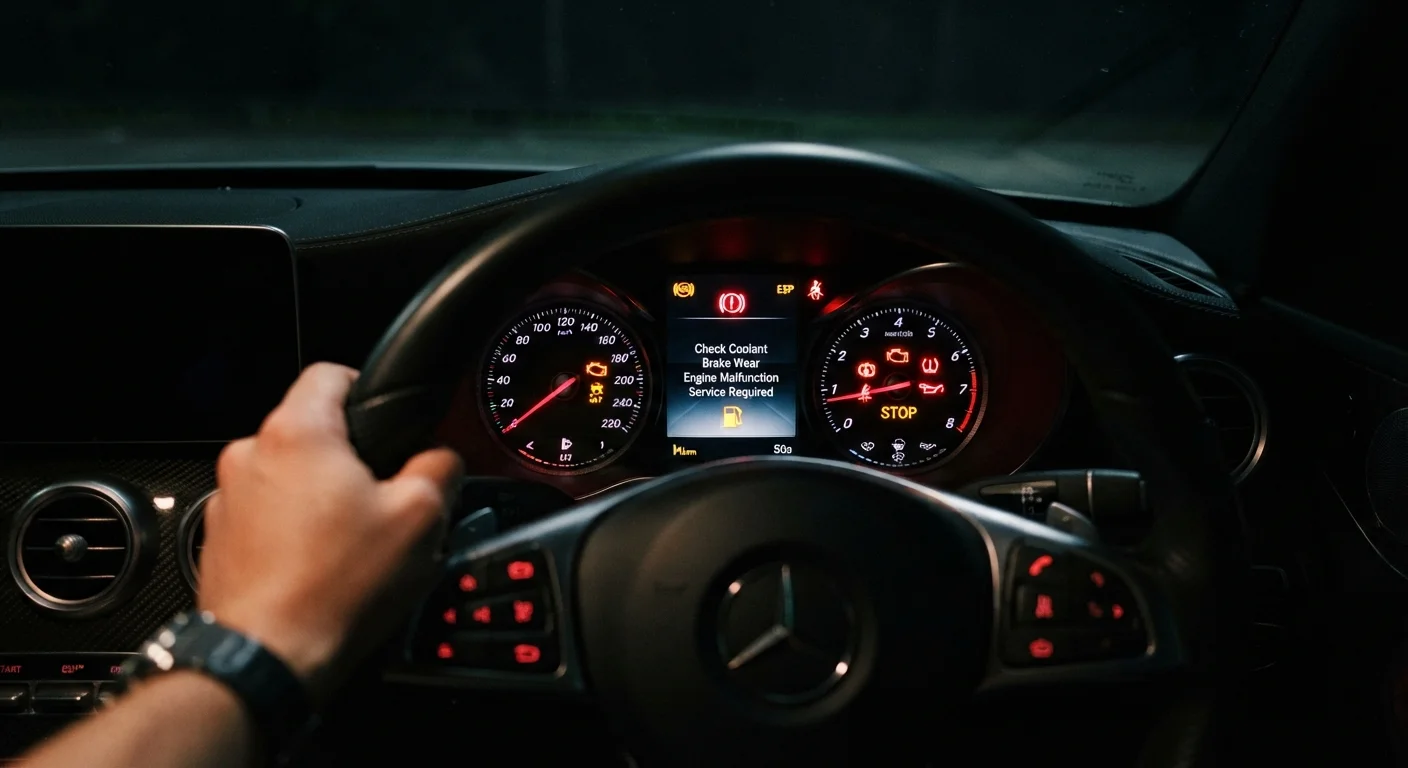
- Red - Stop-level alert. A red light typically signals an active or imminent safety risk: low oil pressure, overheating engine, brake system failure, or an open door at speed. When a red light appears, find a safe place to stop as soon as practical and assess the situation before continuing.
- Amber/Yellow - Caution required. Something needs attention, but immediate stopping is generally not required. Examples include a check engine light, low fuel, or tire pressure warning. These warrant a professional inspection soon - not someday.
- Green/Blue - Status indicators. These confirm a system is active, such as high beams, turn signals, or cruise control. No action needed unless you intended to turn a feature off.
This color framework applies across virtually all vehicles sold in the US market, though the specific symbols vary. Your owner's manual remains the definitive reference for your exact make and model.
| Warning light colors | Red (stop), Amber (caution), Green/Blue (status) |
| OBD-II required since | 1996 (all US passenger vehicles) (US EPA mandate) |
| TPMS required since | 2008 (all new US passenger vehicles) (TREAD Act, NHTSA) |
| Flashing vs. steady check engine | Flashing = urgent; steady = schedule service soon |
| Tire pressure reference location | Driver's door jamb sticker (not tire sidewall) |
| Oil pressure light action | Stop engine promptly; do not continue driving |
The Lights You're Most Likely to See
Some warning lights appear far more frequently than others. Here's what the most common ones actually mean - and how urgently to respond.
Check Engine (Amber)
This is the most misunderstood light on the road. A steady check engine light could mean anything from a loose gas cap to a failing catalytic converter. A flashing check engine light is more serious - it typically indicates active misfiring that can damage the catalytic converter. A flashing light warrants prompt service; a steady light warrants a scan within a few days. An OBD-II scanner (available at most auto parts stores or a mechanic's shop) reads the stored fault codes and tells you exactly what triggered it.
Oil Pressure Warning (Red)
This light - usually resembling a small oil can - signals that oil pressure has dropped below safe operating levels. Do not keep driving. Low oil pressure means internal engine components may not be receiving adequate lubrication, and engine damage can occur within minutes. Pull over safely, shut off the engine, and check the oil level. Low level may be the cause; if the level is normal and the light remains, the issue may be a failing oil pump or sensor - both require professional diagnosis.
Temperature Warning (Red)
An overheating engine can cause serious, expensive damage quickly. If this light appears, turn off the air conditioning (which adds engine load), pull over safely, and let the engine cool before opening the hood. Never open the radiator cap on a hot engine. See our guide to DIY vs. shop repairs for context on when cooling system work calls for a professional.
Brake Warning (Red)
This can mean the parking brake is engaged, brake fluid is low, or there's a hydraulic fault in the braking system. If the parking brake is off and the light remains, check your brake fluid level. A drop in fluid often indicates a leak or worn brake pads. Deferred brake service rarely stays cheap - address this promptly.
Tire Pressure (TPMS) Warning (Amber)
The tire pressure monitoring system triggers when one or more tires falls significantly below the recommended PSI. Under-inflated tires affect handling, braking distance, and fuel economy. Check all four tires with a gauge and inflate to the pressure listed on the sticker inside your driver's door jamb - not the maximum printed on the tire sidewall. For a broader look at tire condition, see tire safety fundamentals.
Battery Warning (Red/Amber)
A battery symbol usually means the charging system isn't keeping the battery topped up. This could be a failing alternator, a loose belt, or a weak battery. You may have limited driving range before the car loses power entirely. Head to a shop promptly rather than hoping it resolves itself.
OBD-II
On-Board Diagnostics II - a standardized system built into all US vehicles sold after 1996 that monitors engine and emissions performance. When a fault is detected, it stores a diagnostic trouble code (DTC) that can be read with an OBD-II scanner.
TPMS
Tire Pressure Monitoring System - a sensor-based system that alerts the driver when tire pressure drops significantly below the manufacturer's recommended level. Required on all new passenger vehicles sold in the US since 2008.
Catalytic Converter
An emissions control device in the exhaust system that converts harmful combustion gases into less harmful compounds. Engine misfires can overheat and damage it, which is why a flashing check engine light is treated with extra urgency.
Oil Pressure
The force with which engine oil is circulated through internal engine components. Adequate pressure ensures lubrication of moving parts; a drop in pressure can cause rapid and severe engine wear.
Alternator
A generator driven by the engine belt that recharges the battery while the car is running. A failing alternator causes the battery warning light to appear and can leave you stranded if not addressed.
DTC (Diagnostic Trouble Code)
A standardized alphanumeric code stored by the vehicle's onboard computer when a fault is detected. Technicians and OBD-II scanners use these codes to identify the system or component triggering a warning light.
Applying This Knowledge Before and After Trips
Warning lights become most valuable when you know how to act on them - not just what they represent. A few practical habits help:
- Do the key-on check. When you first turn the ignition to the on position (before starting), most warning lights should briefly illuminate as a self-test, then go off. Any light that stays on after the engine starts is worth noting.
- Don't rely on memory alone. Keep your owner's manual in the glove compartment, or download your manufacturer's app - many include a warning light lookup tool.
- Log when a light appeared. Knowing the circumstances (cold start, after a fill-up, during highway driving) helps a mechanic diagnose faster and more accurately.
If you're heading out on a longer drive, a pre-trip vehicle check can catch issues before warning lights become necessary. Our road trip safety check guide walks through what to inspect before hitting the highway. And if you're evaluating a used car or thinking about overall ownership costs, understanding what warning lights signal about a vehicle's condition is a useful lens - the car ownership costs hub covers those broader financial implications.