

| Legal tread minimum (most U.S. states) | 2/32 inch (NHTSA standard) |
| Recommended replacement threshold (wet conditions) | 4/32 inch (Industry safety guidance) |
| Pressure check timing | Cold tire (parked 3+ hours or driven under 1 mile) |
| Pressure spec location | Driver's door jamb sticker or owner's manual |
| TPMS required on new U.S. vehicles since | 2008 (NHTSA mandate) |
| Maximum recommended tire age | 10 years from manufacture date (Per most manufacturer guidelines) |
Why Tire Condition Is a Safety Priority
Every handling input - braking, steering, accelerating - is transmitted through four palm-sized patches of rubber where each tire meets the road. When those contact patches are compromised by worn tread or incorrect pressure, a driver's ability to control the vehicle in an emergency drops significantly. The National Highway Traffic Safety Administration (NHTSA) has consistently linked tire-related factors to thousands of crashes annually in the United States.
Understanding what to look for, and acting on it, is one of the most direct steps any driver can take to improve road safety. This reference covers the two most important variables: tread depth and inflation pressure. For a broader look at vehicle upkeep, see the Car Maintenance from the Ground Up guide.
| Legal tread minimum (most U.S. states) | 2/32 inch (NHTSA standard) |
| Recommended replacement threshold (wet conditions) | 4/32 inch (Industry safety guidance) |
| Pressure check timing | Cold tire (parked 3+ hours or driven under 1 mile) |
| Pressure spec location | Driver's door jamb sticker or owner's manual |
| TPMS required on new U.S. vehicles since | 2008 (NHTSA mandate) |
| Maximum recommended tire age | 10 years from manufacture date (Per most manufacturer guidelines) |
Tread Depth: The Numbers That Matter
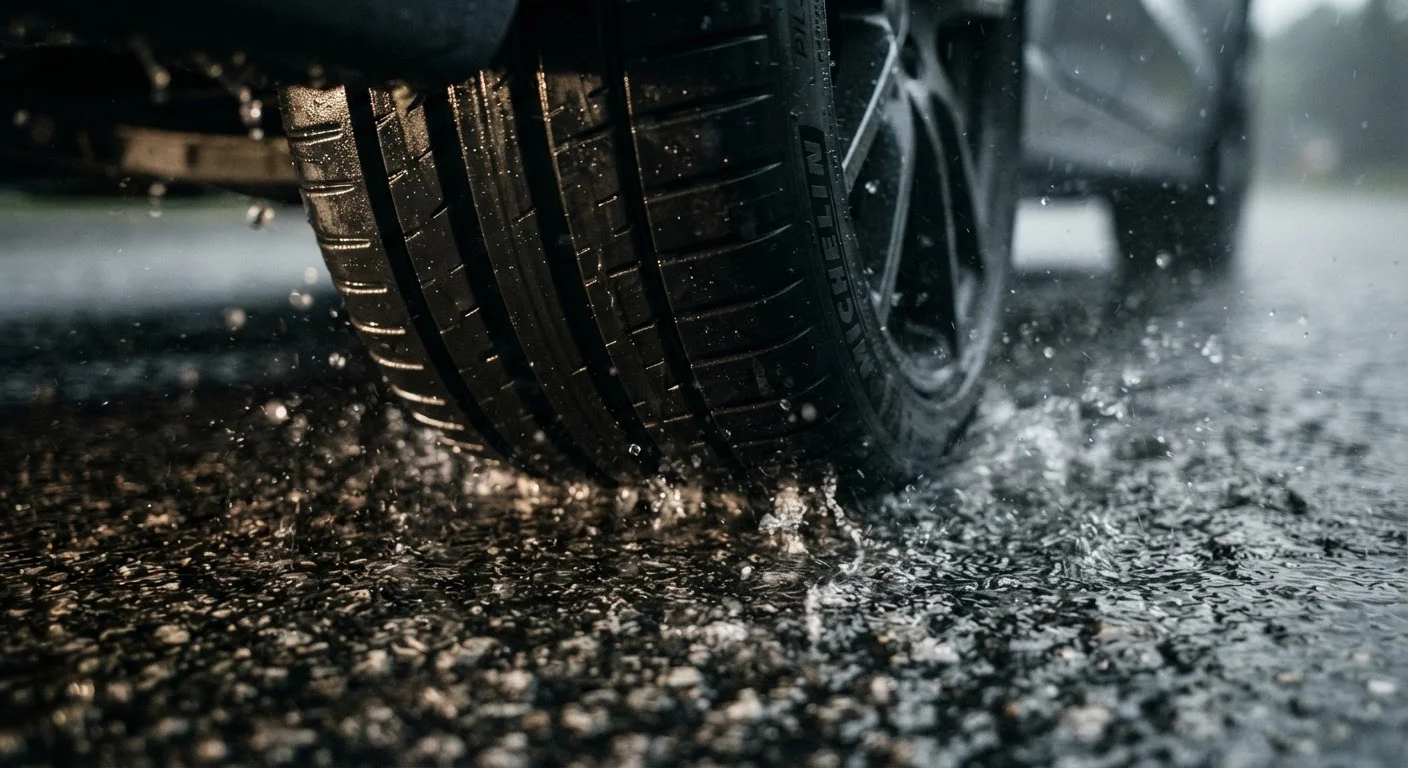
Tire tread channels water away from the contact patch, maintaining grip on wet roads. As tread wears down, that water-evacuation capacity shrinks - and so does your margin of safety.
Tread depth
The measurement from the top of the tire's rubber tread to the bottom of its deepest grooves. Adequate depth is essential for channeling water away from the contact patch on wet roads.
TPMS
Tire Pressure Monitoring System - a federal requirement on all new U.S. passenger vehicles since 2008 that alerts the driver when one or more tires drops significantly below recommended pressure.
DOT code
A standardized alphanumeric code molded into every tire's sidewall, including a manufacture date that tells you the week and year the tire was produced.
Tread wear indicators
Raised bars molded into the grooves of a tire at the 2/32-inch level. When these bars are flush with the surrounding tread surface, the tire has reached its legal wear limit.
Contact patch
The small area of each tire that is actually in contact with the road at any given moment. All braking, steering, and acceleration forces are transmitted through these four patches.
Sidewall bulge
A visible bubble or protrusion on the tire's sidewall caused by internal structural damage, typically from impact with a pothole or curb. A bulging tire is at high risk of sudden failure and must be replaced.
Legal Minimum vs. Safe Minimum
In most U.S. states, the legal minimum tread depth is 2/32 of an inch. However, safety testing consistently shows that braking performance - especially on wet pavement - degrades noticeably before tires reach that legal limit. Many tire safety organizations recommend replacing tires at 4/32 inch for drivers in wet climates, and some recommend that threshold for all drivers.
How to Measure Tread Depth
- Penny test: Insert a penny into the tread groove with Lincoln's head pointing down. If you can see all of Lincoln's head, the tire is at or below 2/32 inch - replace immediately.
- Quarter test: Use a quarter the same way. If Washington's head is fully visible, tread is at or below 4/32 inch - replacement should be planned soon.
- Tread wear indicators: Molded bars in the grooves of most modern tires become flush with surrounding tread at 2/32 inch. Visible bars mean the tire is legally worn out.
- Depth gauge: An inexpensive dial or digital gauge gives a precise reading in 32nds of an inch and removes guesswork.
Check tread depth at multiple points across the tire width. Uneven wear - heavier on one edge than the other - can signal alignment or inflation problems that should be addressed alongside the tires themselves.
Tire Pressure: Staying Within the Recommended Range
Tire pressure affects everything from fuel efficiency to handling response to how evenly tread wears. Both underinflation and overinflation create problems - neither extreme is safe.
Finding the Right Pressure for Your Vehicle
The correct tire pressure for your vehicle is listed on the driver's door jamb sticker or in the owner's manual - not on the tire sidewall, which shows the maximum pressure the tire can hold, not the recommended operating pressure. Front and rear tires sometimes carry different recommended values.
Underinflation Risks
An underinflated tire flexes more than designed, generating excess heat. Over time, this degrades the internal structure and can lead to a blowout. Underinflated tires also reduce fuel economy and cause the outer tread edges to wear faster than the center.
Overinflation Risks
Overinflated tires carry too much load on the center of the tread, causing premature center wear and a harsher ride. They're also more susceptible to damage from road hazards because the sidewall has less give.
Check pressure when tires are cold - meaning the vehicle has been parked for at least three hours or driven fewer than a mile at low speed. Heat from driving temporarily raises pressure and will produce a misleadingly high reading. If your TPMS (Tire Pressure Monitoring System) warning light comes on, see what that warning means and how urgent it is.
When to Replace: Beyond Tread Depth
Tread depth is the most common reason to replace tires, but it isn't the only one. Age, visible damage, and structural changes are equally valid grounds for replacement.
Spare Tires Need Inspection Too
Compact spare tires (often called 'donut' spares) are typically rated for limited speed and distance - check your owner's manual for restrictions. Full-size spares can develop age-related degradation just like mounted tires. Include your spare in your routine pressure and condition checks so it's ready when you actually need it.
Age-Related Degradation
Rubber compounds break down over time due to UV exposure, ozone, and heat cycles - even on tires that haven't been driven heavily. Most tire manufacturers and safety bodies suggest inspecting tires older than five years closely and replacing them by ten years from the manufacture date regardless of tread depth. The manufacture date is encoded in the last four digits of the DOT code on the sidewall: the first two digits are the week, the last two are the year (e.g., 2319 = 23rd week of 2019).
Visible Damage to Replace Immediately
- Sidewall bulges or bubbles (internal structural failure)
- Deep cuts, punctures, or embedded objects in the sidewall
- Tread separation or visible belt edges
- Cracks in the sidewall deep enough to expose internal cords
A puncture in the tread area may be repairable by a qualified tire technician if it's within the central three-quarters of the tread and no larger than 1/4 inch in diameter. Sidewall damage is generally not repairable - replacement is required. Before a long drive, run through these checks as part of a broader readiness review: our pre-road-trip safety check rundown covers tires and more.