

Key Takeaways
- Air filters, cabin filters, and wiper blades are genuinely DIY-friendly tasks requiring no special tools.
- Brake system work, suspension repairs, and airbag-related jobs carry real safety risks and typically require a professional.
- Labor costs typically account for 50-80% of a repair bill, so knowing which jobs to DIY can meaningfully reduce ownership costs.
- Modern vehicles with advanced driver-assistance systems often require professional calibration after certain repairs.
- Keeping a maintenance log helps both DIYers and shops track what's been done and avoid duplicating work.
Our Verdict
DIY maintenance makes sense for simple, low-risk tasks where the tools are affordable and the margin for error is wide. Professional service is the right call when safety systems, specialized equipment, or vehicle warranties are involved. The smartest approach is knowing clearly which category each job falls into before you start.
| Best for | Recommended |
|---|---|
| Cost-conscious owners comfortable with basic mechanical work | DIY Maintenance |
| Brake, suspension, or advanced electronics work | Professional Shop |
| Owners of newer vehicles with ADAS or active safety systems | Professional Shop |
| Routine consumables like filters, wiper blades, and bulbs | DIY Maintenance |
The Real Cost Equation
Every car owner eventually faces a choice: learn to do it yourself or hand the keys to a mechanic. The financial math looks simple on the surface - skip the labor, pay only for parts. But the true equation includes your time, your tools, the risk of mistakes, and the real complexity of the job.
Labor typically represents 50-80% of most repair bills, which means tackling the right jobs yourself can genuinely reduce car ownership costs. The critical word is right. Overreaching on a job that demands professional equipment or training doesn't save money - it often costs more when a shop has to undo and redo the work.
Understanding this divide is foundational. For a structured look at the full scope of what your vehicle needs, car maintenance from the ground up covers every major system and its service requirements.
50-80%
Labor share of a typical repair bill
Industry estimates consistently place labor at the majority of most automotive repair invoices, highlighting where DIY can reduce costs.
~$300
Average annual savings from basic DIY tasks
AAA has estimated that routine DIY maintenance such as air filters, wiper blades, and fluids can save a typical driver several hundred dollars per year.
Tasks That Are Genuinely DIY-Friendly
A handful of maintenance items are well within reach for most car owners with basic mechanical comfort and a few common tools.
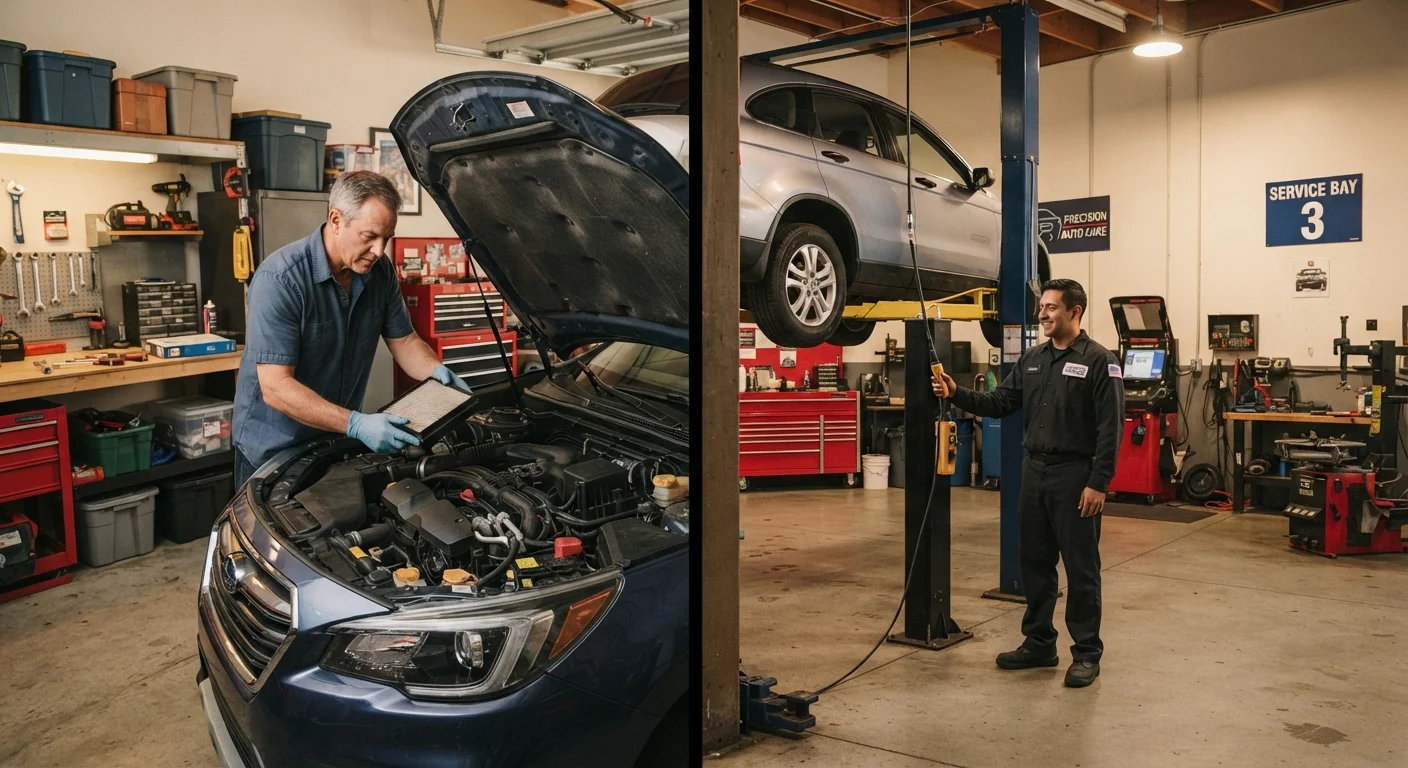
- Engine air filter replacement: Typically held in place by clips or a few screws. Most filters take under 10 minutes to swap and require no special tools.
- Cabin air filter: Usually accessible behind the glove box or under the dashboard. Manufacturer intervals vary, but replacement is straightforward.
- Wiper blades: Almost universally a tool-free task. Most blades simply clip onto the arm.
- Exterior bulbs: Headlight and taillight bulbs on many vehicles are accessible without removing bumpers or panels - though some modern designs do require professional access.
- Tire pressure checks and top-ups: A basic tire gauge costs a few dollars and takes two minutes.
- Fluid top-offs: Windshield washer fluid and, in many vehicles, coolant and power steering fluid can be topped off at home. Always use the type specified in your owner's manual.
It's worth keeping a maintenance log for every job you complete at home - it protects your warranty record and helps shops diagnose issues faster.
Start With Your Owner's Manual
Before attempting any maintenance task, consult your vehicle's owner's manual. It specifies fluid types, filter part numbers, torque specs, and service intervals unique to your make and model. A $5 mistake in fluid type can cost thousands in repairs. Manufacturer guidance always takes precedence over generic online advice.
Where the Line Falls: Jobs for a Professional
Some repairs look approachable but carry consequences that make professional involvement genuinely important.
- Brake system work: Pad replacement looks manageable in videos, but brake caliper compression, proper torque on lug nuts, and bleeding hydraulic lines all require precision. Errors here directly affect stopping ability.
- Suspension and steering components: Worn ball joints, tie rods, and wheel bearings affect vehicle control. These jobs often require a press, alignment equipment, and a lift.
- Timing belt or chain service: Timing system failure can cause catastrophic engine damage. The job is intricate and vehicle-specific.
- Airbag or SRS components: Supplemental Restraint Systems involve explosive charges. Accidental deployment during service causes serious injury. Always defer to a certified technician.
- Advanced Driver-Assistance System (ADAS) calibration: After windshield replacement, suspension work, or camera/sensor repair, cameras and radar sensors on newer vehicles typically require recalibration with dealer or shop equipment. This is not optional for safety-critical systems.
For context on how car safety systems interact with maintenance decisions, especially on newer vehicles, it's worth understanding what's at stake when these systems go out of calibration.
Also note: some states require emissions inspections or other regulated tests that must be conducted by licensed facilities, regardless of the repair itself.
| Task | DIY-Friendly | Shop Recommended | |
|---|---|---|---|
| Engine / cabin air filter | Yes - minimal tools needed | Unnecessary for most vehicles | |
| Wiper blades | Yes - tool-free on most models | Only if integrated into ADAS sensors | |
| Oil change | Possible with correct tools and disposal | Preferred on newer or complex engines | |
| Brake pad replacement | Risky without proper tools and knowledge | Recommended - safety-critical system | |
| Suspension / steering parts | Not without press and alignment equipment | Yes - requires specialized tools | |
| ADAS / airbag components | No - safety and liability risk | Yes - certified technician required |
Oil Changes: The Classic Gray Area
DIY oil changes are a rite of passage for many car owners, and they're achievable with the right drain pan, filter wrench, and jack stands. However, a few factors have shifted this task closer to the professional side for many drivers.
Modern vehicles increasingly use synthetic oils with extended drain intervals - some as long as 10,000-15,000 miles. The savings from DIY narrow when the interval stretches out. Meanwhile, proper disposal of used oil is a legal requirement in all US states; it cannot go in household trash or down a drain.
Additionally, oil capacity, filter location, and drain plug torque specs vary enough between vehicles that errors - over-tightening, using the wrong viscosity, or an improperly seated filter - can cause real engine damage. Understanding synthetic vs. conventional motor oil will help you use the right product whether you're doing it yourself or directing a shop.
If you do it yourself, cross-check your work against your vehicle's maintenance schedule so you're on the correct interval, not just guessing.
Making the Call Without Second-Guessing Yourself
A practical decision framework comes down to three questions:
- What happens if this goes wrong? If the answer involves loss of vehicle control, fire, or personal injury, the job belongs in a shop.
- Do you have the right tools? Improvising with the wrong tools damages components and creates liability. Factor in rental or purchase cost - sometimes shop labor is cheaper.
- Does the vehicle have active warranties? Some manufacturer or extended warranties require documented professional service for coverage to remain valid. Check your agreement before proceeding.
It's also worth reviewing common car maintenance myths before deciding - outdated advice about oil change frequency, coolant flushes, and tire rotation intervals can lead to either unnecessary spending or skipped service that causes real harm.
Ultimately, the distinction between DIY and professional isn't about confidence - it's about matching the right resource to the right job. Many experienced home mechanics still take their vehicles in for brake work and alignments, just as many first-timers successfully replace their own air filters. Know the stakes, know your tools, and be honest about both.