

Key Takeaways
- At 55 mph, a five-second phone glance covers the length of a football field without eyes on the road.
- Cognitive distraction persists for up to 27 seconds after putting a device down, according to AAA research.
- Manual, visual, and cognitive distractions each impair driving independently - many common habits combine all three.
- Drivers consistently underestimate how much in-car tasks degrade their reaction time and hazard detection.
- Simple pre-trip routines - setting navigation, adjusting climate - can eliminate most in-motion distractions.
Why 'Just a Second' Isn't Just a Second
Most distracted driving isn't reckless in the traditional sense. It's habitual - the phone glance, the radio scroll, the sip of coffee. These behaviors feel negligible because they usually go without incident. But that's partly because roads are forgiving most of the time, and partly because people are poor judges of their own impairment.
Distraction researchers generally categorize in-car distractions into three types: manual (hands off the wheel), visual (eyes off the road), and cognitive (mind off the task of driving). The most dangerous habits combine all three simultaneously - and several everyday behaviors do exactly that.
Drivers who believe they're good at multitasking behind the wheel are often the most at risk. Cognitive biases inflate driving confidence in ways that are well-documented in road safety research, making self-assessment unreliable.
~3,300
Distraction-related US traffic deaths annually
The NHTSA reports approximately 3,000-3,500 distracted driving fatalities occur on US roads each year, representing roughly 8-9% of all traffic deaths.
27 seconds
Cognitive distraction after phone use ends
AAA Foundation for Traffic Safety research found drivers remain cognitively impaired for up to 27 seconds after completing a voice-activated task.
5 seconds
Average phone glance while driving
NHTSA estimates the average manual phone interaction takes about five seconds - enough time to travel the length of a football field at 55 mph.
Common Distracted Driving Mistakes - and How to Stop Making Them
The habits below aren't rare or extreme. They're performed by millions of drivers every day. That normalcy is precisely what makes them worth examining closely.
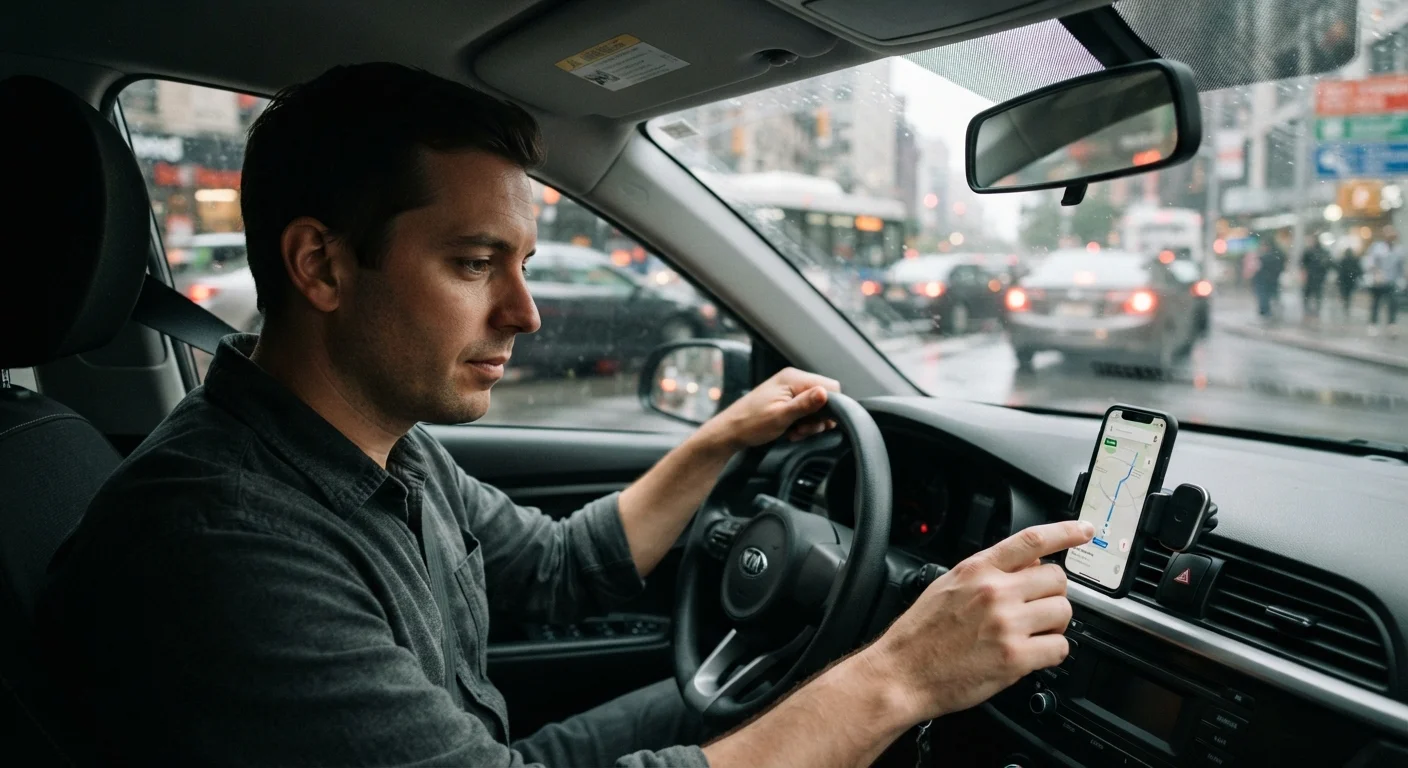
Glancing at navigation prompts while driving, even briefly.
Why it happens: Drivers trust that a quick look is harmless, especially on familiar roads where a glance feels like a minor interruption rather than a dangerous lapse.
Scrolling through music or podcast apps while in motion.
Why it happens: Audio control feels instinctive and trivial - something done dozens of times a day without incident, which breeds familiarity and false confidence.
Eating or drinking behind the wheel.
Why it happens: Busy schedules push meals into commutes, and eating feels passive - unlike texting, it doesn't feel like it demands focused attention.
Engaging in intense conversations with passengers, especially on complex roads.
Why it happens: Social interaction feels natural and unavoidable. Unlike phone calls, face-to-face conversation carries no stigma behind the wheel.
Relying on driver-assist technology as a substitute for attention.
Why it happens: Lane-keeping assist and adaptive cruise control are impressive, but their names imply a level of autonomy they don't possess. Drivers disengage mentally, assuming the car has it handled.
Grooming - applying makeup, fixing hair - at the wheel.
Why it happens: Morning routines run late, and vehicles feel like a natural extension of personal space where multitasking is possible.
Distraction Impairs Reaction Time Significantly
The National Highway Traffic Safety Administration (NHTSA) attributes thousands of traffic fatalities annually to distracted driving. Even hands-free phone conversations reduce a driver's hazard detection ability because the cognitive load remains high. No task in the car is worth the risk it introduces at road speeds.
For drivers who spend significant time on interstates, highway-specific attention discipline matters even more - higher speeds compress reaction windows dramatically, leaving almost no margin for a distracted moment.
Building a Pre-Trip Routine That Reduces In-Motion Decisions
The most effective way to eliminate distracted driving isn't willpower in the moment - it's removing the decisions that cause distraction before the car moves. A brief pre-trip routine addresses the majority of triggers.
- Navigation: Enter your destination and confirm the route while parked.
- Audio: Queue your music, podcast, or audiobook before pulling out.
- Climate: Set temperature and fan speed at rest, not at speed.
- Phone: Enable Do Not Disturb while driving - most smartphones have an automatic mode for this.
- Food and drink: Finish before you drive or wait until you stop.
Young and new drivers benefit particularly from establishing these habits early. Research on teen driving risk consistently identifies distraction as a major contributing factor in crashes among inexperienced drivers - patterns that can persist into adulthood if left unchallenged.
Hands-Free Doesn't Mean Risk-Free
Many drivers treat a Bluetooth call as essentially safe. Research from the AAA Foundation for Traffic Safety found that hands-free calls still produce meaningful cognitive distraction - the brain struggles to fully process the road while holding a conversation. Reserve phone calls, even hands-free, for when you're parked.
Driving is a high-stakes, continuous task that demands consistent attention. The habits that feel harmless are often the ones most worth reconsidering.