

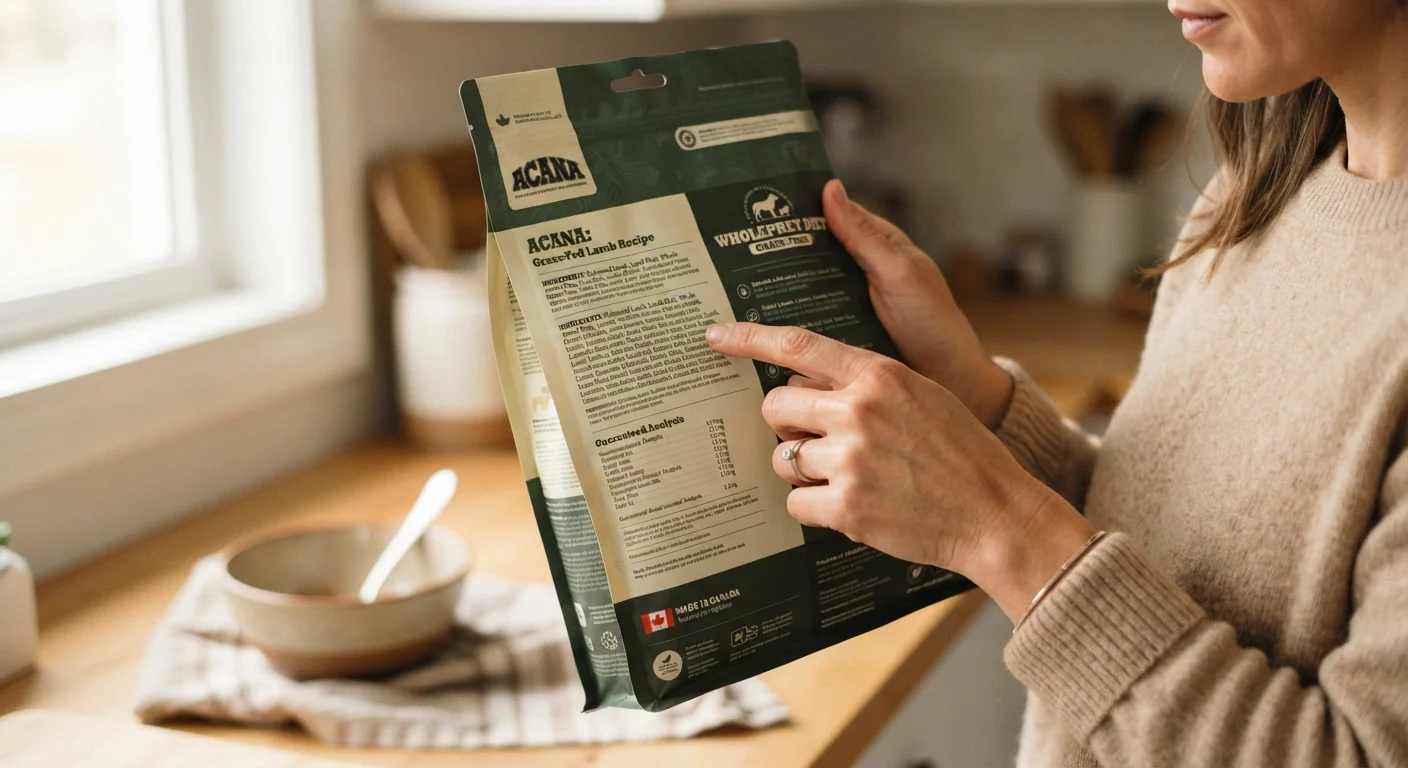
Key Takeaways
- Ingredients are listed by weight before cooking, which can make moisture-rich meats appear higher than they really are.
- Vague terms like 'meat by-products' or 'animal digest' are regulated but tell you little about actual ingredient quality.
- The guaranteed analysis panel shows minimum or maximum nutrient levels, not exact amounts in the food.
- A complete and balanced claim backed by AAFCO standards is more meaningful than any front-of-pack marketing phrase.
- Consulting your veterinarian is the most reliable way to assess whether a food suits your individual pet's needs.
What you will need
Why Pet Food Labels Can Feel Misleading
Pet food packaging is designed to appeal to owners, not to communicate nutrition transparently. Bold claims like "farm-fresh," "ancestral recipe," or "grain-free" are marketing terms with little or no regulatory definition in the US. Meanwhile, the information that genuinely matters — the ingredients list, the guaranteed analysis, and the AAFCO nutritional adequacy statement — is tucked onto the back panel in small print.
Understanding the difference between these elements helps you cut through the noise. The full structure of a pet food label covers guaranteed analysis and feeding guidelines in depth; this guide focuses specifically on decoding what the ingredients list does and doesn't reveal.
What you will need
What the Ingredients List Actually Measures
In the US, the Association of American Feed Control Officials (AAFCO) requires that pet food ingredients be listed in descending order by pre-cooking weight. That sounds straightforward, but it has a significant catch: raw meats contain a lot of water. A chicken breast may be 70% moisture before processing, which means it can appear first on the list — above grain or legume ingredients — even if it contributes less actual protein to the finished food than a dry ingredient listed further down.
This is sometimes called "ingredient splitting" when manufacturers separate a single ingredient (like corn) into multiple forms — corn flour, corn gluten meal, ground corn — so each appears individually lower on the list rather than as a single dominant ingredient. Neither practice is inherently deceptive or illegal, but both mean that position on the list is an imperfect signal of nutritional contribution.
Dry Weight Matters More Than List Position
Because ingredients are listed by pre-cooking weight, a fresh chicken listed first may deliver less protein per serving than a chicken meal listed third. When protein content is a priority, look at the guaranteed analysis alongside the ingredients list — not just ingredient order alone.
For a parallel look at how human food labels use similar conventions, see our piece on reading a food package without getting misled.
Common Terms and What They Really Mean
AAFCO defines specific terms that appear on ingredient lists, though their precise meaning isn't always obvious to consumers:
- Meat by-products: Organ tissues such as lungs, spleen, kidney, and liver — not the same as rendered fat or waste. Many veterinary nutritionists consider organ meat nutritious, though quality can vary by source and manufacturer.
- Meal (e.g., chicken meal): A rendered, dried product with moisture removed. Because water is absent, meal can actually be more protein-dense by weight than fresh meat — making it a meaningful protein source despite appearing lower on the list.
- Animal digest: A flavoring made from chemically or enzymatically processed animal tissue, typically used in small amounts to improve palatability.
- Natural flavors: A broad, loosely defined category. In pet food, this can include a wide range of substances derived from plant or animal sources.
None of these terms automatically signal a low-quality food, but they do signal the need to look beyond the first one or two ingredients before forming a judgment. The meaning of the "complete and balanced" claim is equally worth understanding alongside the ingredients list.
Locate the AAFCO nutritional adequacy statement first
Before reading a single ingredient, find the AAFCO statement — usually near the bottom of the back panel. It will say something like: "[Product name] is formulated to meet the nutritional levels established by the AAFCO [Dog/Cat] Food Nutrient Profiles for [life stage]." This tells you the food is intended to be complete and balanced for a specific life stage. If no such statement appears, the food may be intended as a treat or supplement, not a primary diet.
Scan the first five to seven ingredients
The first several ingredients make up the bulk of the food by pre-cooking weight. Look for a named protein source (e.g., "chicken," "salmon," "beef") or a named meal (e.g., "chicken meal") near the top. Be aware that a fresh meat listed first may contribute less dry-weight protein than a meal listed second or third, due to moisture content differences.
Watch for ingredient splitting
If you see multiple forms of the same base ingredient listed separately — for example, "ground corn," "corn gluten meal," and "corn flour" — be aware that together they may represent a larger portion of the food than any single item suggests. This isn't necessarily harmful, but it can shift your understanding of which ingredients truly dominate.
Check the guaranteed analysis panel
The guaranteed analysis lists minimum crude protein, minimum crude fat, maximum crude fiber, and maximum moisture. These are not exact values — minimums and maximums give a range, not a precise figure. Use them as a general comparison tool across foods, but don't treat them as precise nutritional measurements.
Cross-reference label claims with the ingredients list
Front-of-pack phrases like "high protein," "grain-free," or "natural" should be cross-checked against the actual ingredients. A "grain-free" food may substitute legumes (peas, lentils, chickpeas) for grains — which is not inherently problematic, but is worth knowing, especially given ongoing research into grain-free diets and cardiac health in dogs. Always verify that marketing language matches what the ingredient list actually shows.
Putting It in Context: What Labels Can't Tell You
Even a well-read ingredients list has real limits. It doesn't tell you the sourcing quality of ingredients, the manufacturing conditions, or how nutrients hold up after processing. And because the guaranteed analysis shows ranges rather than exact values, two foods with identical labels may deliver meaningfully different nutrition in practice.
Ingredient lists also don't account for your individual pet's needs. A food with an excellent profile on paper may not suit a pet with a specific health condition, life stage requirement, or food sensitivity. That's why weight and body condition should be tracked alongside diet changes, and why any significant nutritional shift is worth discussing with your veterinarian. For pets on specific dietary protocols, your vet may also refer you to a board-certified veterinary nutritionist.
Used alongside the guaranteed analysis and AAFCO statement, the ingredients list is a useful — if imperfect — window into what's in your pet's bowl. The goal isn't to find a "perfect" label; it's to become a more informed reader of the ones in front of you. See our Pet Care Basics hub for more guidance on everyday nutrition decisions.
This article provides general educational information about pet food labeling and is not a substitute for personalized advice from a licensed veterinarian or veterinary nutritionist.