

Key Takeaways
- Body weight alone doesn't determine whether a pet is at a healthy size — body composition matters just as much.
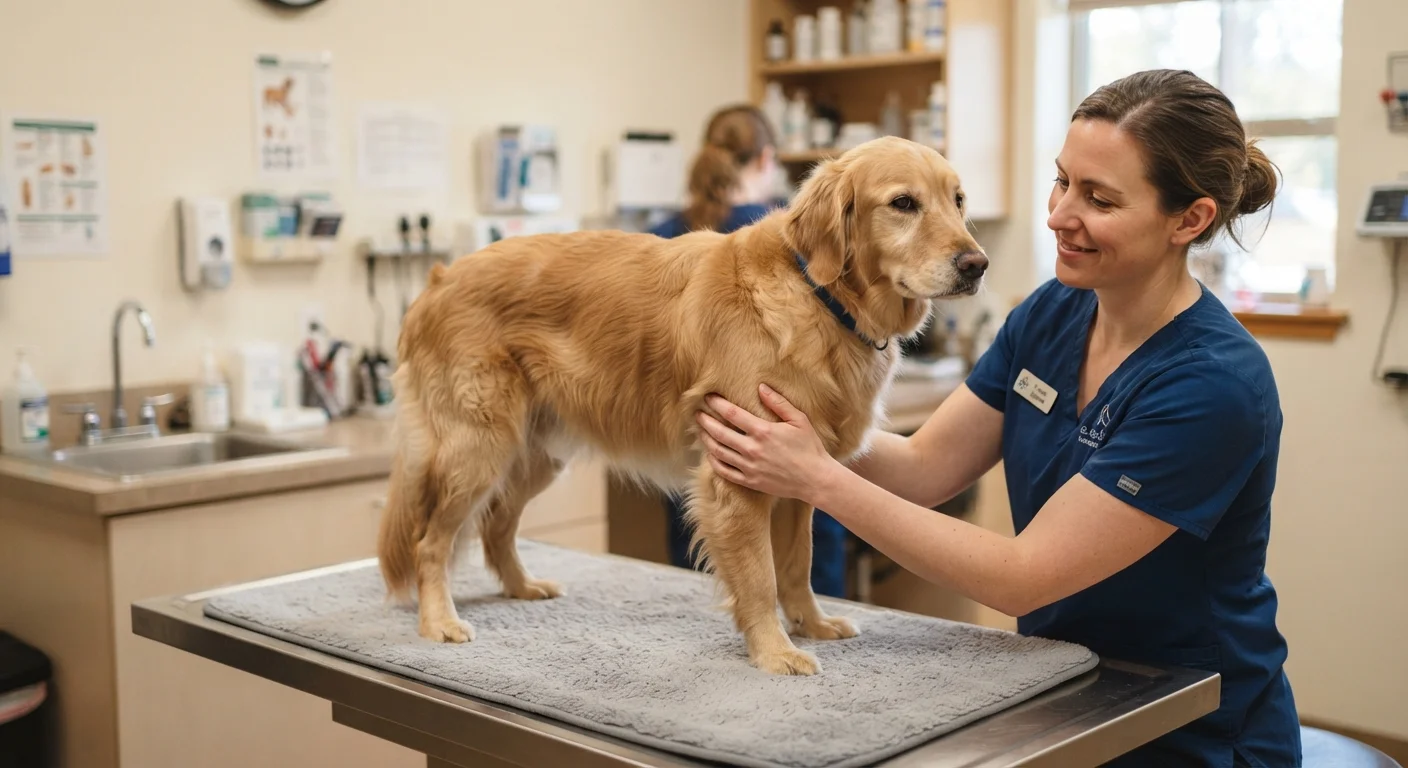
- Veterinarians use a Body Condition Score (BCS) to assess fat coverage and muscle tone through physical examination.
- Breed, age, sex, and reproductive status all influence what a healthy weight range looks like for an individual pet.
- Obesity in pets is linked to joint disease, diabetes, and reduced life expectancy.
- Regular wellness exams are the most reliable way to track your pet's condition over time.
Body Condition Score (BCS)
A Body Condition Score is a structured, hands-on assessment used by veterinarians to evaluate whether a pet carries too little, too much, or an appropriate amount of body fat. Unlike a scale reading, it accounts for muscle mass, fat distribution, and breed-specific physique. Most vets use a 1–9 or 1–5 scale, with the midpoint representing ideal condition.
BCS is validated across species including dogs, cats, and rabbits, and correlates more reliably with metabolic health outcomes than body weight alone in clinical research.
Why the Number on the Scale Misleads Pet Owners
When a dog or cat steps on the scale, the number can feel definitive — but weight is only one piece of a much larger picture. Two dogs of the same breed can weigh identically and have very different health profiles: one may carry lean muscle and appropriate fat reserves, while the other carries excess fat with reduced muscle tone. The scale doesn't distinguish between the two.
This matters because the health consequences of obesity in pets are driven by excess body fat, not body weight alone. Fat tissue is biologically active — it produces inflammatory signals that can worsen joint disease, disrupt insulin sensitivity, and affect cardiovascular function. A pet can be at a medically concerning body composition while appearing to weigh within a normal range for their breed.
For pet owners, this means that keeping an eye on the scale is useful as a general trend tracker, but it shouldn't be the only tool used to assess whether a pet is at a healthy size. Signs your pet's weight is drifting can appear in behavior and physical feel long before the scale moves significantly.
~59%
Dogs classified as overweight or obese in the US
According to the Association for Pet Obesity Prevention's annual clinical survey of veterinary practices.
~61%
Cats classified as overweight or obese in the US
Consistent with multi-year data from the Association for Pet Obesity Prevention's veterinary surveys.
2.5 years
Estimated reduction in lifespan for obese dogs
Cited in a long-term Purina-funded study on canine body condition and longevity, published in peer-reviewed veterinary literature.
How Vets Actually Assess Body Condition
The clinical standard for evaluating a pet's weight status is the Body Condition Score (BCS) — a structured, hands-on evaluation that most veterinary practices use routinely. Rather than relying solely on weight, BCS involves feeling for fat coverage over the ribs, spine, and hip bones, observing the pet's silhouette from above and from the side, and assessing muscle definition.
On the most widely used 9-point scale, a score of 4–5 is considered ideal. Scores of 6–7 indicate overweight status, and 8–9 represent obesity. On the lower end, scores of 2–3 signal underweight condition and nutritional concern. Muscle condition scoring is often evaluated separately, since a pet can lose significant muscle mass while maintaining body weight — a scenario common in aging or chronically ill animals.
Annual wellness exams include this kind of physical assessment, which is one reason routine vet visits catch weight changes that owners might not notice at home. The hands-on nature of BCS makes it more sensitive to gradual shifts than weekly weigh-ins.
Try the Rib Check at Home
Place both hands gently along your pet's sides and press lightly with your fingertips. You should be able to feel individual ribs without pressing hard. If you can't feel them easily, or if you can see them without touching, it's worth mentioning to your vet at the next visit.
What Drives Healthy Weight — Beyond Food and Exercise
Nutrition and activity are central to weight management, but they don't operate in isolation. Several factors shape what a healthy weight looks like for any individual pet:
- Breed and body type: A lean sighthound and a stocky working breed have fundamentally different builds. What looks thin on one may be appropriate for another.
- Age: Metabolic rate tends to slow as pets age, and muscle mass naturally declines. Senior pets often need adjusted feeding strategies to prevent gradual weight gain.
- Reproductive status: Spayed and neutered animals generally have lower caloric needs than intact animals, and this shift can contribute to weight gain if food intake isn't adjusted.
- Underlying health conditions: Hypothyroidism in dogs and certain hormonal disorders can cause unexplained weight gain that doesn't respond to dietary restriction alone.
Understanding what goes into your pet's food is one part of the picture — reading a pet food label carefully helps owners make more informed choices about nutrient density and portion context.
Practical Steps for Weight-Conscious Pet Care
You don't need clinical tools to stay engaged with your pet's body condition. Learning to feel your pet's ribs is one of the simplest and most informative checks an owner can do. With light hand pressure along the side of the chest, ribs should be easy to feel but not sharply visible or protruding. If you need to press firmly to find them, excess fat coverage is likely present.
Observing your pet's waistline from above — looking for a visible tuck behind the rib cage rather than a straight or barrel-shaped torso — is another accessible indicator that vets use as part of BCS. These observations are meaningful when tracked consistently over months, not as one-time snapshots.
If you have concerns, the most productive step is a conversation with your veterinarian. Adjusting a pet's diet without understanding their current health status can create new problems, and weight loss that happens too quickly carries real risks — rapid fat mobilization in cats, for instance, can lead to a serious liver condition called hepatic lipidosis.
This article is for general informational purposes only and does not constitute veterinary or medical advice. Always consult a qualified veterinarian for guidance specific to your pet's health and nutritional needs.