

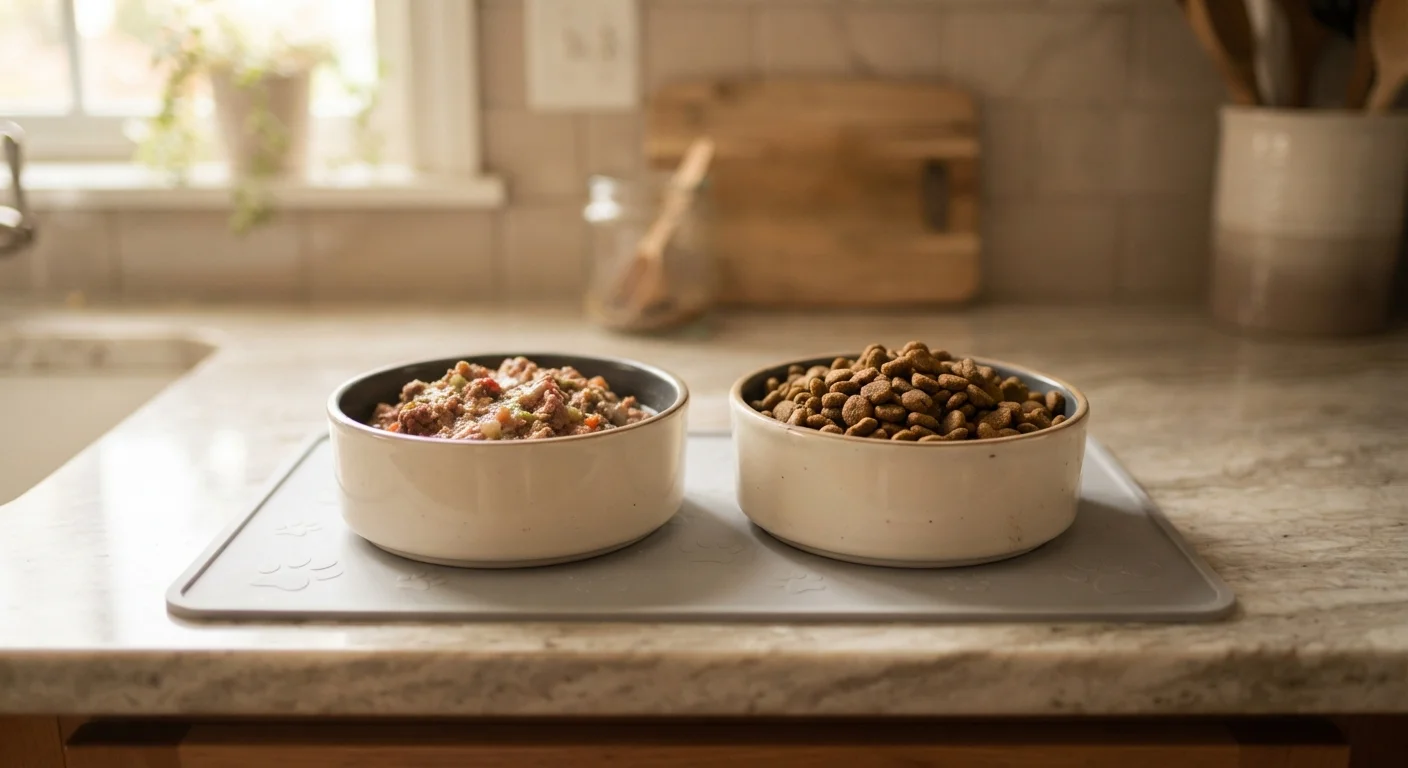
Key Takeaways
- Wet food contains 70–80% moisture, making it a meaningful source of daily hydration for cats and dogs.
- Dry kibble is more calorie-dense per gram, so portion control matters more when feeding kibble.
- Neither format is universally superior — the right choice depends on your pet's health, age, and preferences.
- Many veterinarians support mixing both formats to balance nutritional variety with convenience.
- Dental health claims for kibble are often overstated; neither format replaces active dental care.
Option A
Wet Food
The moisture-rich, palatable option for many pets.
Best for: Pets who need extra hydration, are picky eaters, have dental issues, or struggle to chew hard kibble.
Option B
Dry Food (Kibble)
The convenient, shelf-stable everyday staple.
Best for: Owners seeking an affordable, easy-to-store option that fits a consistent daily feeding routine.
If your cat drinks very little water on their own
Wet Food
Cats evolved as low-thirst drinkers and often don't compensate well for dry diets. Wet food's high moisture content can help support urinary tract health.
If you need a cost-effective option for a large or multi-pet household
Dry Food (Kibble)
Kibble is generally less expensive per calorie and can be left out for longer periods, reducing waste and simplifying mealtimes.
If your pet is a senior or has difficulty chewing
Wet Food
The softer texture of wet food is easier on aging teeth and jaws, and the stronger aroma can help entice pets with diminished appetite.
If weight management is a priority
Wet Food
Wet food's higher water content often means fewer calories per serving, which can help pets feel satisfied while staying within a calorie target — always confirm portions with your vet.
If convenience and storage ease are your top priorities
Dry Food (Kibble)
Kibble has a long shelf life, requires no refrigeration after opening, and is easy to measure and serve consistently.
The Core Difference: It Starts with Water
The most fundamental distinction between wet and dry pet food isn't flavor or texture — it's moisture. Wet food typically contains 70–80% water, while dry kibble usually contains just 10–12%. That gap has real consequences for how your pet's body processes each meal.
For cats especially, this matters a great deal. Cats have a naturally low thirst drive and are biologically wired to get much of their water from prey. A cat eating only dry food may drink more from a bowl, but research consistently suggests many don't fully compensate — potentially putting stress on the kidneys and urinary tract over time. Our guide to pet hydration explains in more detail why water intake is surprisingly difficult to monitor.
Dogs are generally better at regulating water intake, though seniors and dogs with certain health conditions can still benefit from the added moisture in wet food.
| Criterion | Wet Food | Dry Food (Kibble) |
|---|---|---|
| Moisture content | 70–80% | 10–12% |
| Calorie density | Lower per gram | Higher per gram |
| Shelf life (opened) | 1–2 days refrigerated | 4–6 weeks sealed |
| Typical cost per calorie | Higher | Lower |
| Texture | Soft, easy to chew | Hard, crunchy |
| Palatability for picky eaters | Generally higher | Varies by pet |
| Dental cleaning effect | Minimal | Minimal (unless dental formula) |
| Hydration support | Significant | Negligible |
Nutrition, Calories, and What's Really in the Bowl
Because dry food contains so little water, it's far more calorie-dense by weight. A cup of kibble might deliver 300–400 calories, while the same weight of wet food could contain a fraction of that. This means portion sizes look very different between formats — a common source of accidental overfeeding.
Both formats can meet your pet's complete nutritional needs when properly formulated. The key phrase to look for on any package is "complete and balanced," a regulated claim in the US that signals a food meets established nutrient profiles. Our article explaining what "complete and balanced" really means breaks down what that label tells you — and where its limits are.
Ingredient quality varies widely within both formats. Learning to read a pet food label without getting lost in the fine print will help you compare options more confidently, regardless of format.
70–80%
Average moisture in wet pet food
Compared to roughly 10% in dry kibble, wet food provides substantially more water per serving, which is especially relevant for cats.
~3–4x
Calorie density advantage of dry food
Ounce for ounce, dry kibble typically delivers significantly more calories than wet food, making portion accuracy more critical.
50%+
Cats affected by dental disease by age 3
According to veterinary dental guidelines, many cats show signs of dental disease early in life — underscoring that food format alone is not a dental health strategy.
Dental Health, Texture, and Common Myths
A persistent belief holds that dry kibble cleans teeth because of its crunchy texture. The reality is more nuanced. While some specially formulated dental kibbles do show evidence of reducing tartar buildup, standard kibble provides minimal dental benefit — most pets don't chew it long enough for any mechanical cleaning effect. Wet food, conversely, is sometimes blamed for accelerating plaque, though the evidence here is also thin.
What is clear: neither food format replaces active dental care. Regular toothbrushing with pet-safe toothpaste, and veterinarian-recommended dental chews or professional cleanings, remain the most effective tools for oral health. If your pet has existing dental disease or a compromised mouth, the softer texture of wet food may be more comfortable — worth discussing with your veterinarian.
For pets with digestive sensitivities, texture preferences, or life-stage needs (kittens, puppies, seniors), both formats offer options, and many owners find that mixing wet and dry food works well — combining hydration benefits with the convenience and cost efficiency of kibble.
Cost, Storage, and Everyday Practicality
Dry food is almost always less expensive per calorie than wet food, and it wins on storage: an open bag keeps for weeks in a sealed container, while opened wet food must be refrigerated and used within a day or two. For households with multiple pets or tight budgets, this difference is meaningful.
Wet food requires more planning — buying in smaller quantities or managing opened cans carefully. In warmer climates or during summer, wet food left out at room temperature can spoil within an hour or two, which matters for free-choice feeders.
That said, cost-per-calorie isn't the only financial consideration. Pets with certain health conditions — kidney disease, urinary issues, or obesity — may benefit enough from wet food that the added expense is offset by fewer veterinary interventions. That's a conversation worth having with your vet rather than a decision to make based on price alone.
For a deeper look at what different pet food packaging claims actually signal, see our guide to what the ingredients list really tells you. And if you're curious about broader dietary approaches, the evidence on raw vs. cooked diets offers useful context on how feeding format fits into a bigger nutritional picture.
This article is for general informational purposes only and is not a substitute for veterinary advice. Always consult a qualified veterinarian before making significant changes to your pet's diet, especially if your animal has an existing health condition.