

Key Takeaways
- Indoor cats generally live longer lives due to reduced exposure to hazards, disease, and predators.
- Outdoor access provides natural stimulation but introduces real risks including injury, parasites, and toxins.
- Neither lifestyle is universally right — the best choice depends on your cat's temperament, history, and environment.
- Indoor cats need deliberate enrichment to meet their behavioral and physical needs.
- Supervised outdoor options like catios and leash walks can offer a middle ground.
Significantly reduced risk of injury or death
Vehicles, predators, and falls from unsafe heights pose ongoing hazards to free-roaming cats. Keeping cats indoors removes the majority of these acute risks.
Lower exposure to infectious disease
Diseases such as feline leukemia virus (FeLV) and feline immunodeficiency virus (FIV) are transmitted through contact with infected cats — a much rarer scenario indoors.
Reduced parasite burden
Fleas, ticks, intestinal worms, and ringworm are far more common in cats with outdoor access. Indoor living doesn't eliminate parasite risk, but it substantially reduces it.
Easier to monitor health and behavior changes
Owners of indoor cats can more reliably track litter box habits, appetite, and activity levels — all early indicators of illness. For practical help with that monitoring, litter box troubleshooting is a useful reference.
No impact on local wildlife populations
Free-roaming cats are documented predators of birds and small mammals. Indoor cats have no impact on local ecosystems.
Higher risk of obesity and physical inactivity
Indoor cats typically have smaller territories and fewer demands on their energy. Without structured play and movement, weight gain is common and can contribute to diabetes, joint problems, and reduced lifespan.
Greater potential for boredom and behavioral issues
Cats are natural hunters and explorers. An unstimulating environment can lead to over-grooming, aggression, destructive scratching, or inappropriate elimination.
Increased owner responsibility for enrichment
Everything that nature provides outdoors — novelty, sensory variety, physical challenge — must be deliberately provided indoors. This is a significant and ongoing commitment.
Some cats adapt poorly to indoor-only confinement
Cats with outdoor histories, high prey drive, or anxious temperaments may find indoor-only living chronically stressful, particularly if space is limited.
Our Verdict
Indoor living offers measurable safety advantages and is associated with longer average lifespans, but it places the full responsibility for mental and physical enrichment on the owner. Outdoor access provides genuine stimulation and behavioral outlets, but it comes with real and sometimes serious risks. A thoughtful middle-ground approach — such as a secure enclosure or supervised outdoor time — can serve many cats well.
Indoor living is best for cats in high-traffic urban areas or those with health vulnerabilities, while supervised outdoor access suits confident, healthy cats with attentive owners and safe surroundings.
Why This Decision Matters More Than Many Owners Realize
The question of whether a cat should live indoors, outdoors, or somewhere in between sits at the intersection of animal welfare, public health, and personal responsibility. It's a genuinely nuanced topic — one where reasonable, caring owners reach different conclusions based on their circumstances.
Veterinary organizations in the US, including the American Veterinary Medical Association, generally advocate for keeping cats indoors or providing only supervised outdoor access, citing health and safety data. At the same time, many cats — particularly those with outdoor histories — may show signs of frustration or stress when confined. Understanding both sides of that equation is essential before making a decision. For a deeper look at the health dimension specifically, see our dedicated health comparison.
The Case for Keeping Cats Indoors
The most frequently cited reason for indoor living is lifespan. Studies and veterinary data consistently suggest that indoor-only cats live significantly longer on average than cats with outdoor access — a gap often attributed to the hazards below.
Significantly reduced risk of injury or death
Vehicles, predators, and falls from unsafe heights pose ongoing hazards to free-roaming cats. Keeping cats indoors removes the majority of these acute risks.
Lower exposure to infectious disease
Diseases such as feline leukemia virus (FeLV) and feline immunodeficiency virus (FIV) are transmitted through contact with infected cats — a much rarer scenario indoors.
Reduced parasite burden
Fleas, ticks, intestinal worms, and ringworm are far more common in cats with outdoor access. Indoor living doesn't eliminate parasite risk, but it substantially reduces it.
Easier to monitor health and behavior changes
Owners of indoor cats can more reliably track litter box habits, appetite, and activity levels — all early indicators of illness. For practical help with that monitoring, litter box troubleshooting is a useful reference.
No impact on local wildlife populations
Free-roaming cats are documented predators of birds and small mammals. Indoor cats have no impact on local ecosystems.
Beyond safety, indoor cats benefit from stable social bonds, consistent veterinary monitoring, and reduced parasite exposure. Owners also have more opportunity to notice behavioral changes that might signal illness early. If you're focused on comprehensive pet health, the controlled indoor environment makes that easier to manage.
The key caveat: indoor cats don't automatically thrive. Without adequate enrichment, they can develop obesity, anxiety, or behavioral problems. Daily enrichment across different pet types covers what a stimulating indoor routine should look like for cats specifically.
The Case for Allowing Outdoor Access
Outdoor environments offer something genuinely difficult to replicate indoors: real-world sensory complexity. Changing smells, textures, temperatures, and the unpredictability of live prey triggers natural feline behaviors — stalking, climbing, territory marking — that contribute to psychological wellbeing.
Higher risk of obesity and physical inactivity
Indoor cats typically have smaller territories and fewer demands on their energy. Without structured play and movement, weight gain is common and can contribute to diabetes, joint problems, and reduced lifespan.
Greater potential for boredom and behavioral issues
Cats are natural hunters and explorers. An unstimulating environment can lead to over-grooming, aggression, destructive scratching, or inappropriate elimination.
Increased owner responsibility for enrichment
Everything that nature provides outdoors — novelty, sensory variety, physical challenge — must be deliberately provided indoors. This is a significant and ongoing commitment.
Some cats adapt poorly to indoor-only confinement
Cats with outdoor histories, high prey drive, or anxious temperaments may find indoor-only living chronically stressful, particularly if space is limited.
The risks are real and shouldn't be minimized. Outdoor cats face threats from vehicles, other animals, parasites, and toxic plants or chemicals. If your cat does spend time outdoors, reviewing your garden and lawn setup is worth doing — common herbicides, slug pellets, and certain ornamental plants can be dangerous to cats.
Middle-Ground Options Worth Considering
For many cat owners, a hybrid approach resolves the tension between safety and stimulation without fully sacrificing either. A few options that veterinarians and behaviorists commonly discuss:
- Catios and enclosed runs: Secure outdoor enclosures that allow fresh air, sunlight, and sensory exposure without free-roaming risk.
- Leash and harness walking: Requires gradual training and patience, but can work well for calm, adaptable cats. Understanding how cats actually learn will help you approach harness training realistically.
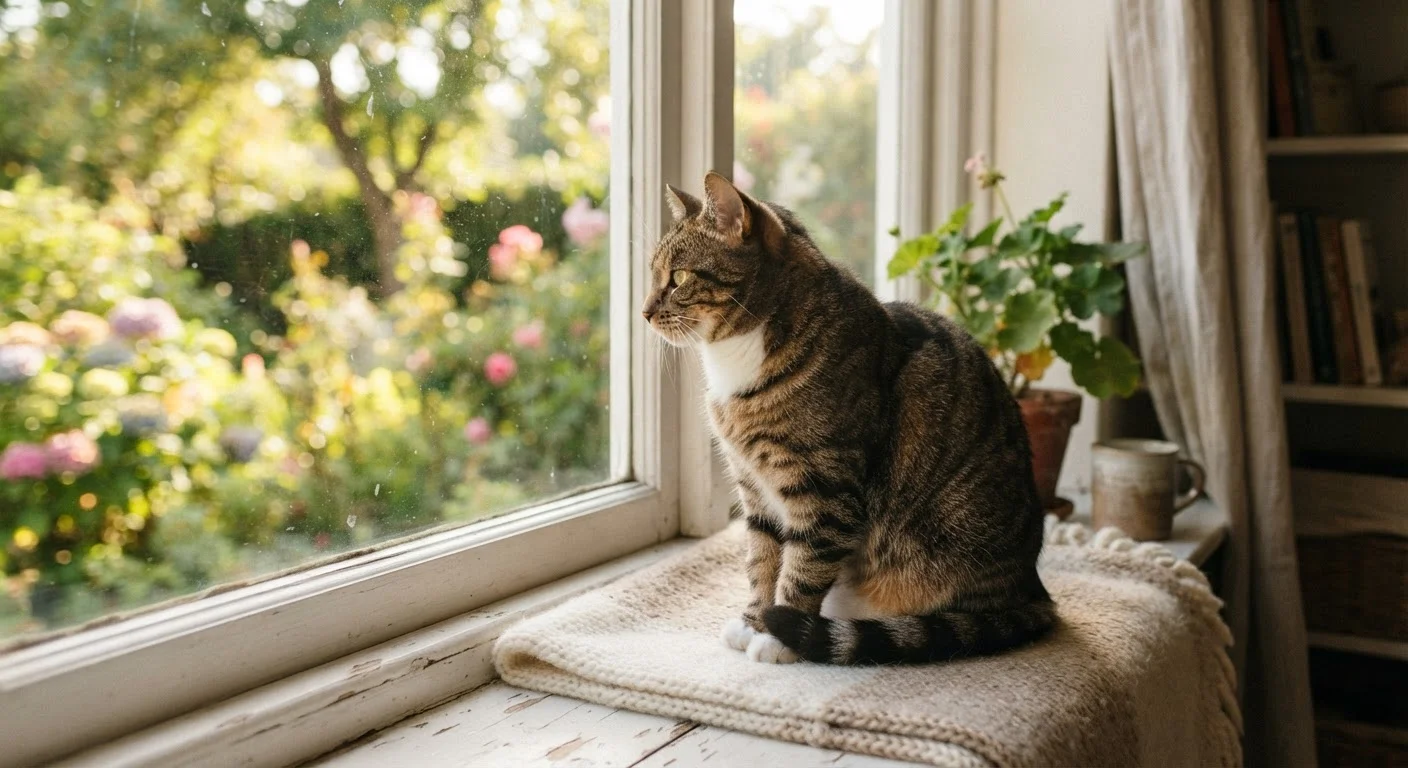
- Window perches and bird feeders: Simple but effective — placing feeders outside a window that a cat can observe provides low-cost visual enrichment.
- Supervised yard time: Works best in quiet, fenced environments with an attentive owner present.
A Note on Cats With Outdoor Histories
Transitioning a cat that has always had outdoor access to indoor-only living requires a gradual, patient approach. Abrupt confinement can cause significant stress and behavioral problems. If you're considering this change, speak with your veterinarian or a certified feline behaviorist about a transition plan suited to your cat's age, temperament, and prior experience.
If you're managing multiple pets alongside this decision, the dynamics between animals can influence how much freedom any individual cat should have. Our guide on introducing a new pet to existing animals addresses how territorial stress can compound these challenges.
This article is for general informational purposes only and is not a substitute for advice from a licensed veterinarian familiar with your cat's individual health history and needs.