

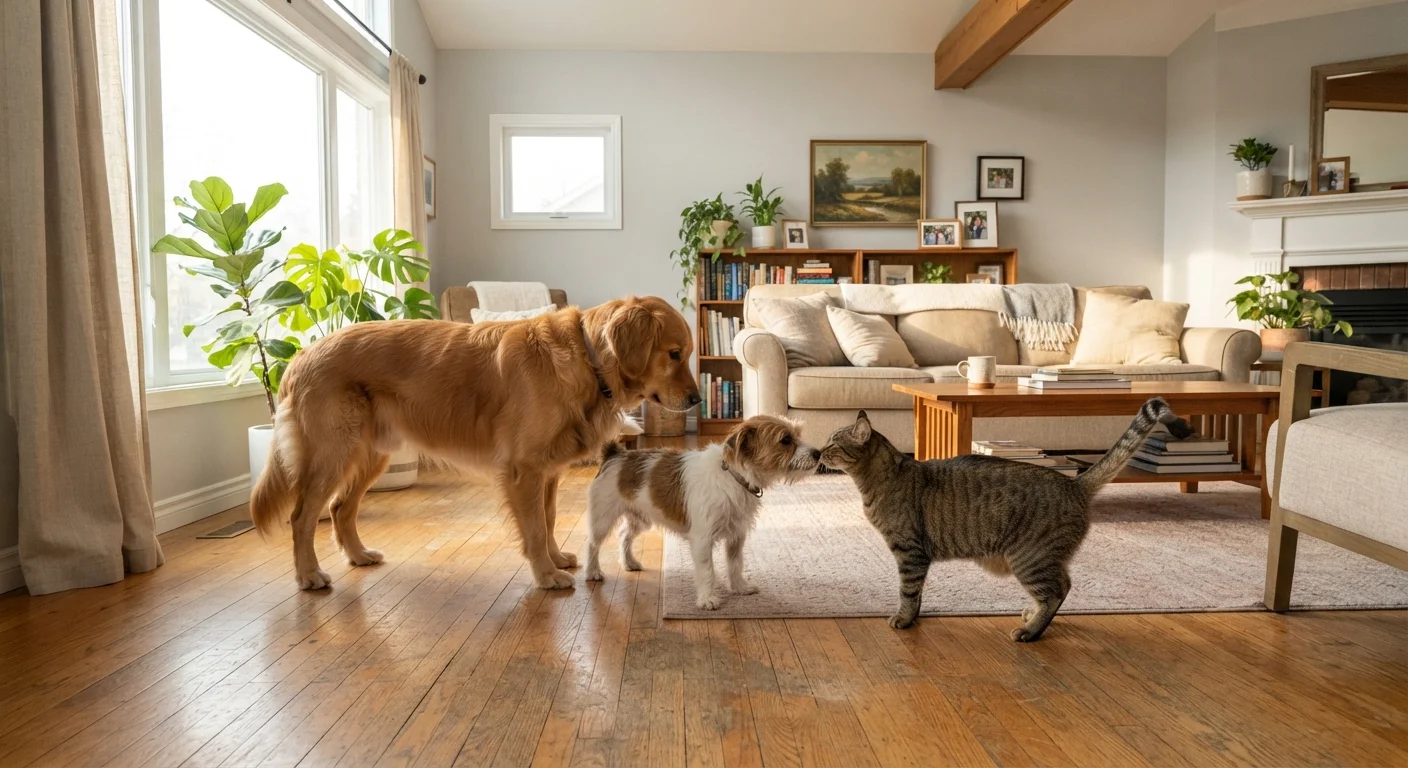
Key Takeaways
- Rushed introductions are a leading cause of lasting conflict between household pets.
- Scent swapping before any face-to-face meeting significantly reduces territorial tension.
- Resident animals need their routines and resources protected throughout the transition.
- Most introductions take days to weeks — patience is the most important tool you have.
- Signs of serious aggression warrant a pause and, in some cases, a veterinary or trainer consultation.
What you will need
Why Multi-Pet Introductions Often Go Wrong
Most problems during multi-pet introductions stem from one source: moving too fast. When animals are thrust together without time to acclimate, they rely on threat responses rather than curiosity. The resident pet experiences the newcomer as an intruder; the new pet arrives already stressed from relocation and is immediately confronted with unfamiliar animals on unfamiliar ground.
Territorial behavior is not a personality flaw — it is a biologically normal response to perceived resource competition and perceived threats to safety. Understanding this shifts the goal of an introduction from hoping animals like each other immediately to creating conditions where both animals feel secure enough to investigate without feeling threatened.
Species differences matter, too. Dog-to-dog introductions generally follow different dynamics than cat-to-cat or cat-to-dog introductions. Small prey animals — rabbits, guinea pigs, birds — require additional care when sharing a home with predatory species, even domestic ones. If anxiety is already a factor for one of your resident pets, the guide to pet anxiety can help you distinguish normal stress from a deeper concern. Before you begin the steps below, gather your tools and prepare your space.
Baby gate or exercise pen
Creates a visual and physical barrier that allows animals to see each other without direct contact.
Separate food bowls and water dishes
Prevents resource guarding and competition during feeding times.
Soft cloth or worn item for scent swapping
Transfers each animal's scent to the other's space before any visual introduction.
High-value treats
Used to create positive associations during controlled introduction sessions.
Separate litter boxes or relief areas
Ensures territorial animals are not forced to share elimination spaces prematurely.
Leash or harness
Allows you to manage a dog's proximity and movement during early face-to-face sessions.
Following the Steps and Knowing When to Pause
What you will need
Prepare a separate space for the new arrival
Before bringing the new pet home, designate one room where they will live during the initial adjustment period. This space should include everything they need — food, water, bedding, litter if applicable, and enrichment. Keeping the new animal separated from day one prevents overwhelming both animals and allows your resident pets to adjust to the presence of a newcomer gradually.
For guidance on setting up this initial habitat properly, see our habitat setup guide for small pets.
Exchange scents before any visual contact
Take a soft cloth or worn item belonging to the new pet and place it in the area where your resident animals spend most of their time. Do the same in reverse — place something carrying your resident pet's scent in the new pet's room. Allow each animal to investigate these items at their own pace over one to three days. This step is not optional: scent is the primary way most mammals and cats process their social world, and familiarity with a scent reduces the startle response during first visual encounters.
Allow scent investigation through a barrier
Once both animals appear relaxed around the scent items — eating normally, moving freely, showing no persistent agitation — allow them to sniff under the door or through a baby gate. Sit nearby and observe body language carefully. Loose, curious postures, slow tail movement, and relaxed ears are positive signs. Stiff bodies, sustained growling, flattened ears, or piloerection (raised fur along the spine) indicate the animals need more time at this stage.
Introduce visual contact with a physical barrier in place
When both animals are comfortable at the door or gate, move to brief, supervised sessions where they can see each other through a baby gate or exercise pen. Keep these sessions short — five to ten minutes — and reward calm behavior in both animals with treats. End each session before any animal shows escalating stress. Repeat daily, gradually increasing duration as comfort grows.
[tip_callout]Begin supervised, shared space time
When visual contact sessions consistently go well, allow the animals into a shared neutral space — ideally not a room the resident pet considers their primary territory. Keep a dog on a leash initially. Let the animals move at their own pace without forcing proximity. Have high-value treats ready and reward any calm, relaxed interaction. If tension rises, calmly separate the animals and end the session without punishment.
Maintain separate resources throughout the transition
Even after successful shared sessions, keep food bowls, sleeping areas, and — for cats — litter boxes separate. Resource competition is a common trigger for conflict even between animals that appear to be getting along. The general guideline from veterinary behaviorists is to provide one resource station per animal, plus one extra. Continue monitoring meal times and rest spaces for signs of guarding or displacement.
For support with ongoing pet wellbeing, the Pet Health hub offers vet-informed guidance on a wide range of care topics.
Establish a stable daily routine for all animals
Consistency helps resident pets feel secure during a period of change. Try to keep feeding, exercise, and attention schedules as close to their pre-introduction pattern as possible. Once things have stabilized, building a shared household routine benefits all animals. Our weekly pet care routine guide offers a practical structure for multi-pet households.
Never Force a Face-to-Face Meeting
Pushing animals together before they are ready can create fear-based aggression that becomes very difficult to undo. If either animal shows sustained growling, hissing, lunging, or freezing during any stage, slow down immediately. A certified animal behaviorist or veterinarian can help you assess whether the pace needs to change.
Watch for Stress Signals in Resident Pets
Changes in appetite, litter box habits, excessive hiding, or sudden aggression in your existing animals are signals that the transition is moving too fast. These signs shouldn't be dismissed as temporary — sustained stress can affect an animal's physical health. Consult your veterinarian if concerning symptoms persist.
Even after a successful introduction, the work continues. Animals build trust incrementally, and regression — temporary conflict or avoidance — is common after changes like a move, new family members, or illness. Keeping an eye on behavioral shifts in all your pets is part of responsible multi-animal caregiving. The Pet Training hub offers humane, practical guidance if you want structured support for managing interactions as the household settles. For deeper insight into what enrichment looks like once animals are cohabiting comfortably, see enrichment needs by pet type.
This article provides general guidance for pet owners and is not a substitute for individualized advice from a licensed veterinarian or certified animal behaviorist. If you have concerns about your animals' health or behavior during introductions, consult a qualified professional.