

Key Takeaways
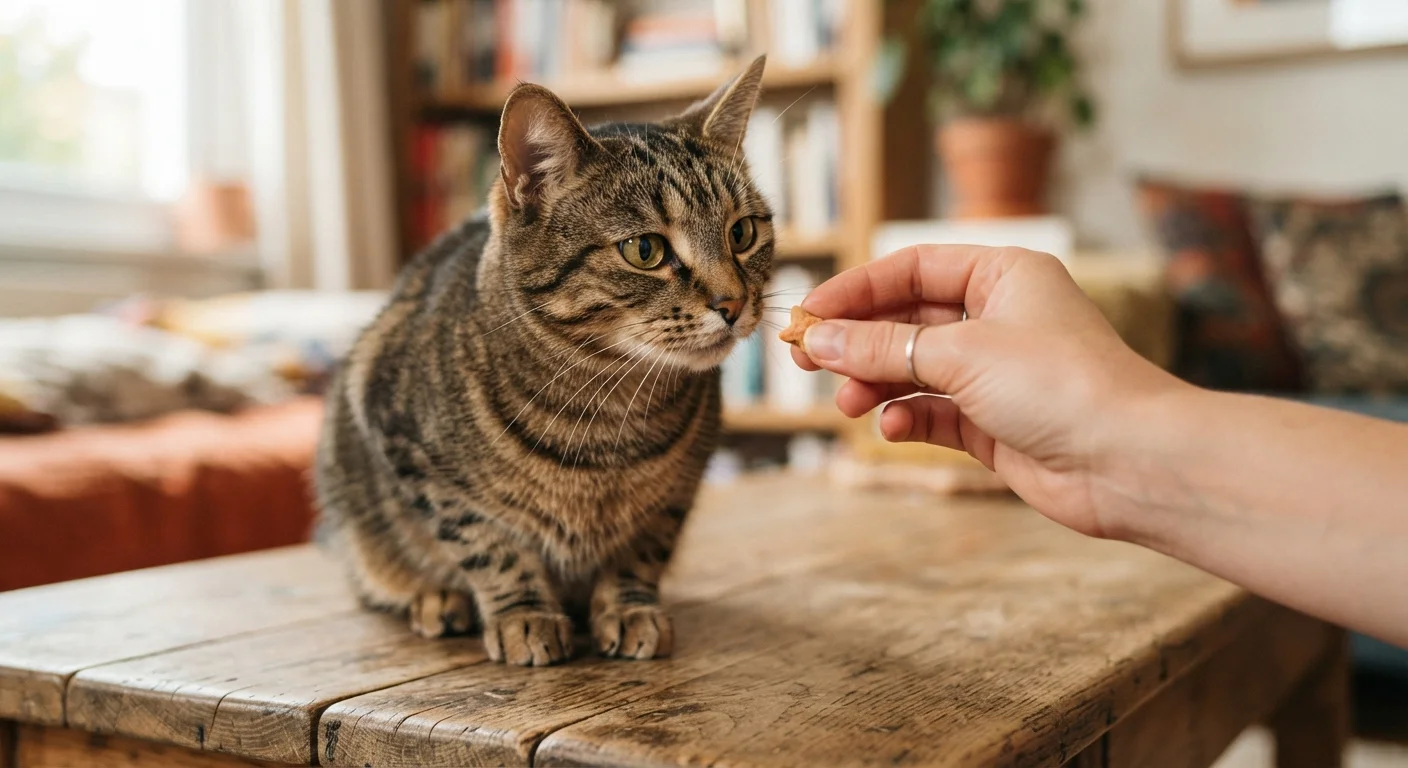
- Cats can absolutely be trained using positive reinforcement — their independence is not the same as inability to learn.
- Short, reward-based sessions work far better than repetition or punishment for feline learners.
- Understanding how cats naturally process cause and effect is the foundation of effective training.
- Many common behavior problems in cats are addressable through consistent, patient training methods.
- Timing of rewards is critical — cats associate consequences with what happened just seconds before.
Why Cat Training Myths Are So Persistent
Ask almost anyone whether cats can be trained and you'll likely hear a version of the same response: "Cats do what they want." It's said affectionately, even proudly — as if a cat's supposed untrainability is part of what makes them special. But this belief, however charming, isn't accurate. And it quietly sets owners up to miss one of the most rewarding parts of life with a cat: a relationship built on mutual understanding and clear communication.
The myths surrounding feline learning are stubborn because they're rooted in a partial truth. Cats are independent. They are wired differently from dogs. But independence and untrainability are not the same thing. Cats learn constantly — from their environment, their routines, and yes, from their owners. The question isn't whether they can learn, but whether we're communicating in a way they can actually use.
Below, we address the most common misconceptions owners carry into training — and what the evidence actually tells us about how cats learn. For a deeper look at the behavioral science behind reward-based approaches, see our guide to positive reinforcement in pet training.
Common Myths About Cat Training — Corrected
These paired myth-and-fact breakdowns address the beliefs most likely to get in the way of productive training. Recognizing them is the first step toward a more cooperative relationship with your cat.
Myth
Cats can't be trained — they're too independent to learn commands or respond to cues.
Fact
Cats are fully capable of learning behaviors, cues, and routines when training uses methods suited to how they naturally process information.
The idea that cats are untrainable typically comes from comparing them to dogs, who have been selectively bred over thousands of years for cooperative behavior with humans. Cats haven't been shaped the same way — but they are highly intelligent animals who learn from consequences constantly. Feral cats learn which hunting strategies succeed. Domestic cats learn which behaviors get them fed, petted, or let into a room. The learning mechanism is the same one that underlies all animal training: behavior that produces a positive outcome is repeated. Cats respond well to positive reinforcement when the reward is timely, consistent, and genuinely motivating to that individual animal.
Myth
If a cat does something wrong, you need to correct it firmly so it understands — scolding or physical discipline gets results.
Fact
Punishment is generally ineffective for cats and can damage the trust that makes training possible in the first place.
Unlike some species, cats don't readily connect a punishment delivered after the fact to the behavior that caused it. Their window for associating cause and effect is very short — just a second or two. A cat scolded for scratching the couch minutes after the fact has no way of understanding why it's being addressed. What it does experience is an owner who becomes unpredictable and a source of stress. Over time, this erodes the cat's confidence and willingness to engage. Research in animal behavior consistently supports positive reinforcement as more effective and less likely to produce fear or aggression than punishment-based methods.
Myth
Older cats are set in their ways — training is only useful for kittens.
Fact
Adult and senior cats can learn new behaviors; the learning process may simply require more patience and shorter initial sessions.
The idea that older pets can't change behavior is one of the most limiting beliefs in pet ownership. While kittens do have developmental windows during which socialization and learning are especially efficient, the brain's capacity to form new associations doesn't disappear with age. Adult cats successfully learn recall cues, target training, carrier comfort, and even complex tricks when training is introduced gradually and rewards are appropriately motivating. Senior cats may have health-related limitations (reduced hearing, mobility challenges, or cognitive changes) that require adapted approaches — but age alone is not a barrier to learning.
Myth
A cat that misbehaves is being spiteful or dominant — it knows what it's doing is wrong.
Fact
Cats don't engage in spite or act out of dominance toward humans; problem behaviors almost always have a practical cause that can be addressed.
Attributing human motivations like spite or revenge to cats leads owners to approach problems the wrong way. A cat urinating outside the litter box isn't punishing its owner — it may be experiencing a medical issue, discomfort with box location or cleanliness, or anxiety from environmental change. A cat scratching furniture isn't being defiant; it's meeting a legitimate behavioral need for claw maintenance and scent marking. Understanding the function behind a behavior points directly toward the solution. This is why a careful look at context — what changed, what the cat is getting from the behavior — is far more useful than framing the cat as a willing rule-breaker.
Myth
You need to train cats for a long time each day to see results.
Fact
Brief, frequent sessions of two to five minutes are more effective than long training blocks for most cats.
Cats are not built for extended focus sessions the way some working dog breeds are. Their natural hunting behavior involves short bursts of intense engagement followed by rest — and training works best when it mirrors this rhythm. Long sessions tend to produce frustration, disengagement, or play-biting as the cat hits its limit. Ending a session while the cat is still engaged and successful keeps motivation high. Most owners are surprised by how quickly cats progress with even five minutes of daily practice, particularly for foundational behaviors like sit, target touch, or coming when called.
If you're also working through specific household behavior challenges, our litter box troubleshooting reference covers one of the most common pain points cat owners face.
Practical Principles That Actually Work
Once you've let go of the myths, a few core principles will carry most of your training forward.
2 sec
Window for effective reward timing in cats
Behavioral science indicates that animals associate a reward with the behavior that immediately preceded it — typically within a two-second window.
2–5 min
Ideal cat training session length
Feline behavior specialists generally recommend short, focused sessions that align with a cat's natural attention span and prey-drive rhythm.
- Keep sessions short. Two to five minutes is plenty. Cats have sharp but brief attention windows, and ending on a success keeps them engaged for next time.
- Reward within two seconds. Cats associate consequences with the moment just before them. A reward delivered late teaches nothing — or worse, teaches the wrong thing.
- Use high-value treats strategically. Not every treat is equally motivating to every cat. Experiment to find what your cat genuinely works for, and reserve those rewards for training only.
- Train before meals, not after. A cat who just ate has little reason to engage. A cat who's slightly hungry is naturally more food-motivated.
- Ignore unwanted behavior where safe to do so. Attention — even frustrated attention — can reinforce behavior. Redirect calmly rather than react.
Cats respond well to consistency in environment as much as in training. How you structure their daily life matters too. Our overview of pet care basics covers the environmental foundations that support good behavior across all pets.
This article is for informational and educational purposes only. For concerns about your cat's specific behavior or health, consult a qualified veterinarian or certified animal behaviorist.