

| Typical report length | 30–60 pages |
| Scope of inspection | Visual only — no destructive testing |
| Systems typically covered | Roof, foundation, electrical, plumbing, HVAC, and more |
| Report delivery time | Usually within 24 hours of the inspection |
| Licensed inspector credential | Most states require licensure; verify before hiring |
| Report validity | Point-in-time snapshot — conditions can change |
What a Home Inspection Report Actually Is
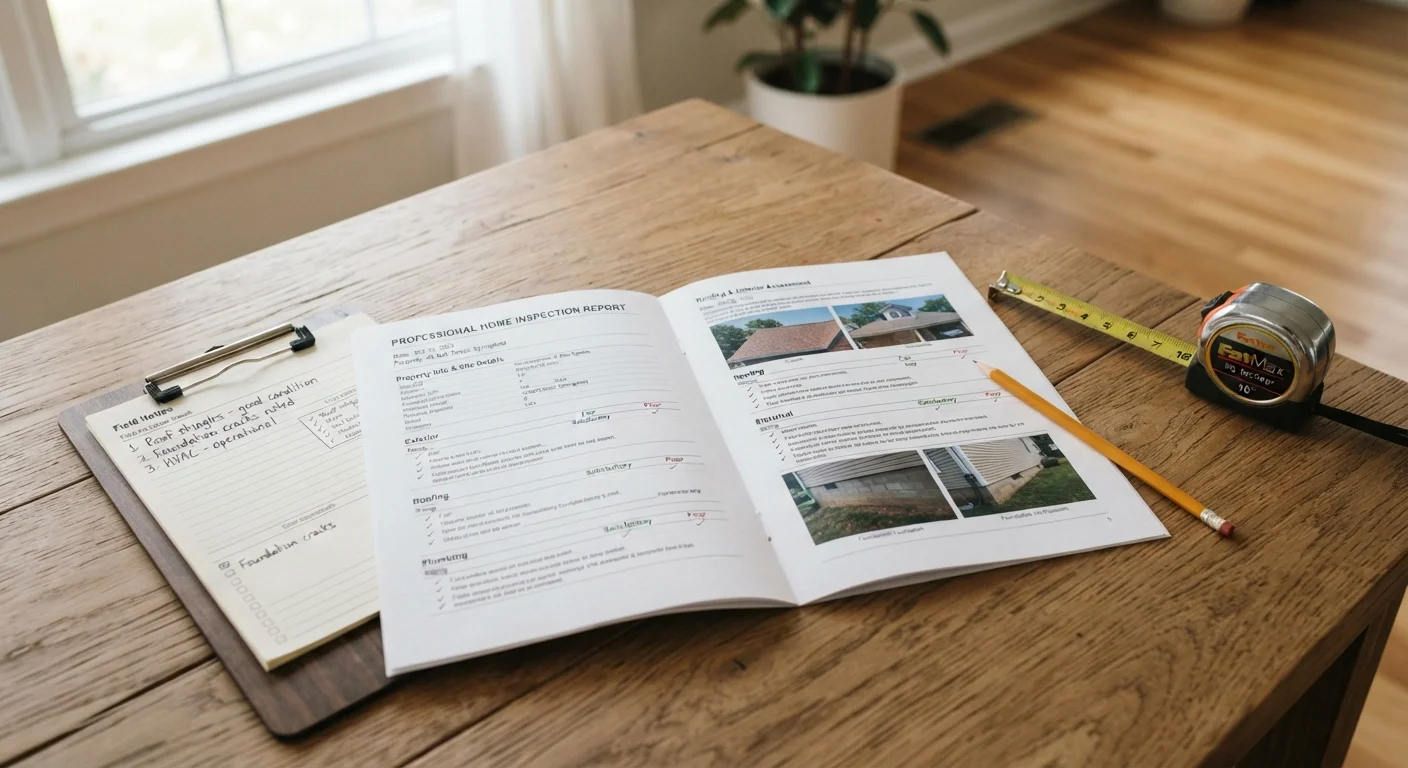
A home inspection report is a written record of a licensed inspector's visual assessment of a property's condition on a specific day. It is not a pass/fail document, and it is not a list of demands — it is a snapshot. Most reports run 30 to 60 pages and combine photographs, written observations, and condition ratings for dozens of individual systems and components.
The sheer volume of findings can feel alarming, but length alone is not a reliable indicator of how serious a property's issues are. A thorough inspector documents everything they observe, including minor maintenance items alongside genuine defects. Understanding how reports are organized — and what the language in them actually signals — is the essential first step.
For context on how inspections fit into the broader permitting and code compliance process, see our guide to permits and inspections.
| Typical report length | 30–60 pages |
| Scope of inspection | Visual only — no destructive testing |
| Systems typically covered | Roof, foundation, electrical, plumbing, HVAC, and more |
| Report delivery time | Usually within 24 hours of the inspection |
| Licensed inspector credential | Most states require licensure; verify before hiring |
| Report validity | Point-in-time snapshot — conditions can change |
Decoding Inspection Terminology and Severity Ratings
Most inspection reports use a tiered rating system, though the exact labels vary by inspector and report software. Common categories include:
- Safety hazard: Conditions that pose an immediate risk of injury or health harm — exposed electrical wiring, missing stair railings, inoperable smoke detectors. These require prompt attention regardless of negotiations.
- Major defect: Systems or components that are significantly impaired or at or near the end of useful life — a failing roof, a cracked heat exchanger in a furnace, active water intrusion. These carry meaningful repair or replacement costs.
- Deferred maintenance: Items that are not yet failing but will deteriorate if ignored — peeling paint, clogged gutters, minor caulking gaps. These are typically low-cost but time-sensitive.
- Monitor: Conditions the inspector flagged as worth watching but not currently requiring action — a hairline crack in a foundation wall that shows no active movement, for example.
Inspectors also use language carefully. "Recommend evaluation by a licensed " signals they observed something outside their scope or expertise — take these referrals seriously. "Evidence of previous repair" notes a past issue that may or may not have been resolved correctly. If the report uses unfamiliar contractor terms, our home renovation glossary can help you decode the vocabulary.
Material defect
A condition that significantly affects the value, habitability, or safety of a home. Material defects are typically the items that warrant negotiation or immediate repair action.
Deferred maintenance
Upkeep tasks that have been postponed past their ideal timing. These items are not yet failures but will worsen and become more costly if left unaddressed.
GFCI
Ground Fault Circuit Interrupter — a type of outlet or breaker that shuts off power within milliseconds when it detects a ground fault. Required by electrical code near water sources in most US jurisdictions.
Efflorescence
White or gray mineral deposits left on masonry surfaces when water evaporates after migrating through concrete or block. Its presence suggests moisture movement but does not confirm active leakage on its own.
Heat exchanger
A component inside a gas furnace that separates combustion gases from the air circulated through the home. A cracked heat exchanger is a serious safety concern requiring professional evaluation.
Grading
The slope of the soil immediately surrounding a home's foundation. Proper grading directs rainwater away from the structure to reduce the risk of water intrusion.
How to Prioritize What You've Found
Once you understand the severity levels, organize findings into three working groups:
- Act immediately: All safety hazards and major defects affecting habitability or posing liability risk. This group drives any repair requests in a real estate transaction — or your repair schedule if you already own the home.
- Plan within 12 months: Major defects that are not yet emergencies but will worsen — a roof with two to three years of remaining life, an aging water heater, or evidence of past moisture intrusion in the basement. Our article on basement moisture and warning signs covers one common category in depth.
- Add to your maintenance list: Deferred maintenance and monitored items. Schedule these into your regular upkeep calendar rather than treating them as crises.
For a broader framework on ranking projects by safety, structure, and return, see how to prioritize home improvement projects.
Inspection Reports Are Not Cost Estimates
Inspectors document conditions — they do not price repairs. A finding described as a "major defect" could cost a few hundred dollars or several thousand depending on scope, local labor rates, and what a contractor finds once work begins. Always obtain written quotes from licensed contractors before using inspection findings to negotiate price or budget a repair project.
Common Findings and What They Signal
Certain findings appear in the majority of US home inspections. Knowing what they typically mean prevents both panic and complacency:
- GFCI outlets absent near water sources: A code-required safety upgrade in kitchens, bathrooms, and garages. Relatively inexpensive to correct by a licensed electrician.
- Attic insulation below recommended levels: Affects energy efficiency and comfort but is rarely an emergency. See our insulation guide for R-value benchmarks by climate zone.
- Grading sloping toward the foundation: Directs rainwater toward the structure rather than away — a contributor to basement moisture issues over time. Regrading is often a DIY-accessible fix.
- Efflorescence on basement walls: White mineral deposits that indicate water has migrated through masonry. It signals moisture movement but does not confirm active leakage on its own.
- Roof at or near end of serviceable life: Inspectors typically estimate remaining life, not a specific replacement date. Get at least two roofing contractor assessments before budgeting.
No inspection finding is a definitive cost estimate. Use the report to identify what needs a specialist's eyes, then get written quotes before making financial decisions.