

Key Takeaways
- Moisture is the root cause of most serious basement problems, including mold, rot, and foundation damage.
- Proper ventilation and humidity control are ongoing maintenance tasks, not one-time fixes.
- Early warning signs — efflorescence, musty odors, damp spots — are far cheaper to address than late-stage damage.
- Many basement moisture problems originate outside the home, making gutter and grading maintenance critical.
- Structural cracks, persistent flooding, and active mold growth require a licensed professional, not a DIY fix.
Why Basements Are Moisture Magnets
Basements sit below grade, surrounded by soil that holds and transmits groundwater. Concrete and block foundations are porous by nature — they don't seal moisture out so much as slow it down. When soil becomes saturated from rain, snowmelt, or poor drainage, hydrostatic pressure (the force of water-laden soil pushing against your foundation) can drive moisture through walls even without visible cracks.
Condensation adds another layer. In warmer months, humid outdoor air enters the basement and contacts cool concrete surfaces, leaving behind liquid water. This cycle repeats silently until mold, wood rot, or rust signals that something is wrong. Understanding these two mechanisms — infiltration and condensation — is essential for diagnosing and preventing problems effectively.
For context on how water reaches your foundation in the first place, see our guide to what gutters actually do — neglected gutters are a leading cause of basement water intrusion.
Recognizing the Warning Signs Early
Catching moisture problems before they escalate is almost always less expensive and less disruptive. Walk your basement regularly and look for these indicators:
- Efflorescence: White, chalky mineral deposits on concrete walls. This residue is left behind when water moves through masonry and evaporates — a reliable sign that water is migrating through your walls.
- Musty or earthy odors: A persistent smell, even without visible mold, often indicates mold or mildew growing behind drywall, under flooring, or in insulation.
- Staining or tide marks: Discolored patches at consistent heights on walls suggest recurring water entry at that level.
- Peeling paint or bubbling drywall: Moisture trapped behind finished surfaces causes coatings to fail and materials to swell.
- Rust on metal: Water heater bases, support column footings, and steel beams showing rust signal sustained moisture exposure.
- Cracks in walls or floor: Hairline cracks are common and often benign; horizontal cracks in block walls, stair-step cracks in mortar joints, or cracks wider than ¼ inch warrant professional evaluation.
Our article on spotting water damage before it becomes a renovation covers these signs throughout the whole house, not just the basement.
Inspect your basement walls and floor at least twice a year — once in spring and once in fall.
Seasonal transitions are when moisture conditions shift most dramatically. Catching new efflorescence, staining, or cracks at the start of a wet season prevents minor seepage from becoming a sustained intrusion problem.
Keep a dehumidifier running during summer months and monitor readings with a hygrometer.
Summer humidity is the primary driver of condensation-related mold growth in basements. Passive ventilation alone rarely maintains safe humidity levels when outdoor air is warm and humid.
Ensure downspouts discharge water at least 4–6 feet away from the foundation.
Downspouts that terminate at the foundation's base deposit thousands of gallons of concentrated water directly where you least want it. Extensions are inexpensive and reduce hydrostatic pressure on basement walls significantly.
Never store cardboard, fabric, or untreated wood directly on a basement concrete floor.
Concrete wicks moisture, and materials in direct contact absorb it. Organic materials then become food sources for mold. Even a 'dry' basement floor will periodically be damp enough to cause problems.
Address any gaps or cracks in the rim joist with foam sealant and insulation.
The rim joist — the perimeter framing at the top of your foundation walls — is often the most significant air and moisture infiltration point in older homes. Sealing it reduces both condensation and energy loss.
Controlling Humidity and Improving Ventilation
The goal is to keep relative humidity in the basement between 30% and 50%. Above 60%, mold growth becomes likely on most organic materials. A hygrometer — an inexpensive humidity meter — is a worthwhile tool for any basement-owning homeowner.
98%
Basements experiencing water damage
The American Society of Home Inspectors has estimated that the vast majority of basements will experience some form of water intrusion over a home's lifetime.
60%+
Relative humidity threshold for mold growth
Environmental health guidelines generally identify relative humidity above 60% as the threshold at which mold growth on most materials becomes probable.
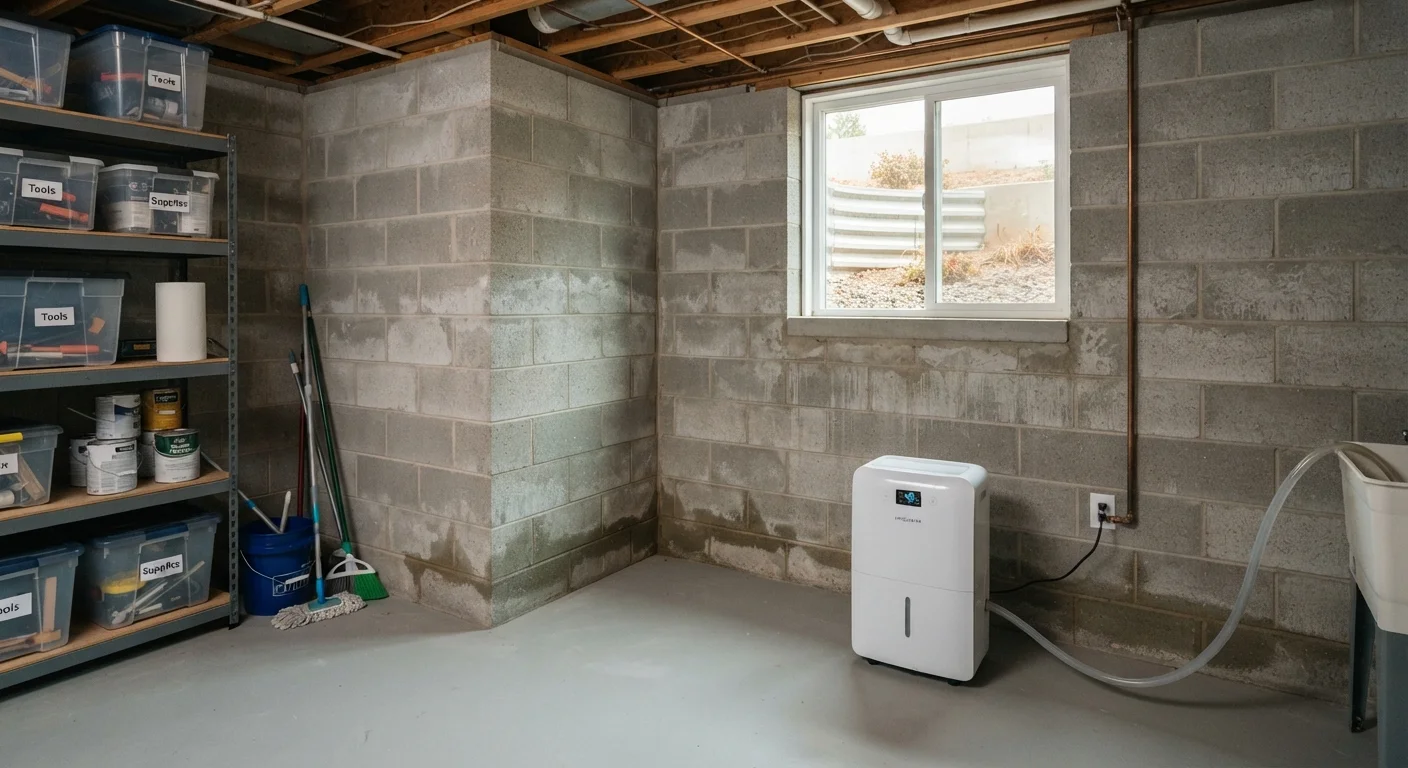
Dehumidifiers are the most direct control tool. Size the unit to your square footage; an undersized dehumidifier will run constantly without achieving adequate reduction. Empty the reservoir regularly, or direct the drain hose to a floor drain or sump pump pit. Clean the filter every few weeks during high-humidity seasons.
Ventilation matters, but opening basement windows during humid summer days can make things worse by introducing more moisture. Instead, ventilate during cooler, drier periods — mornings after low-humidity nights are a good window. If the basement is finished, ensure HVAC supply and return registers are included in the room so conditioned air circulates properly.
Vapor barriers on exposed earth in crawl spaces (or unfinished basement sections with dirt floors) are standard practice. A 6-mil polyethylene sheet overlapping seams by at least 12 inches and taped at joints can meaningfully reduce ground moisture evaporation into the space.
Check Your Sump Pump Before Storm Season
If your basement has a sump pump, test it at least once a year — ideally before spring rains. Pour a bucket of water into the pit to confirm the float triggers the pump and water discharges properly through the outlet pipe. Also check that the discharge pipe extends well away from the foundation and isn't blocked by debris or frozen in winter.
Exterior Fixes That Have the Biggest Impact
A significant portion of basement moisture problems are solved outside, not inside. Before investing in interior waterproofing systems, address these exterior factors:
- Grading: The soil around your foundation should slope away from the house — a minimum drop of 6 inches over the first 10 feet is a common guideline. Flat or negative grades funnel rain directly toward your foundation.
- Gutter maintenance: Clogged or damaged gutters overflow and deposit large volumes of water right at the foundation. Downspout extensions should discharge water at least 4–6 feet from the house.
- Window wells: Basement egress windows need properly installed wells with gravel at the bottom for drainage. A cover helps keep debris and direct rainfall out.
- Downspout splash blocks: These simple concrete or plastic pads redirect downspout discharge away from the foundation and are inexpensive to add or replace.
If you're preparing for winter, weatherproofing your home room by room includes guidance on addressing drainage and foundation gaps before cold weather arrives.
When to Call a Professional
Some basement conditions are beyond routine homeowner maintenance and require a licensed waterproofing contractor, structural engineer, or remediation specialist:
- Active mold colonies covering more than 10 square feet generally require professional remediation. Mold in HVAC systems, inside wall cavities, or on structural framing poses health risks that go beyond what surface cleaning can address.
- Horizontal foundation cracks indicate lateral soil pressure and can signal structural failure — have these assessed by a structural engineer promptly.
- Recurring flooding despite exterior fixes may require interior drainage systems (French drains) or sump pump installation, both of which involve permits in most jurisdictions.
- Foundation wall bowing or shifting is a serious structural concern requiring immediate professional evaluation.
If you've received a home inspection report flagging basement issues, our guide to reading your home inspection report explains how to interpret severity ratings and prioritize next steps.
For broader context on keeping your home in good shape year-round, routine upkeep fundamentals for first-time homeowners is a useful companion read.