

| Typical planting spacing | 6-18 inches apart, depending on species |
| Time to establish coverage | 1-3 growing seasons for most species |
| Hardiness zones covered | Zones 3-11 (varies by plant) |
| Common site challenges addressed | Shade, slopes, dry soil, poor drainage |
| Erosion control benefit | Root systems reduce soil displacement on slopes |
| Weed suppression | Dense canopy shades out germinating weed seeds |
Why Ground Covers Deserve a Closer Look
Bare patches under trees, steep banks prone to erosion, and baked-dry strips along driveways are among the most frustrating corners of any yard. Grass often fails in these spots, and mulch needs constant replenishment. Ground cover plants-low-growing species that spread horizontally to blanket the soil-offer a more permanent answer.
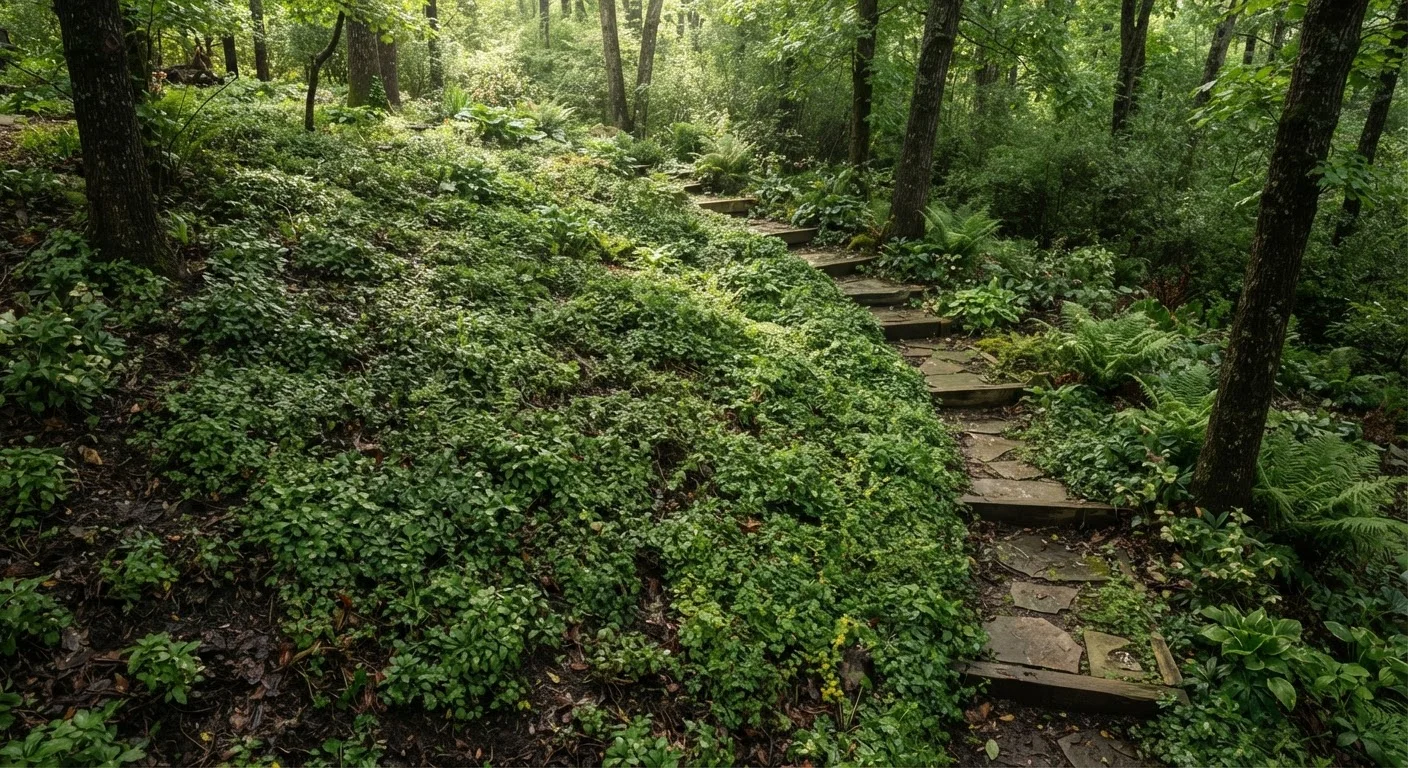
Beyond looks, ground covers suppress weeds by shading out germinating seeds, reduce water runoff on slopes, limit soil erosion, and build organic matter as their leaves decompose. Many are perennials that return each year with minimal intervention, making them a practical investment for homeowners who want a lower-maintenance landscape. For those also exploring edible options, our beginner's vegetable garden guide walks through soil and plant basics that translate well to any ground-level planting.
| Typical planting spacing | 6-18 inches apart, depending on species |
| Time to establish coverage | 1-3 growing seasons for most species |
| Hardiness zones covered | Zones 3-11 (varies by plant) |
| Common site challenges addressed | Shade, slopes, dry soil, poor drainage |
| Erosion control benefit | Root systems reduce soil displacement on slopes |
| Weed suppression | Dense canopy shades out germinating weed seeds |
Plant Profiles by Condition
Shady Spots
- Pachysandra (Pachysandra terminalis): A reliable evergreen for dense shade under trees. Spreads slowly by underground stems; tolerates dry shade once established. Zones 4-8.
- Ajuga (Bugleweed): Fast-spreading, low rosettes with spring flower spikes in purple or blue. Handles part to full shade and moist soils well. Zones 3-9.
- Wild Ginger (Asarum canadense): A native option with heart-shaped leaves ideal for woodland gardens. Spreads gradually and prefers consistently moist, rich soil. Zones 3-7.
Slopes and Erosion-Prone Areas
- Creeping Juniper (Juniperus horizontalis): Woody, evergreen, and extremely tough. Deep root system anchors soil on steep banks. Drought-tolerant once established. Zones 3-9.
- Crown Vetch (Coronilla varia): Aggressively spreads across slopes and stabilizes soil quickly. Note: it can spread beyond desired areas in some regions-check local guidance before planting.
- Creeping Phlox (Phlox subulata): Forms dense mats with a spring flush of colorful blooms. Works well on sunny slopes with well-drained soil. Zones 3-9.
Dry and Poor Soil
- Sedum (Stonecrop): Succulent foliage retains moisture; thrives in rocky, lean soil with full sun. Wide variety of species available in different heights and colors. Zones 3-9.
- Creeping Thyme (Thymus serpyllum): Fragrant, pollinator-friendly, and tolerant of foot traffic. Ideal between stepping stones or on dry sunny slopes. Zones 4-9.
- Lantana (Lantana camara): Heat- and drought-tolerant; produces clusters of bright flowers. Grown as a perennial in warm climates (Zones 8-11) and as an annual farther north.
For deeper guidance on matching water habits to plant needs, see our article on common garden watering mistakes that can stress even tough ground covers.
Stolon
A horizontal above-ground stem that spreads away from the parent plant and takes root at nodes to form new plants. Common in ajuga and creeping thyme.
Rhizome
An underground stem that grows horizontally and sends up new shoots at intervals. Pachysandra and wild ginger spread this way.
USDA Hardiness Zone
A geographic designation based on average annual minimum winter temperatures, used to indicate which plants are likely to survive winter in a given region.
Erosion control
The use of plants, mulch, or physical barriers to prevent soil from being washed or blown away. Ground covers are a common biological method on slopes and banks.
Crown
The point at or just below the soil surface where a plant's roots meet its stems. Burying the crown too deeply or smothering it with mulch can cause rot.
Choosing and Establishing Ground Covers Successfully
Selecting the right plant starts with an honest assessment of your site: how much direct sun does it receive, how does water drain after heavy rain, and what is the soil texture? Most ground cover failures trace back to a mismatch between plant and site rather than poor care.
Key Considerations Before Planting
- Spread habit: Some ground covers spread by runners above soil (stolons), others by underground stems (rhizomes), and some self-seed freely. Fast spreaders fill in quickly but may need edging to stay in bounds.
- Maintenance expectations: Even low-maintenance plants benefit from an initial weeding period while they establish. Plan for one to two growing seasons before coverage becomes dense enough to suppress weeds reliably.
- Native vs. non-native: Native ground covers generally support local pollinators and wildlife more effectively. Our guide to native plants for American home gardens is a useful companion reference.
- Invasive potential: A handful of popular ground covers-English ivy and Japanese honeysuckle among them-are listed as invasive in multiple US states. Check your state's invasive species list before purchasing.
When planting on slopes, install plants in staggered rows and water deeply after planting to help roots reach down rather than sideways. Mulch lightly between plants to retain moisture without smothering crowns. Once the planting is established heading into fall, consult our end-of-season garden checklist to winterize correctly and protect new growth.