

Key Takeaways
- Native plants are adapted to local soils and climates, typically requiring less water and fertilizer than non-natives.
- Many native species actively support pollinators like bees, butterflies, and hummingbirds.
- Choosing regionally appropriate natives reduces maintenance and improves long-term garden resilience.
- Native plants can thrive in challenging spots — slopes, dry areas, and partial shade — where other plants struggle.
Why Native Plants Belong in Your Garden Plan
Native plants have evolved alongside local soils, rainfall patterns, and wildlife for thousands of years. That evolutionary history translates into real-world advantages for homeowners: reduced watering needs, fewer pest problems, and built-in habitat value that imported ornamentals simply can't match.
They're not a compromise — many natives offer seasonal color, textural interest, and wildlife activity that rivals any non-native garden plant. The key is matching species to your region, your site conditions, and your maintenance comfort level.
Native Plant Ranges Vary by Region
A plant labeled 'native' is most beneficial when it's native to your specific region, not just the US broadly. Check with your local cooperative extension service or a native plant society to identify which species are indigenous to your county or state. Regionally native plants are better adapted to your local soils, rainfall patterns, and native wildlife needs.
The seven plants below represent a cross-section of what's available — from sun-loving prairie species to shade-tolerant woodland natives. All are widely available through native plant nurseries and are considered non-invasive, well-behaved choices for residential gardens.
Purple Coneflower (Echinacea purpurea)
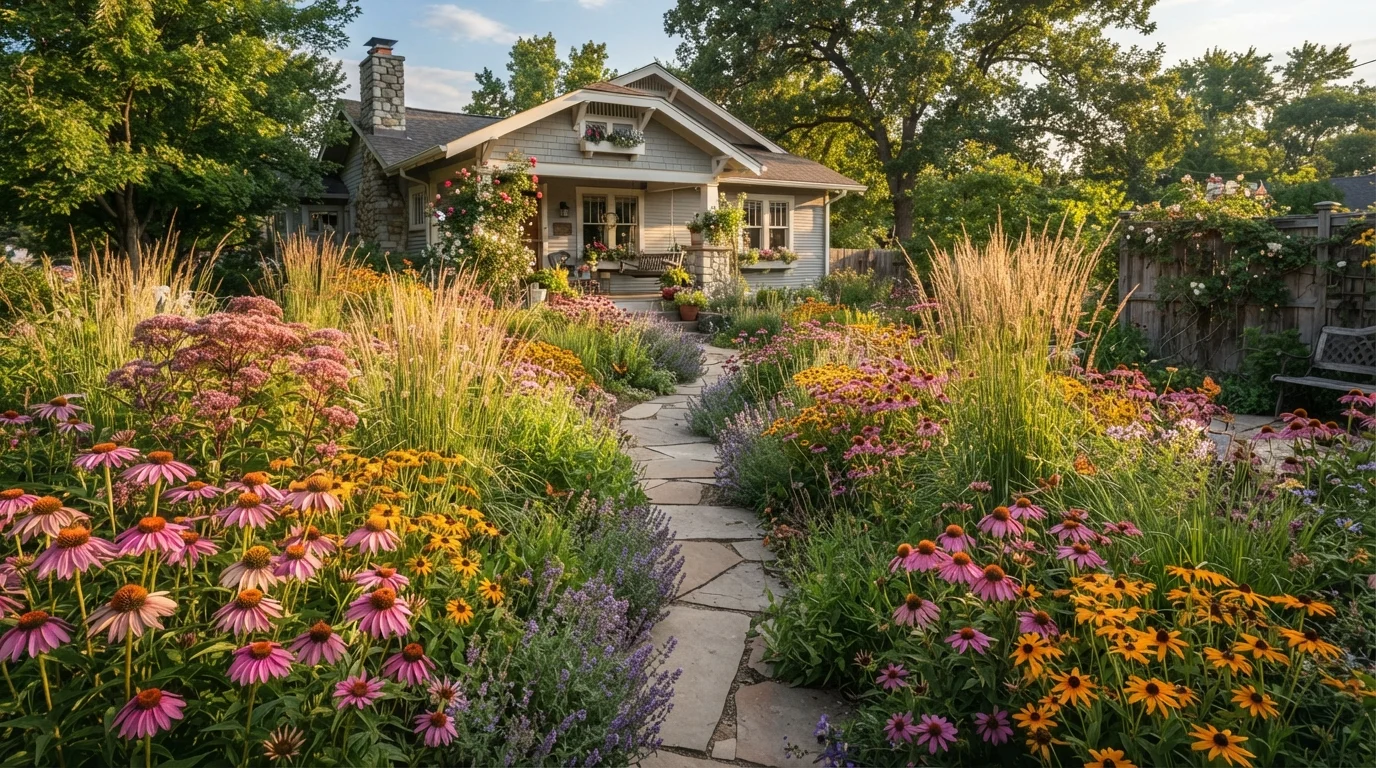
One of the most recognizable native wildflowers in the US, purple coneflower is native to the central and eastern regions but adapts well across much of the country. It thrives in full sun with well-drained soil and, once established, handles drought with minimal fuss.
Its daisy-like blooms attract bees and butterflies throughout summer, and the seed heads persist into fall and winter, feeding birds like goldfinches. It spreads gradually by self-seeding, so you can allow colonies to naturalize in a border or meadow-style planting.
Purple coneflower feeds pollinators in summer and seed-eating birds through winter.
Black-Eyed Susan (Rudbeckia hirta)
Black-eyed Susan is a warm-season perennial native to most of North America. It performs well in USDA hardiness zones 3–9, tolerates poor and dry soils, and produces bright yellow flowers with dark centers from midsummer through early fall.
It's an excellent choice for homeowners who want color without constant attention. Black-eyed Susan self-seeds freely and pairs well with native grasses, creating a naturalistic look that suits informal garden styles. It's also short-lived as a perennial, but reseeding keeps colonies going year after year.
Black-eyed Susan thrives in poor soil and reliably reseeds without gardener intervention.
Wild Blue Indigo (Baptisia australis)
Wild blue indigo is a long-lived perennial native to the eastern and central US. It develops a deep taproot over time, which makes it exceptionally drought-tolerant once established — though that same root system means it dislikes being moved once planted.
Its striking blue-purple flower spikes appear in late spring. After blooming, the attractive blue-green foliage remains as a tidy, shrub-like mound throughout the growing season. Bumblebees are particularly drawn to it. Choose your planting location carefully, as it can take two to three years to settle in fully.
Wild blue indigo's deep taproot makes it one of the most drought-resilient native perennials available.
Eastern Red Columbine (Aquilegia canadensis)
Eastern red columbine is native to the eastern half of North America and uniquely suited to shady and partially shaded spots where many other natives struggle. It produces distinctive red and yellow nodding flowers in spring that are a primary nectar source for ruby-throated hummingbirds migrating north.
It grows well in average to dry soils and naturalizes readily by seed. In a woodland garden or under deciduous trees, it fills the spring gap before shade becomes too dense. If you're working on a challenging shaded area, also consider the ground cover options that complement columbine in low-light conditions.
Eastern red columbine blooms in spring shade and is a critical early food source for hummingbirds.
Little Bluestem (Schizachyrium scoparium)
Little bluestem is a warm-season native grass found across the US prairies and open woodlands. It earns its place in home gardens with four-season interest: blue-green summer foliage, copper and russet fall color, and fluffy seed heads that catch winter light.
It's highly adaptable to poor and dry soils, making it suitable for slopes or areas with low fertility where lawn grass fails. Birds feed on its seeds through winter, and its clumping habit avoids the invasive spread common with some ornamental grasses. Because native grasses establish from soil contact rather than transplanting easily, review seed starting versus transplant guidance before deciding how to establish it.
Little bluestem delivers four seasons of visual interest while feeding birds on little to no supplemental water.
Swamp Milkweed (Asclepias incarnata)
While common milkweed dominates the monarch butterfly conversation, swamp milkweed is often a better fit for home gardens. It's more compact, less aggressive in spreading, and accepts average garden moisture — not just wet conditions, despite the name.
Its rosy-pink flower clusters bloom in midsummer and support monarch caterpillars, which feed exclusively on milkweed foliage. It's native across most of the eastern US and performs well in zones 3–6. Because it stays relatively tidy and doesn't send out disruptive underground runners, it integrates well into mixed perennial borders without taking over.
Swamp milkweed supports monarch butterflies without the aggressive spreading of common milkweed.
Coral Bells (Heuchera americana)
Coral bells are native to eastern North America and bring fine-textured, mounded foliage to shady and semi-shady garden corners. The original species features understated greenish flowers, but numerous cultivars have been developed from the native stock for bolder foliage color.
For native garden purposes, species-type or minimally bred forms are preferable, as heavily hybridized selections offer less wildlife value. Hummingbirds visit the small tubular flowers in late spring. Coral bells are also a practical solution for dry shade — a garden problem addressed in the ground cover reference guide for homeowners dealing with difficult spots.
Species-type coral bells offer hummingbird habitat and handsome foliage with minimal care in shade.
Getting the Most From Native Plants in Your Garden
Native plants reward patience. Many establish slowly in year one as they direct energy into root development rather than top growth — but that investment pays dividends in subsequent seasons with minimal inputs required.
Establish First, Then Step Back
Most native plants need supplemental watering during their first growing season while roots develop. After that first year, many require little to no additional irrigation. Good establishment watering habits matter — avoid the common mistakes covered in the garden watering habits guide to give new natives the best start.
If you're working with raised beds or structured planting areas, consider how natives fit alongside your broader garden design. The raised bed planning guide covers drainage and soil considerations that also affect native plant performance. And when the growing season wraps up, the end-of-season checklist will walk you through how to leave native plantings in good shape for winter — including which seed heads to leave standing for wildlife benefit.