

Key Takeaways
- Drip irrigation delivers water directly to the root zone, reducing evaporation and weed growth.
- Sprinkler systems cover large areas quickly but lose more water to evaporation and overspray.
- Drip systems generally cost less upfront for small garden beds; sprinklers suit larger, open landscapes.
- Wet foliage from sprinklers can increase the risk of fungal disease on some plants.
- Both systems can be automated with timers, but drip setups are easier to expand incrementally.
- Your garden's size, plant types, and local water restrictions should guide the choice.
Option A
Drip Irrigation
The targeted, water-efficient option for garden beds and containers.
Best for: Best for vegetable gardens, raised beds, shrubs, and any planting area where water conservation and root-zone delivery matter.
Option B
Sprinkler Systems
The broad-coverage choice for lawns and larger planted areas.
Best for: Best for turf grass, ground covers, and wide open planting zones that benefit from overhead, uniform water distribution.
If you grow vegetables, herbs, or flowers in defined beds
Drip Irrigation
Drip lines deliver water precisely to the root zone, keeping foliage dry and reducing disease risk - a significant advantage for edible gardens.
If you need to water a turf lawn or large open area
Sprinkler Systems
Sprinklers are designed for broad, even coverage across grass and ground covers where targeted delivery isn't practical.
If water conservation is a top priority
Drip Irrigation
Drip systems can use significantly less water than overhead sprinklers by minimizing evaporation and limiting runoff.
If you want a simple setup for an established, mixed landscape
Sprinkler Systems
A well-zoned sprinkler system can handle varied plantings in one place with less hands-on reconfiguration over time.
If you're gardening in a raised bed or container setup
Drip Irrigation
Drip emitters can be customized to each container or bed section, making them far more adaptable than fixed sprinkler heads.
How Each System Works
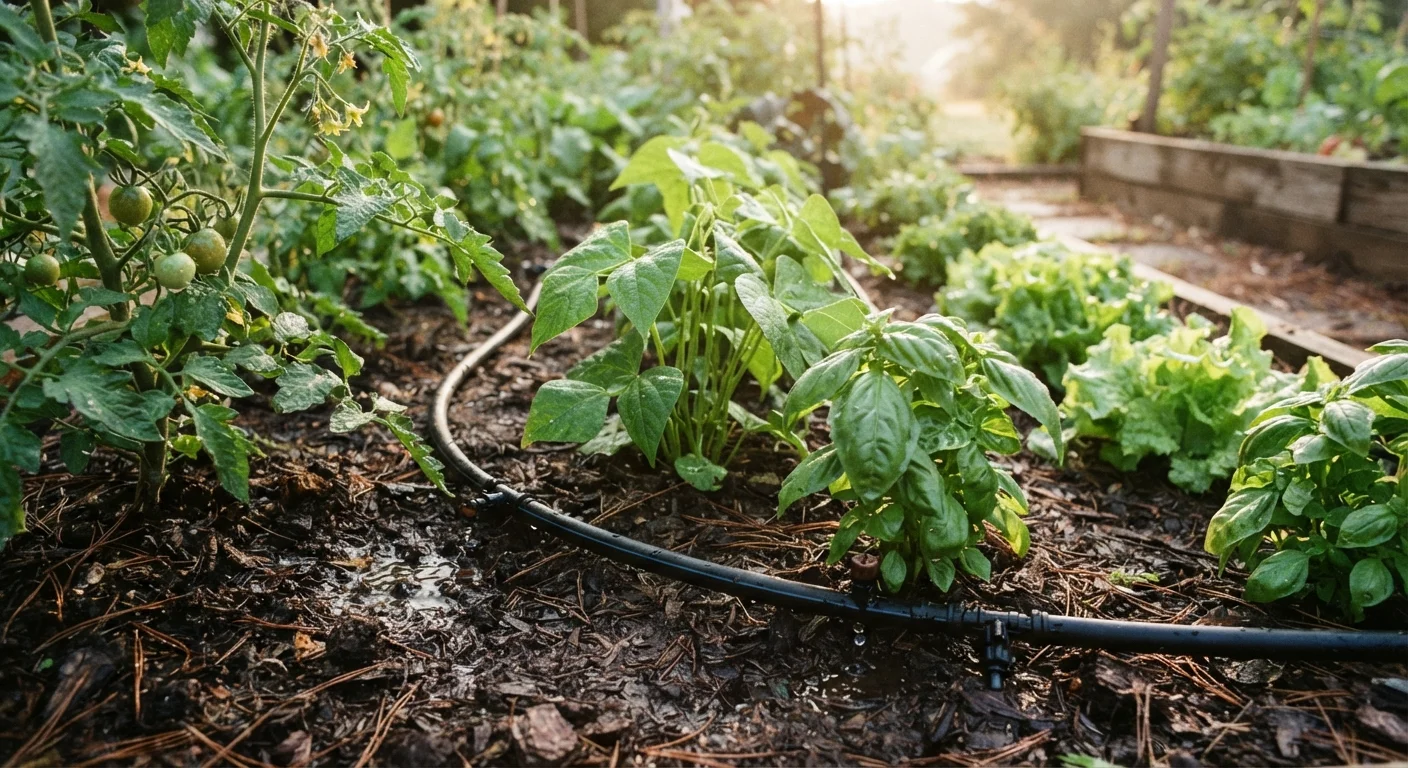
Drip irrigation operates through a network of low-pressure tubing and emitters placed at soil level. Water seeps slowly and directly into the root zone of each plant, with little exposure to sun or wind. This method is well-suited to raised beds and defined garden areas, where plants are spaced in predictable patterns.
Sprinkler systems, by contrast, broadcast water upward and outward through rotating or fixed heads. The water falls across a wide area, much like rainfall. This approach works well for large, open spaces - particularly turf lawns - but loses efficiency when used in densely planted or irregularly shaped gardens.
Both systems can connect to a standard outdoor water supply and be paired with automatic timers. The fundamental difference is where the water ends up: at the root with drip, or across the surface and foliage with sprinklers.
| Criterion | Drip Irrigation | Sprinkler Systems |
|---|---|---|
| Water efficiency | High - delivers to root zone | Moderate - evaporation and drift losses |
| Best suited for | Garden beds, containers, shrubs | Lawns, large open areas |
| Foliage wetness | Leaves stay dry | Leaves get wet |
| Upfront cost (small garden) | Generally lower | Higher for in-ground systems |
| Installation complexity | DIY-friendly for most setups | In-ground may require a contractor |
| Weed suppression | Better - dry zones between plants | Weaker - waters entire surface |
| Automation options | Timer-compatible, zone-by-zone | Timer-compatible, zone-by-zone |
| Scalability | Easy to expand incrementally | Expansion requires more planning |
Water Efficiency and Plant Health
Drip irrigation consistently outperforms sprinklers in water efficiency. Because water goes directly to the soil, very little is lost to evaporation or wind drift. Sprinklers, especially in warm or windy conditions, can lose a substantial portion of water before it ever reaches roots. This matters not just for water bills, but for compliance in areas with seasonal watering restrictions.
Wet foliage is another concern with sprinkler systems. Many common garden plants - tomatoes, squash, roses - are susceptible to fungal diseases that take hold when leaves stay damp. Drip irrigation sidesteps this problem entirely. For guidance on watering habits that can quietly stress plants, overhead watering at the wrong time is frequently cited as a contributing factor.
Drip systems also tend to discourage weed germination between plants, since dry soil between emitters receives little moisture. Sprinklers, by watering broadly, inadvertently water the spaces between plants just as thoroughly.
30-50%
Water savings with drip vs. overhead irrigation
The U.S. Environmental Protection Agency notes that drip irrigation can use 20-50% less water than conventional sprinkler systems, depending on setup and conditions.
50%
Outdoor water use attributed to irrigation
According to EPA WaterSense program data, roughly half of residential outdoor water use goes to landscape irrigation, much of it applied inefficiently.
Cost, Installation, and Maintenance
For a small to mid-size garden bed, drip irrigation is generally the more affordable starting point. Basic kits include tubing, emitters, and a timer, and most homeowners can install them without professional help. Systems can be expanded one zone at a time as the garden grows - a practical advantage for incremental projects.
Sprinkler systems, especially in-ground types, involve more upfront cost and typically require trenching, which may call for a licensed irrigation contractor depending on your municipality's requirements. Above-ground oscillating sprinklers are inexpensive but manual. Pop-up in-ground systems are more convenient but significantly more complex to install and repair.
Maintenance needs differ as well. Drip emitters can clog over time, particularly in areas with hard water, and tubing can be damaged by foot traffic or garden tools. Sprinkler heads can break, sink, or shift out of alignment. Both systems benefit from a seasonal check-up - flushing drip lines in spring and adjusting sprinkler heads before heavy use periods.
Pairing either system with a layer of mulch can improve soil moisture retention and reduce watering frequency. See our comparison of organic vs. inorganic mulch options for more on that topic.
Choosing the Right Fit for Your Garden
The right system comes down to what and where you're growing. Vegetable and herb gardens, container plantings, and flower beds are natural fits for drip irrigation. Lawns and wide-open landscape areas - particularly those with native or drought-tolerant plantings - are better served by sprinklers, though even here, efficiency varies by head type and scheduling.
Many homeowners end up using both: drip lines for garden beds and a separate sprinkler zone for the lawn. This hybrid approach lets each area receive the watering method it's best suited to, without forcing a single system to do everything adequately.
Before installing any permanent system, check whether your local water authority has seasonal use restrictions or rebate programs for efficient irrigation equipment - these vary widely by region and can affect both your installation choices and ongoing costs.