

Key Takeaways
- Blind-spot monitoring systems use radar or ultrasonic sensors with specific detection zones that don't cover every threat.
- Most systems cannot reliably detect fast-approaching vehicles, cyclists, or pedestrians in all conditions.
- Overreliance on driver-assistance technology is a documented contributor to preventable lane-change crashes.
- A shoulder check takes under two seconds and catches what sensors can miss.
- Understanding what your car's system actually monitors makes you a safer, more informed driver.
What Blind-Spot Monitoring Actually Does
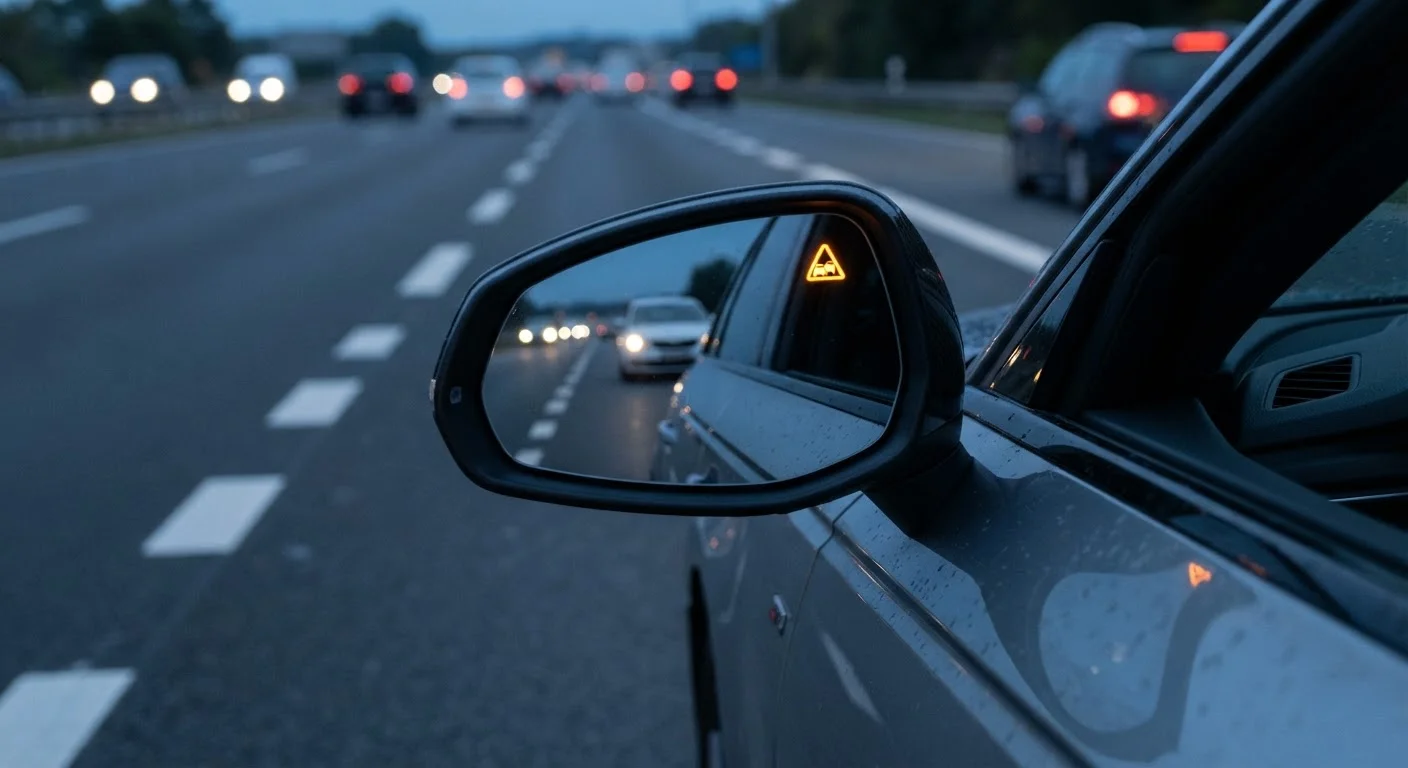
Blind-spot monitoring (BSM) systems use radar sensors - typically mounted in the rear bumper - to scan the zones alongside and slightly behind your vehicle. When a vehicle enters that detection zone, the system triggers a visual alert in or near the corresponding side mirror. Some systems add an audible chime or steering-wheel vibration if you engage the turn signal while the alert is active.
That's genuinely useful technology. But the detection zone is fixed by the sensor's field of view, which varies by manufacturer and model. Most systems are calibrated to flag vehicles traveling at comparable speeds in adjacent lanes - the classic highway merging scenario. They are not designed to be an all-purpose proximity warning system, and the distinction matters enormously in practice.
For context on the broader ecosystem of driver-assistance features, understanding how lane-keeping systems differ from one another helps illustrate how narrowly each technology is scoped.
Common Myths - and What the Evidence Says
Drivers routinely overestimate what BSM can see. Below, we address the most consequential misconceptions head-on.
Myth
If the warning light doesn't come on, there's nothing in my blind spot.
Fact
BSM sensors have defined detection ranges and can miss objects that are too close, too far, or moving significantly faster than your vehicle.
Radar-based BSM systems detect objects within a specific zone - typically extending about 10-15 feet to the rear and side of the vehicle. A motorcycle accelerating rapidly from well behind you may enter and exit that zone faster than the alert cycle triggers. A bicyclist riding close alongside your front quarter panel may be entirely outside sensor range. The absence of an alert is not confirmation that the path is clear; it's confirmation that nothing meeting the system's detection criteria was present in its defined zone at that moment.
Myth
Blind-spot monitoring works the same in all weather and road conditions.
Fact
Radar sensors can be degraded by ice, snow, mud, or damage to the bumper area where they're housed.
BSM sensors are typically integrated into the rear bumper fascia. Accumulated ice, packed snow, mud, or even certain aftermarket bumper accessories can attenuate the radar signal, reducing detection range or disabling the system altogether. Some vehicles will display a warning when sensor obstruction is detected; others may not. Drivers in winter climates or off-road conditions should verify their system is functioning - and not assume a lack of alerts means the system is working normally.
Myth
BSM will alert me to cyclists and pedestrians, not just other cars.
Fact
Most production BSM systems are optimized for vehicle-to-vehicle detection and have unreliable or inconsistent performance with cyclists, pedestrians, and smaller objects.
Radar cross-section - the reflectivity of an object to radar waves - is much smaller for a cyclist or pedestrian than for another vehicle. BSM systems calibrated for highway lane-change scenarios may not reliably detect or alert to these road users. Urban driving, where cyclists and pedestrians are most prevalent, is precisely where BSM provides the least comprehensive coverage. A shoulder check remains the only reliable method for confirming the adjacent space is clear of all road users before maneuvering.
Myth
The system monitors my blind spots continuously, so I don't need to check as often.
Fact
BSM is designed to supplement attentive driving habits, not replace them - and reducing your own monitoring is a documented safety risk.
Automotive safety research has found that drivers with active BSM systems sometimes reduce mirror-checking frequency, assuming the technology compensates. But BSM has detection gaps by design, and no current system provides full situational awareness. Shoulder checks, mirror scans, and BSM alerts are meant to work together. Treating any one of them as the sole source of information creates a gap that, in low-probability but real scenarios, leads to crashes that a combined approach would have prevented.
The Real Risk: Automation Complacency
Researchers who study driver behavior have documented a consistent pattern: when drivers trust an automated system too much, their own monitoring behaviors deteriorate. This is called automation complacency, and it's not a character flaw - it's a predictable human response to perceived redundancy. If you believe the car will warn you, you check your mirrors and shoulder less often.
The problem compounds because BSM systems fail silently in some conditions - a sensor obscured by ice or road grime may simply stop alerting without any dashboard notification. If you've already reduced your own checking habits, you now have neither a working alert nor a compensating habit.
Sensor Obstruction Can Disable Alerts Without Warning
Ice, snow, or mud covering the rear bumper area can reduce or eliminate BSM sensor function. In some vehicles, the system will not display a dashboard fault when this occurs. During winter months or after off-road driving, visually inspect your rear bumper and confirm the system is active before relying on alerts.
This connects directly to broader patterns of overconfidence behind the wheel. Cognitive biases that inflate road-safety confidence are well-documented and affect even experienced drivers. And distraction makes the problem worse - common in-car distractions that feel harmless erode the attentional baseline that safety systems assume you still have.
Shoulder Checks: Simple, Fast, and Irreplaceable
A proper shoulder check - rotating your head to view the area your mirrors don't cover - takes roughly one to two seconds. It captures pedestrians stepping off a curb, cyclists filtering alongside in urban traffic, motorcycles approaching faster than radar anticipates, and anything else in your actual physical environment that sensors might miss or misclassify.
No current production BSM system replicates this. The technology is designed to assist, not replace, the visual scan a trained driver performs before a lane change. Driving instructors and safety organizations have consistently framed these systems as supplements to good technique, not substitutes for it.
~840,000
Annual US lane-change crashes
The NHTSA has estimated that hundreds of thousands of crashes per year in the US involve lane-change or merge maneuvers - a category BSM is specifically designed to address, though not eliminate.
1-2 sec
Time required for a shoulder check
Driving safety researchers note that a full head-turn shoulder check takes only one to two seconds - a minimal time cost with meaningful safety benefit that no current sensor system fully replicates.
If your BSM warning light appears on your dashboard and you're unsure what it means, a guide to dashboard warning lights can help you identify whether the sensor system itself has flagged an issue.
The practical takeaway is uncomplicated: use BSM as one input among several, keep your mirror-checking and shoulder-check habits intact, and treat any alert as a prompt to look - not as the entirety of the information you need before changing lanes.