

Key Takeaways
- Most roof problems are visible from the ground before they cause interior damage.
- Moss and algae actively degrade shingles and should be treated, not ignored.
- Flashing failures around chimneys and vents are a leading source of water intrusion.
- A roof covering more than 25% of its surface in damaged shingles typically warrants replacement.
- Twice-yearly inspections — spring and fall — catch the majority of developing issues early.
Why Roof Maintenance Matters More Than Most Homeowners Realize
Your roof is your home's primary defense against water, wind, and temperature extremes — yet it tends to get attention only after something goes wrong. A small leak ignored for one season can saturate insulation, rot decking, and invite mold into wall cavities within months. The cost difference between catching a cracked flashing early and remediating the resulting water damage is significant.
Roof maintenance doesn't require climbing ladders or calling a contractor every spring. Much of it is observational — learning to recognize the early signals that appear long before a ceiling stain does. This guide walks through every major component of a residential roof, explains what to watch for, and helps you decide when a repair is sufficient and when replacement is the more economical path. It fits naturally alongside a year-round home maintenance calendar that keeps all your seasonal tasks in one place.
40%
of home insurance claims related to water damage
Water intrusion — much of it roof-related — is consistently among the most common sources of homeowner insurance claims in the US.
20–30 yrs
typical asphalt shingle lifespan
Three-tab shingles generally last 20–25 years; architectural shingles are rated for 25–30 years under average conditions.
2×/year
recommended minimum inspection frequency
Most roofing professionals and home maintenance resources recommend spring and fall inspections as the baseline for residential roofs.
How to Read Your Roof from the Ground
Binoculars and a clear day are the only tools most homeowners need for a productive roof inspection. Walk the perimeter of your home and examine each slope methodically, working from the ridge down to the eaves.
Shingle Condition Signals
- Cupping: Shingle edges curl upward, exposing the underlayer. Common in older asphalt shingles or those installed without adequate ventilation.
- Clawing: The middle of the shingle lifts while edges stay flat. Often indicates the shingle is drying out and losing granules.
- Missing granules: Bare patches appear darker than surrounding shingles. Check downspout discharge for granule accumulation — a reliable indicator of accelerated wear.
- Missing or displaced shingles: Any bare decking visible from the ground is an urgent repair item.
- Sagging sections: A wavy or depressed area on a slope suggests decking rot or structural movement beneath — escalate to a professional promptly.
After checking the roof surface, spend five minutes in the attic during daylight — any pinhole light visible through the decking confirms a gap that needs sealing before the next rain.
Attic-side inspection often reveals minor penetrations invisible from outside, and catching them early prevents insulation saturation and mold development.
Keep a dated record of granule accumulation in your downspout discharge areas — a sudden increase from one season to the next is a more reliable wear indicator than shingle appearance alone.
Granule loss tracks actual shingle degradation; a spike in accumulation can signal the roof is entering its final serviceable years even when it still looks acceptable from the ground.
After any significant windstorm, a quick ground-level pass can save you from discovering interior damage weeks later. Note that walking on a roof without proper footwear and safety equipment carries real fall risk; ground-level observation handles the majority of diagnostic work safely.
Managing Moss, Algae, and Debris
Dark streaking on roof slopes is almost always Gloeocapsa magma, a cyanobacterium that feeds on the limestone filler in asphalt shingles. It's primarily cosmetic in early stages but creates a surface that retains moisture, accelerating granule loss over time. Moss — the raised, cushion-like growth — is more immediately damaging because it physically lifts shingle edges as it expands, creating channels for water infiltration.
Treatment Approach
Zinc or copper strips installed along the ridge line release trace metals with rainfall that inhibit biological growth. For established moss or algae, a diluted bleach-and-water solution (typically one part bleach to four parts water) applied with a low-pressure sprayer and rinsed gently is a widely used approach. Avoid pressure washing — it strips granules and voids most shingle warranties.
Overhanging branches accelerate both problems by keeping shingle surfaces shaded and moist. Trimming limbs that hang within a few feet of the roof reduces debris accumulation and drying time after rain — a maintenance task that pairs well with the end-of-season garden checklist you'd already be running each fall.
Flashing, Gutters, and the Vulnerable Spots
Shingles are only part of the system. Flashing — the thin metal strips (typically galvanized steel or aluminum) sealed around chimneys, skylights, plumbing vents, and wall intersections — is where the majority of leak complaints originate. It's also where the fix is often straightforward if caught early: resealing with roofing caulk or replacing a single piece of flashing costs a fraction of repairing the water damage that follows an unaddressed gap.
What to Examine
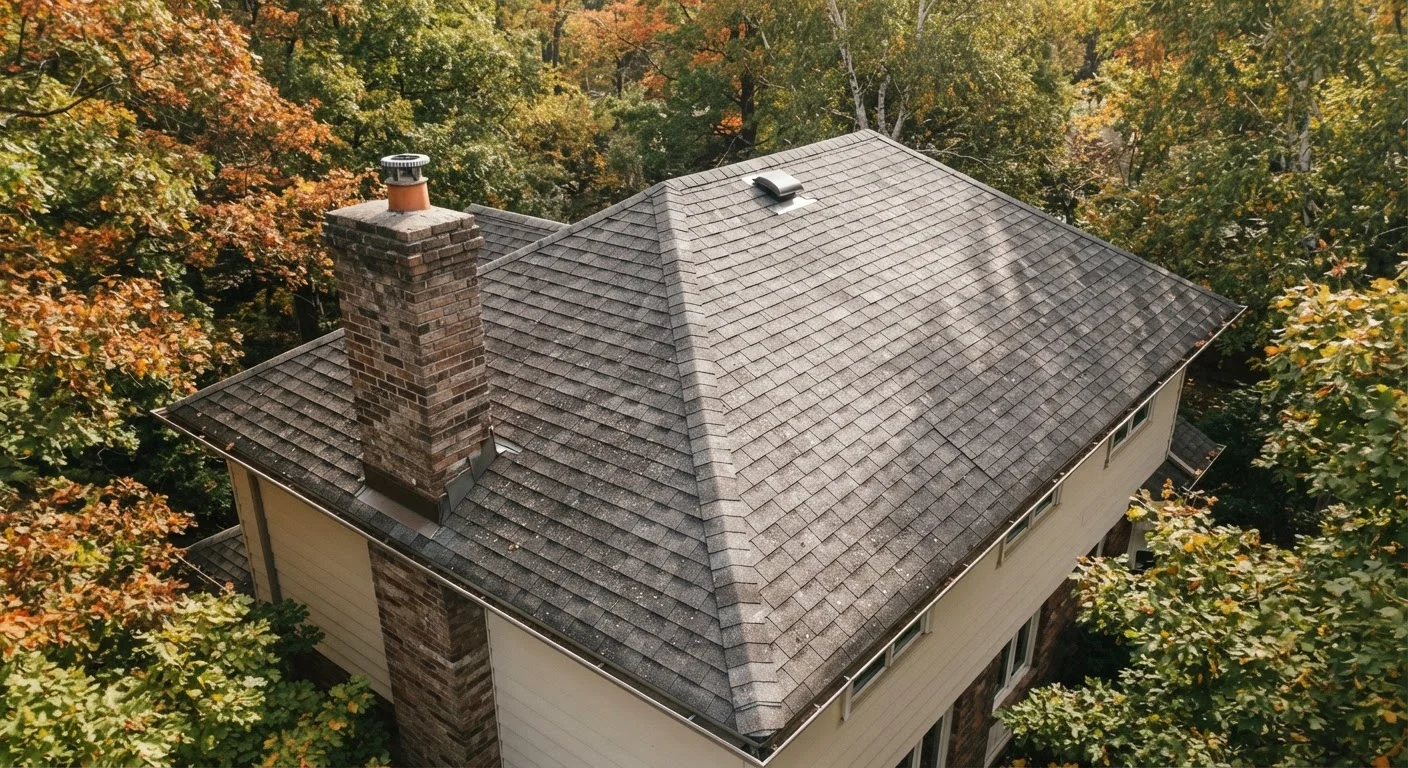
- Chimney flashing: Look for separation at the mortar line or visible rust streaking on the surrounding shingles.
- Valley flashing: The channel where two slopes meet. Debris accumulation here directs water laterally under shingles.
- Vent pipe boots: The rubber collar around plumbing vents degrades in UV exposure; cracking is common on roofs over 10 years old.
Gutters are part of the same water-management system. Blocked gutters back water under the eave's first shingle course — a direct path to rot. For a detailed explanation of how gutter failures interact with roof and foundation health, see our guide on what gutters actually do and why cleaning matters.
Repair vs. Replacement: Knowing the Threshold
The repair-or-replace decision hinges on three factors: the extent of damage, the age of the roof relative to its expected lifespan, and the integrity of the decking beneath.
Don't Delay on Decking Damage
Soft or spongy areas on the roof deck indicate moisture has already penetrated beyond the shingles. Continuing to apply surface repairs over damaged decking traps moisture and accelerates structural rot. If a professional notes soft spots during inspection, prioritize full repair over cosmetic patching — and verify whether a permit is required in your jurisdiction for decking replacement.
General Guidelines
- A standard three-tab asphalt shingle roof carries an expected lifespan of roughly 20–25 years; architectural (dimensional) shingles are rated for 25–30 years under typical conditions.
- If damaged or missing shingles cover less than roughly 25–30% of one slope and the decking is sound, spot repair is usually appropriate.
- If the roof is within 5 years of its expected lifespan, layering repairs over aging material rarely makes economic sense — the underlayment and decking have the same age as the shingles and will need replacement regardless.
- Two or more layers of existing shingles (visible at the eave edge) typically require full tear-off before any new installation, per most building codes.
For structural questions — sagging ridgelines, soft spots underfoot (when a professional is on the roof), or signs of moisture in attic insulation — always engage a licensed roofing contractor before making a repair decision. Structural issues fall outside DIY territory.
Building a Maintenance Schedule That Sticks
Roof maintenance is most effective when it's habitual rather than reactive. Two dedicated inspections per year — one in spring after freeze-thaw cycles and one in late fall before winter precipitation — cover the majority of failure modes.
Seasonal Focus Areas
- Spring
- Check for shingles displaced or damaged by winter ice damming. Inspect flashing sealant for cracking. Clear valley debris. Check attic for moisture staining on rafters.
- Fall
- Remove leaf accumulation from valleys and gutters. Trim overhanging branches. Inspect vent boots. Note any granule accumulation in downspouts as a baseline.
Roof condition doesn't exist in isolation — the same seasonal discipline that protects your roof connects to broader home health. If you're building out your maintenance habits, the guide on routine upkeep for first-time homeowners provides a useful foundation. Addressing roof problems early also protects the interior spaces below — something covered from a different angle in our article on maintaining a healthy basement.
Document each inspection with dated photos stored in a home folder. This record is useful when evaluating warranty claims, planning budgets, or preparing for a home sale.