

Key Takeaways
- Every homeowner should know the location of their main water shut-off valve before an emergency occurs.
- Home plumbing is split into a pressurized supply side and a gravity-driven drain-waste-vent side.
- Water pressure consistently above 80 psi can accelerate wear on pipes and fixtures.
- Many small leaks reveal themselves through subtle clues like higher water bills or discolored ceilings.
- Certain plumbing tasks require a licensed plumber and local permits — DIY is not always appropriate.
Home Plumbing System
Your home's plumbing system is a network of pipes, valves, and fixtures that delivers fresh water in and removes wastewater out. It operates under pressure, relies on gravity for drainage, and is divided into a supply side and a drain-waste-vent (DWV) side. Understanding how these two sides work together helps you catch problems early and make informed decisions about repairs.
Water pressure in a typical residential supply system is measured in pounds per square inch (psi); the normal range is 40–80 psi. Pressure outside this range can damage fixtures or create flow problems.
The Two Sides of Your Plumbing System
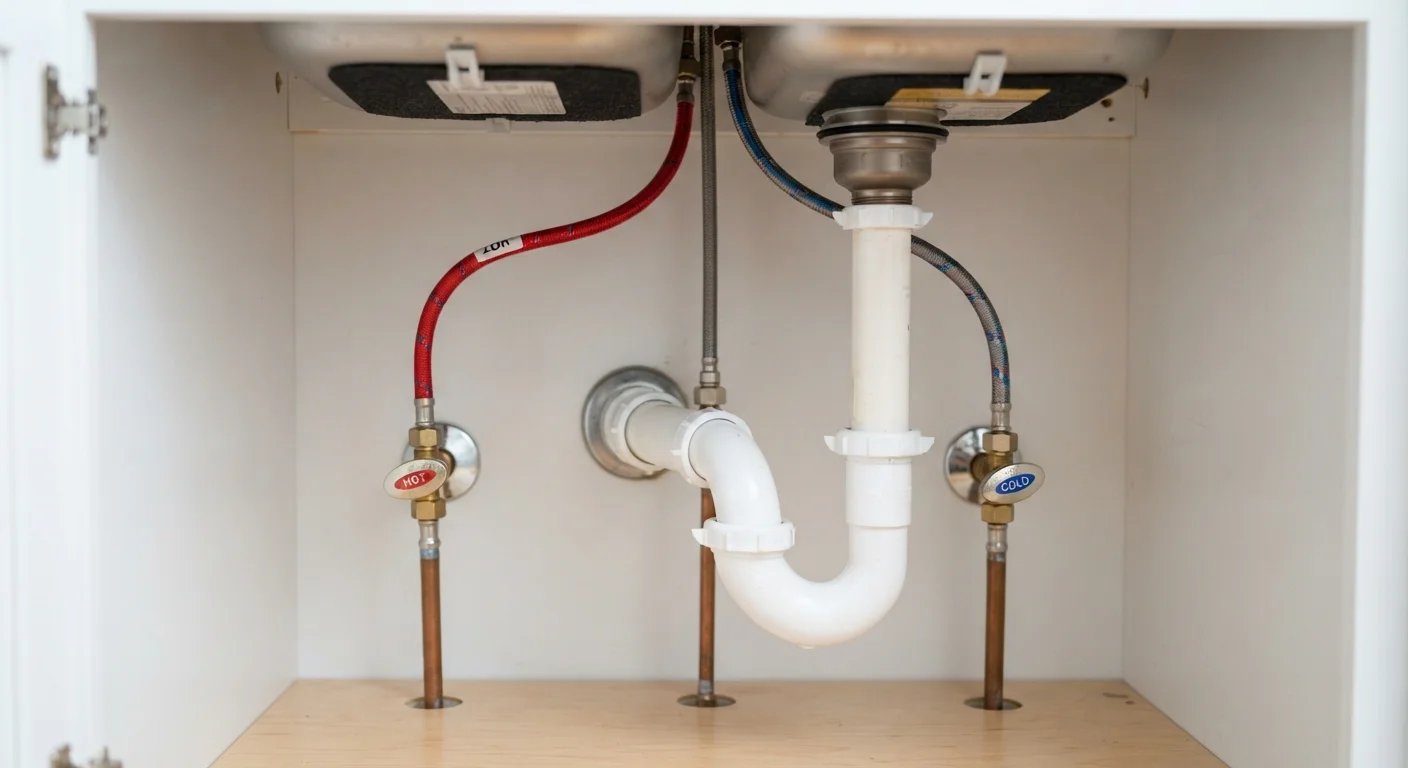
Every residential plumbing system works in two directions simultaneously. The supply side brings pressurized fresh water from the municipal main (or a private well) into your home and routes it to every faucet, appliance, and fixture. The drain-waste-vent (DWV) side removes used water and sewage by gravity, channeling it toward the municipal sewer or a septic system.
The DWV side also includes vent pipes — typically exiting through your roof — that allow sewer gases to escape safely outside and maintain the air pressure needed for drains to flow properly. A gurgling drain or a toilet that drains slowly can sometimes point to a blocked or improperly installed vent, not a clog in the drain itself.
Understanding this two-part structure helps you interpret symptoms correctly. For example, a slow drain in one fixture is usually a local blockage, while slow drains throughout the house may point to a problem on the main drain line. Similarly, low pressure at every tap is a supply-side issue, not a fixture problem. See our guide on bathroom renovation myths for how misunderstanding plumbing basics can lead to costly remodel errors.
10%
Homes with leaks wasting 90+ gallons per day
According to the U.S. Environmental Protection Agency (EPA), about one in ten homes has leaks that waste 90 gallons or more of water daily — most from worn faucet washers, toilet flappers, or valve seats.
40–80 psi
Safe residential water pressure range
Most plumbing codes and manufacturer guidelines identify 40–80 psi as the functional and safe range for household supply pressure; sustained pressure above 80 psi is a common cause of premature fixture wear.
~10,000 gallons
Water wasted per year by an average leaky home
The EPA estimates the average American household loses roughly 10,000 gallons annually to leaks — equivalent to the water needed to wash nearly 270 loads of laundry.
Shut-Off Valves: What They Are and Why You Need to Know Them
One of the most practical skills any homeowner can develop is knowing where their shut-off valves are located — before they ever need them. There are two types to be aware of:
- Main shut-off valve: Controls water flow to the entire house. Turning it off stops all water — essential during a burst pipe or major leak. It's typically near the water meter.
- Fixture shut-off valves: Small valves located under sinks, behind toilets, and behind appliances like washing machines. They let you cut water to a single fixture without shutting off the whole house.
A valve that hasn't been turned in years can seize or fail when you need it most. Periodically exercising your shut-off valves — turning them fully off and back on — helps keep them functional. If a valve is corroded, leaking, or won't turn, that's a job for a licensed plumber.
Exercise Your Shut-Off Valves Annually
Once a year, locate both your main shut-off and each fixture-level shut-off, and turn them fully off then fully back on. This prevents the valve seats from seizing due to mineral buildup or disuse. If a valve is stiff, corroded, or leaks when operated, schedule a plumber to replace it before you actually need it in an emergency.
Water Pressure and What It Tells You
Water pressure affects everything from shower satisfaction to the lifespan of your pipes and fixtures. Pressure that's too low creates frustrating flow; pressure that's too high stresses pipe joints, wears out washers faster, and can cause appliances to fail prematurely.
A basic pressure gauge — available at most hardware stores — screws onto any hose bib (outdoor spigot) and gives you an immediate reading. The normal residential range is generally 40–80 psi. Many homes have a pressure-reducing valve (PRV), a bell-shaped device found where the main supply enters the house. PRVs are adjustable and have a typical service life of 10–15 years; a plumber should replace a failing one.
If you notice banging sounds in your pipes when a faucet or appliance shuts off — sometimes called "water hammer" — that's often a sign of high pressure or a water hammer arrestor that needs attention. Don't ignore it; repeated pressure surges can loosen pipe joints over time.
Spotting Trouble Early
Many plumbing problems announce themselves quietly long before they cause serious damage. Knowing what to look and listen for can save significant repair costs. Some common early warning signs include:
- Unexplained increase in your water bill: A spike with no change in usage habits often indicates a running toilet, dripping faucet, or hidden pipe leak.
- Discoloration on ceilings or walls: Yellow or brown stains suggest a slow leak above, possibly from a supply line, drain, or wax ring under a toilet. Our guide on spotting water damage early covers these signs in detail.
- Musty or sulfur-like odors: Can indicate standing water in a wall cavity or a dry P-trap (the curved pipe under a drain) that has lost its water seal and is allowing sewer gas to enter.
- Rust or discolored water: Orange or brown water from hot taps may indicate corrosion inside your water heater tank. From cold taps, it could signal aging galvanized pipes.
If you're proactive about routine home maintenance, you're more likely to catch these issues at the small and inexpensive stage.
When to Call a Licensed Plumber
Some plumbing tasks are well within the reach of an attentive homeowner — replacing a faucet aerator, unclogging a slow drain with a plunger or drain snake, swapping a toilet flapper, or tightening a supply line connection. Others carry real risk or require permits, and those should go to a licensed professional.
Tasks that typically require a licensed plumber in most U.S. jurisdictions include: replacing or relocating supply or drain lines inside walls, water heater installation or replacement, sewer line work, and any project that requires a building permit. Attempting these without proper licensing can void your homeowner's insurance coverage for related damage and create complications when selling your home.
When evaluating any plumbing project, the guiding question should be: Is this a maintenance task, or is it modifying the system? Maintenance — cleaning, replacing worn parts, unclogging — is generally DIY-friendly. Modification — rerouting, adding lines, replacing major components — is generally professional territory. Review our overview on common home maintenance myths to avoid misconceptions about what's safe to tackle yourself.
This article is for general educational purposes only. Always verify local permit requirements and consult a licensed plumber before undertaking any plumbing work beyond basic maintenance.