

Key Takeaways
- Most renovation projects run longer than initial estimates due to predictable, avoidable planning gaps.
- Permit delays, material lead times, and scope changes are the most frequent timeline killers.
- Building in a buffer of 20–30% extra time reduces stress and helps you manage contractor expectations.
- Early decisions about finishes and fixtures prevent the most disruptive mid-project delays.
Why Delays Are the Rule, Not the Exception
Ask almost any homeowner who has completed a renovation, and they'll tell you the same thing: it took longer than expected. This isn't just bad luck — it's a systemic pattern rooted in how renovations are planned, priced, and executed. Understanding why delays happen is the first step toward managing them.
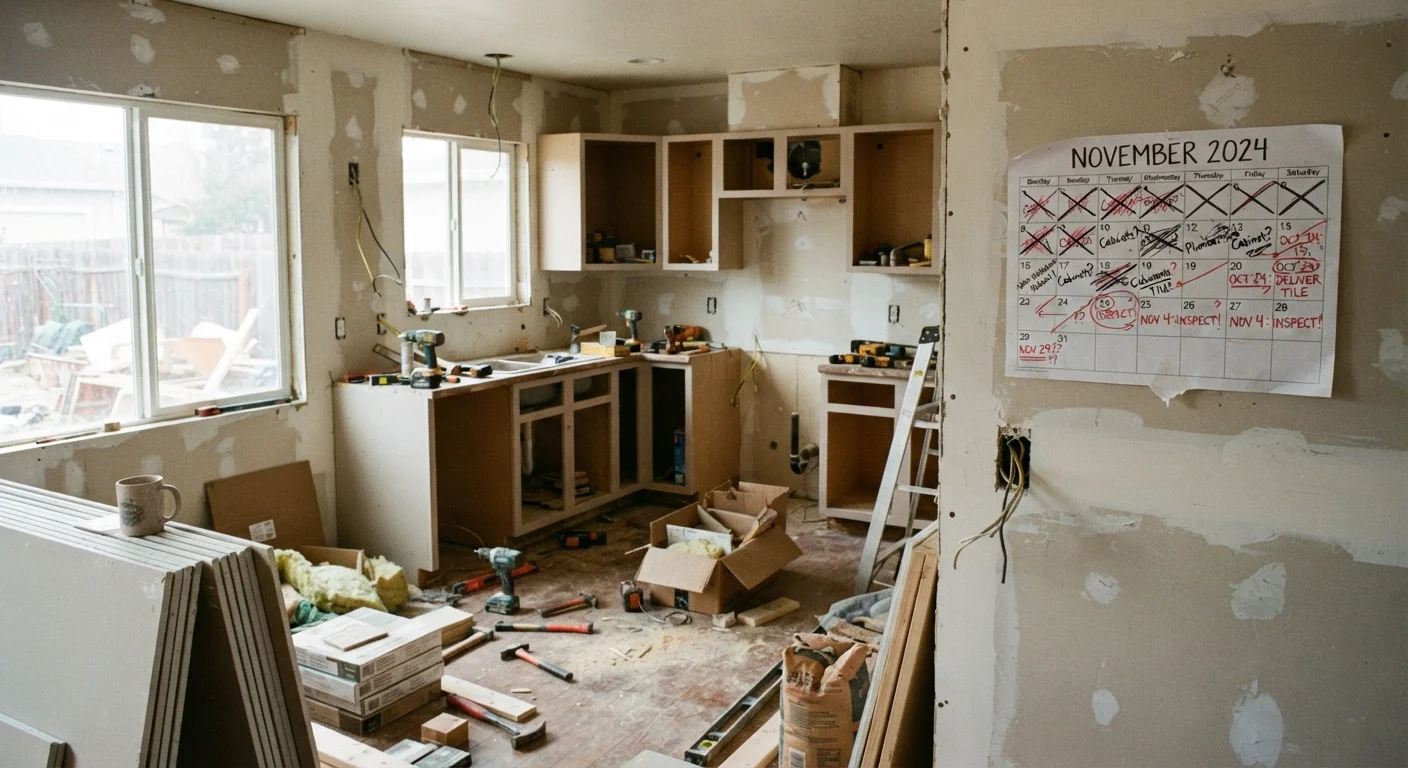
Renovation timelines are estimates built on assumptions. Contractors assume materials will arrive on time, inspectors will be available quickly, and no surprises will emerge once walls open up. In practice, each assumption has a meaningful chance of failing. When several fail in sequence, a six-week kitchen project can stretch to ten or twelve weeks without anyone making a major error.
The good news: most causes of delay are predictable. By understanding them in advance, you can build a more honest schedule, make smarter early decisions, and avoid the frustration of a timeline that keeps slipping. See our kitchen remodel planning walkthrough for a stage-by-stage look at what a realistic schedule involves.
Accepting a contractor's best-case timeline as the actual schedule.
Why it happens: Contractors naturally present optimistic timelines to win bids, and homeowners want to believe the project will move quickly.
Waiting to select materials and fixtures until after demolition starts.
Why it happens: Many homeowners underestimate lead times for tile, cabinetry, and plumbing fixtures, assuming items can be ordered and received within days.
Failing to account for permit processing time in the project schedule.
Why it happens: Homeowners and even some contractors treat permits as a formality rather than a scheduling variable with its own timeline.
Agreeing to scope changes verbally without updating the timeline.
Why it happens: Mid-project additions feel minor in the moment, and homeowners are often hesitant to slow things down with paperwork when momentum is good.
Not planning for what happens when hidden conditions are discovered.
Why it happens: It's hard to anticipate problems inside walls, floors, or ceilings, so most homeowners simply don't budget time or money for them.
How to Build a More Realistic Project Timeline
Once you understand what causes delays, you can plan around them rather than hoping they won't apply to you. A realistic timeline isn't pessimistic — it's professional. Contractors who underpromise and overdeliver build lasting reputations for a reason.
Don't Schedule Around an Optimistic End Date
Booking travel, planning events, or moving back into a space based on your contractor's initial estimate is one of the most stressful mistakes homeowners make. Treat any quoted completion date as a rough target until the project is well into its final phase. Firm commitments should follow confirmed progress, not projected timelines.
Start by padding your contractor's estimate by 20–30% for any project involving permits, custom orders, or work inside walls. For larger whole-home renovations, some project managers recommend planning for delays equal to the entire original duration of the most complex phase.
Lock in material selections — tile, cabinetry, fixtures, hardware — before demolition begins. Late selections are one of the most disruptive timeline killers because they create cascading idle time for trades waiting to proceed. Refer to our renovation glossary to get familiar with terms like lead time, rough-in, and punch list so you can have informed conversations with your contractor from the start.
Schedule permit applications as early as possible — ideally before your contractor's start date. In many jurisdictions, permit turnaround runs two to six weeks. Treating permitting as a pre-project task rather than a project task eliminates one of the most common early delays. If you're weighing which projects to take on first, the framework in prioritizing home improvement projects can help you sequence work strategically.
Finally, build a written change-order process into your contractor agreement before work begins. Verbal scope changes are the leading cause of billing disputes and schedule confusion. Every change — no matter how small — should be documented with an updated timeline and cost before the work proceeds. For a deeper look at how these same dynamics play out in bathrooms specifically, see bathroom renovation myths that cost homeowners money.
~80%
Renovations that exceed original timeline
Industry surveys consistently find that a large majority of home renovation projects run over their initial schedule estimates.
4–16 weeks
Typical lead time for custom cabinetry and specialty fixtures
Material lead times vary widely by product and supplier; confirming delivery windows before demolition begins is essential to avoiding idle time on the job site.