

Key Takeaways
- Short, consistent training sessions of 5–10 minutes work better than long, infrequent ones.
- Positive reinforcement — rewarding desired behavior — is the foundation of effective, humane training.
- Each command builds on the last; mastering "Sit" first makes "Stay" and "Come" easier to teach.
- "Leave it" is one of the most important safety commands a dog can learn.
- Always end every session on a success so your dog associates training with good experiences.
What you will need
Why These Four Commands Matter
Sit, Stay, Come, and Leave It aren't just party tricks — they're the behavioral building blocks that keep dogs safe and households running smoothly. A dog who reliably responds to these cues is easier to manage at the vet, around guests, near traffic, and in any moment when quick compliance could prevent an accident or injury.
These commands also do something less visible but equally important: they give your dog a framework for understanding how to interact with the world around them. Dogs thrive when they know what's expected. Clear communication reduces anxiety, builds confidence, and deepens the trust between you and your pet.
The methods used here are rooted in positive reinforcement principles — rewarding the behaviors you want to see rather than punishing the ones you don't. This approach is supported by decades of behavioral research and is widely recommended by veterinary and training professionals.
What you will need
Getting Ready to Train
Before your first session, gather what you need and choose the right environment. Training works best in a calm, low-distraction space — start indoors, then gradually practice in areas with more environmental challenges as your dog improves. Keep sessions to 5–10 minutes to match your dog's natural attention span, and aim for two or three sessions a day rather than one long marathon.
Consistency is the single biggest factor in how quickly a dog learns. Everyone in the household should use the same cue words and hand signals. If one person says "Come here, boy!" while another says "Come," your dog has to learn multiple cues for one behavior — that's extra cognitive work that slows progress.
High-value training treats
Used to reward correct responses immediately after the desired behavior occurs.
Treat pouch or pocket
Keeps rewards accessible so you can deliver them within a second or two of the behavior.
Clicker
Provides a precise, consistent marker sound to pinpoint the exact moment your dog performs the right behavior.
Standard 4–6 ft leash
Keeps your dog safely within training range, especially useful when practicing "Come" at a distance.
Step-by-Step: Teaching the Four Commands
Work through these commands in order. Each one lays the groundwork for the next, and moving too quickly can undermine the reliability you're trying to build. If your dog struggles with a step, go back to the previous one and spend more time there — that's not failure, it's good training.
Teach "Sit"
Hold a treat close to your dog's nose, then slowly move your hand up and back over their head. As their nose follows the treat upward, their bottom will naturally lower toward the ground. The moment they're fully seated, say "Sit" clearly and reward immediately. Repeat 5–10 times per session until the response is consistent before adding the verbal cue before the movement.
Teach "Stay"
Ask your dog to sit. With an open palm facing them, say "Stay" and take one small step back. If they hold position for even one second, return to them and reward. Gradually build duration (seconds first, then minutes) and distance (one step, then several) before adding distractions. Never rush this — a shaky "Stay" at close range is worth fixing before adding distance.
Teach "Come"
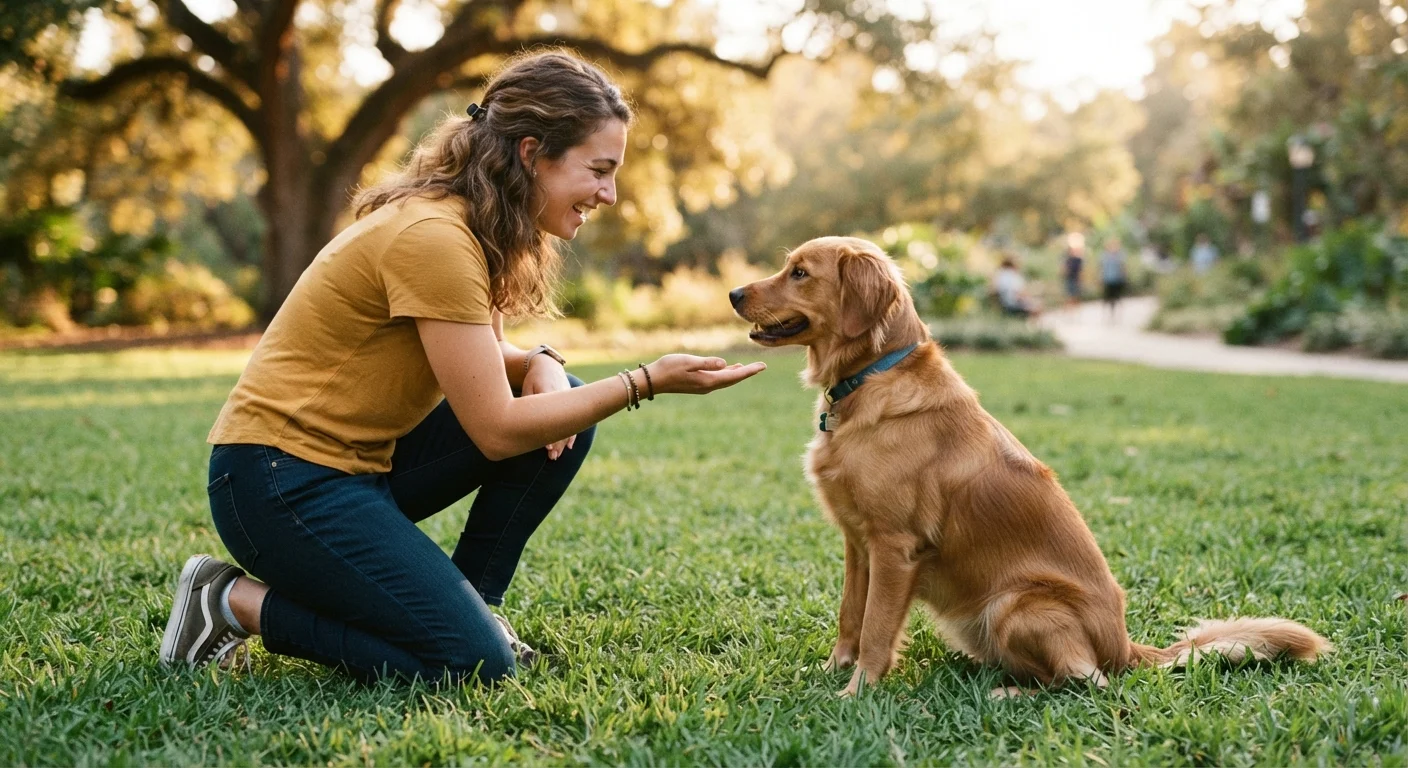
With your dog on a leash, crouch down to their level, open your arms wide, and say "Come" in a warm, enthusiastic voice. When they reach you, reward generously — this should feel like a celebration. Practice with the leash before trying off-leash recall in a fully enclosed space. Make coming to you the best thing that happens in your dog's day.
Teach "Leave It"
Place a low-value treat in your closed fist and let your dog sniff, lick, or paw at it. The moment they pull back or pause, say "Leave it" and reward with a different, higher-value treat from your other hand. Practice until they back away from your closed fist immediately. Then progress to treats on the floor covered by your foot, and eventually to uncovered items with the cue alone.
If your dog is having persistent trouble with recall in particular, our article on why dogs ignore the "Come" command explains common causes and how to rebuild that response from scratch.
Troubleshooting and Next Steps
Every dog learns at a different pace, and that's completely normal. If your dog is distracted, the treats may not be motivating enough — try higher-value rewards like small pieces of cooked chicken or cheese. If your dog seems frustrated or disengaged, shorten the session and end on something easy they already know well.
Avoid repeating a cue over and over if your dog isn't responding. Saying "Sit, sit, sit" teaches your dog that the first cue doesn't need to be taken seriously. Say it once, gently guide into position if needed, then reward. Over time, the single cue becomes meaningful.
Once your dog has a solid handle on these four commands, you're in excellent shape to expand their skills. The complete dog training reference covers how to build on this foundation throughout every life stage, and our guide for new dog owners is a great companion resource if you're just getting started.
This article is for general informational and educational purposes. For guidance specific to your dog's health, behavior history, or special needs, consult a qualified veterinary or professional dog training professional.