

Key Takeaways
- Enclosure size matters more than most owners expect — err generously on floor space.
- Bedding depth, substrate type, and ventilation directly affect respiratory and foot health.
- Temperature, lighting, and placement in the home are as important as the enclosure itself.
- Enrichment items reduce stress and prevent boredom-related health problems in small pets.
- A consistent setup from day one makes daily care routines far easier to maintain.
What you will need
Why the Habitat Matters More Than You Might Expect
When people think about small pet care, feeding and handling often come to mind first. But the physical environment your animal lives in around the clock has an outsized effect on their physical health, emotional wellbeing, and even how easily they bond with you. An undersized or poorly arranged enclosure can contribute to stereotypic behaviors (repetitive, compulsive movements), chronic stress, and preventable health problems — all of which affect quality of life and veterinary costs over time.
This is especially relevant for first-time owners who may rely on general advice or packaging claims that don't fully reflect what veterinary and behavioral research supports. For a broader look at daily care routines that pair with a good habitat setup, see our foundation guide for first-time pet owners.
Consult a Vet Before Bringing Your Pet Home
Habitat needs vary meaningfully between species and even between individual animals. Before finalizing your setup, consult a veterinarian familiar with small mammals or exotic pets. This article provides general educational guidance only — it is not a substitute for professional veterinary advice tailored to your specific animal.
The steps below apply broadly to common small mammals such as rabbits, guinea pigs, hamsters, gerbils, and rats — but species differences are significant. Always verify specific requirements with a knowledgeable veterinarian or reputable species-specific resource.
What you will need
What You'll Need
Gathering everything before setup day prevents last-minute substitutions that may not be safe or appropriate. Here's what to have on hand:
Appropriately sized enclosure
Provides the primary living space; floor area requirements vary by species.
Solid-bottom substrate or bedding
Cushions feet, absorbs waste, and supports natural burrowing behavior.
Hideaway or shelter box
Gives the animal a secure retreat to reduce stress and regulate body temperature.
Water bottle or heavy ceramic bowl
Delivers clean, accessible drinking water without tipping or contamination.
Food dish
Keeps pellets and fresh food off bedding and easy to monitor.
Thermometer
Monitors ambient temperature to keep the habitat within the species-safe range.
Enrichment items (tunnels, chew toys, platforms)
Provides mental stimulation and physical activity to support wellbeing.
Hay rack or foraging tray
Keeps hay clean and accessible; essential for rabbits and guinea pigs.
Set Up Before Your Pet Arrives
Having the habitat fully assembled, cleaned, and stocked with food and water before your pet comes home reduces the stress of transition. A familiar-smelling piece of bedding from the breeder or shelter, placed inside the enclosure, can help your new animal settle in more quickly.
Step-by-Step Habitat Setup
Work through these steps in order. Each one builds on the last, and skipping ahead — particularly on enclosure size or bedding selection — tends to create problems that are harder to fix once the animal is already home.
Choose the right enclosure size
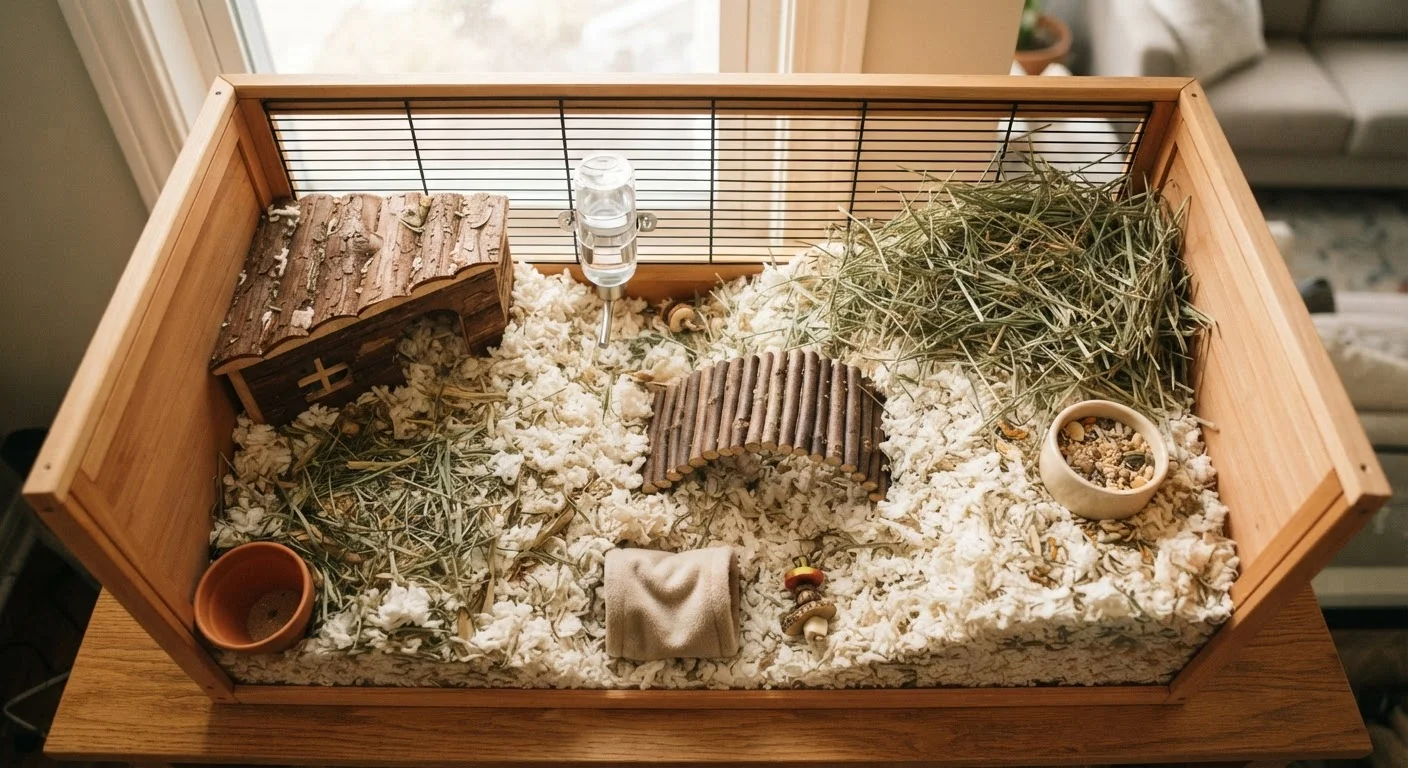
Floor space is the single most important dimension. A commonly cited minimum for a guinea pig pair is roughly 7.5 square feet of usable floor area; a single rabbit typically needs at least 8 square feet of enclosure space plus daily free-roaming time. Hamsters, despite their small size, benefit from enclosures with a minimum of around 600 square inches of floor space to support natural activity levels. When in doubt, larger is always better. Enclosures should also be tall enough to allow natural postures — a rabbit should be able to sit upright without touching the ceiling.
Select and layer appropriate bedding
Bedding serves three functions: cushioning, odor absorption, and enabling natural behaviors like burrowing. Paper-based or compressed paper bedding is widely considered appropriate for most small mammals and is generally low-dust, which matters for respiratory health. Avoid cedar and pine shavings — aromatic oils in these woods can irritate airways and affect liver function over time. For Syrian hamsters and other burrowing species, aim for a bedding depth of at least 6 inches in part of the enclosure to allow full burrowing. For rabbits and guinea pigs, a shallower layer paired with a hay-covered area is more appropriate.
Position the enclosure thoughtfully in your home
Placement affects temperature stability, noise exposure, and your pet's sense of safety. Place the enclosure away from exterior doors, air conditioning or heating vents, and windows that receive direct afternoon sun. Most small mammals thrive between 65°F and 75°F (18°C–24°C), though verify the range for your specific species. Avoid placing enclosures near televisions, washing machines, or speakers — small animals have sensitive hearing and can be chronically stressed by vibration or high-frequency sounds.
Add a hideaway and establish zones
Every small pet needs at least one enclosed hideaway — a wooden house, ceramic tunnel, or fabric pouch depending on species — where they can retreat and feel secure. Beyond the hideaway, think about the enclosure in functional zones: a sleeping area, a feeding station, an elimination corner (many small animals naturally choose one), and an activity area. Separating these zones mirrors how animals use space naturally and makes cleaning far more efficient. For social species like guinea pigs, provide at least one hideaway per animal to prevent resource competition.
Set up food and water stations
Attach a sipper-style water bottle to the cage wall at an accessible height, or use a heavy ceramic water dish that cannot be tipped. Check daily that the sipper ball is functioning — these can clog silently. Place the food dish away from the elimination corner. For rabbits and guinea pigs, a hay rack positioned to encourage natural grazing posture helps dental and digestive health; hay should make up the majority of their diet and be available at all times.
Add enrichment before your pet arrives
An empty enclosure causes boredom and stress. Before your pet arrives, include species-appropriate enrichment: untreated wooden chew items for gnawing species, tunnels, cardboard boxes, climbing platforms, or foraging toys. Rotate enrichment items periodically to maintain novelty. Once your pet is settled, you can begin exploring positive reinforcement techniques to build trust and teach simple behaviors.
Avoid Wire-Bottom Floors
Wire-bottom cages are commonly sold for rabbits and guinea pigs but can cause a painful condition called bumblefoot (pododermatitis) from prolonged pressure on unpadded feet. Always opt for solid flooring covered with appropriate bedding. If your enclosure has a wire bottom, cover it fully with a solid panel or thick mat.
Maintaining What You've Built
A well-designed habitat only stays beneficial if it's maintained consistently. Spot-clean soiled bedding daily, do a full bedding change at least weekly (or more often depending on species and enclosure size), and disinfect food and water stations regularly. Observe your pet daily — changes in behavior, appetite, or elimination patterns are often early signs that something in their environment or health needs attention.
Once the habitat is established and your pet is settled, consider building a structured weekly care routine to keep all aspects of their care on track. If you share your home with other animals, our guide on introducing a new pet to existing animals can help you manage that transition safely.
This article is intended for general informational purposes only and does not constitute veterinary advice. Always consult a licensed veterinarian for guidance specific to your pet's species, age, and health status.