

| Common emergency fund target | 3–6 months of essential expenses (Consumer Financial Protection Bureau (CFPB)) |
| 50/30/20 rule allocation | 50% needs, 30% wants, 20% savings/debt (General personal finance guideline) |
| Debt-to-income ratio threshold | 43% or lower (common lender benchmark) (CFPB mortgage qualifying guidance) |
| Sinking fund uses | Car repairs, insurance premiums, holidays, tuition |
| Zero-based budget outcome | Income minus all allocations = $0 |
Income Terms: Know What You're Actually Working With
A budget built on the wrong income figure will fail before you spend a single dollar. Two numbers matter most: gross income and net pay. Gross income is what you earn; net pay is what you keep after payroll deductions. Most budgets should be built on net pay, because that is the cash that actually lands in your account.
Once you know your net pay, subtract essential fixed and variable expenses to find your discretionary income — the flexible portion you can direct toward savings, debt repayment, or lifestyle spending. Understanding these three figures gives you the foundation of any budget. For a broader look at the concepts that sit alongside budgeting, see Key Financial Planning Concepts Every Adult Should Understand.
| Common emergency fund target | 3–6 months of essential expenses (Consumer Financial Protection Bureau (CFPB)) |
| 50/30/20 rule allocation | 50% needs, 30% wants, 20% savings/debt (General personal finance guideline) |
| Debt-to-income ratio threshold | 43% or lower (common lender benchmark) (CFPB mortgage qualifying guidance) |
| Sinking fund uses | Car repairs, insurance premiums, holidays, tuition |
| Zero-based budget outcome | Income minus all allocations = $0 |
Expense Categories: Fixed, Variable, and Periodic
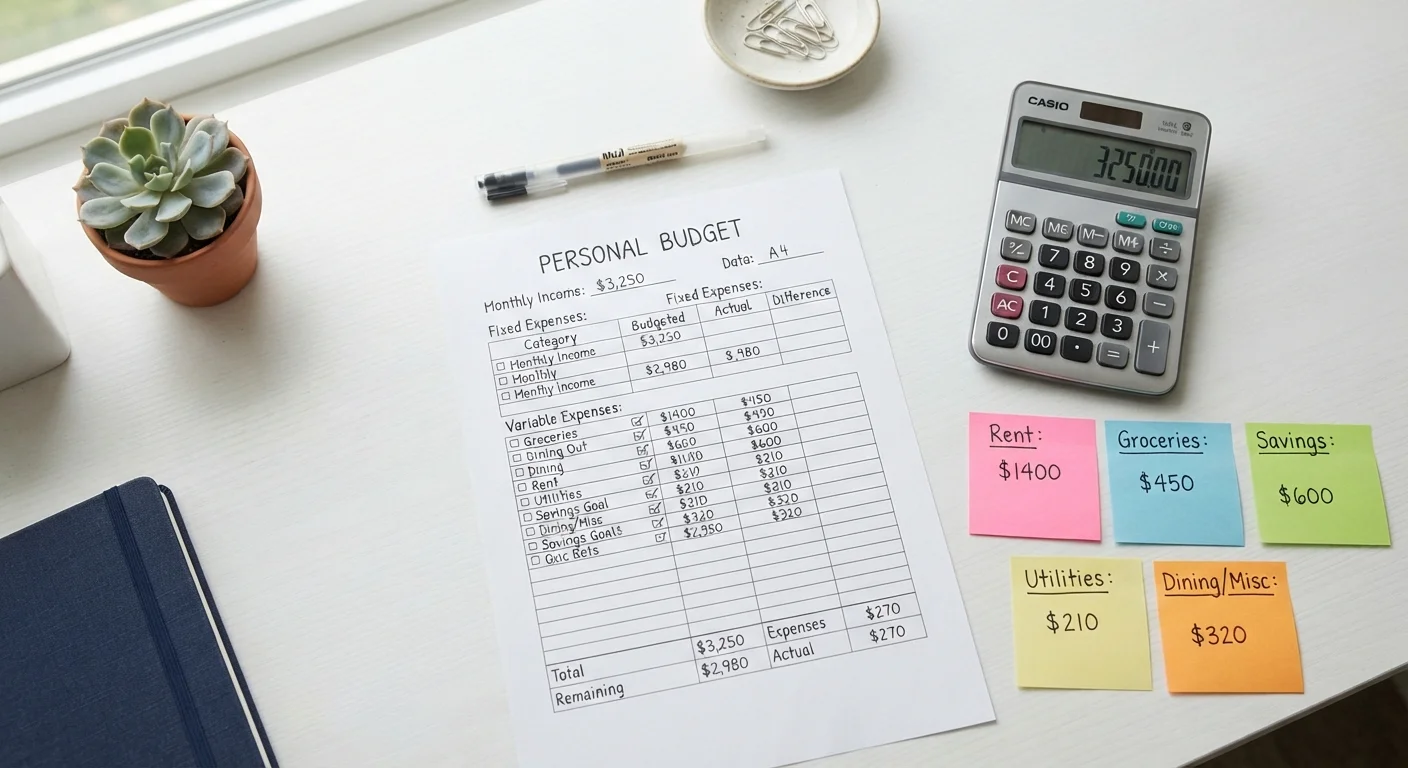
Fixed expenses are predictable and constant — rent, a car loan, or a subscription with a locked-in rate. Because they don't change, they're easy to plan for but harder to reduce quickly. Variable expenses such as groceries, fuel, and dining out shift each month and offer the most immediate opportunity for adjustment.
A third category — periodic or irregular expenses — trips many budgeters up. These are costs that don't arrive monthly but are entirely predictable: annual insurance premiums, vehicle registration, school supplies, and holiday spending. A sinking fund is the standard tool for handling them. Set aside a small, regular amount throughout the year so the expense doesn't ambush your budget when it arrives. This approach also applies to car ownership costs like tires and registration fees that recur on their own schedule.
These Are Definitions, Not Personal Advice
This article provides general financial education and is not a substitute for personalised financial, tax, or legal advice. Every household's situation is different. Consider consulting a licensed financial professional before making significant changes to your budget or financial plan.
Budgeting Methods and the Terms Behind Them
Several popular budgeting frameworks each rely on a specific vocabulary. The zero-based budget requires you to assign every dollar of income to a category — spending, saving, or debt — until the balance reaches zero. Nothing is left unallocated. The envelope method applies the same logic using physical cash sorted into labeled envelopes by category.
The 50/30/20 rule takes a broader approach, dividing net income into three buckets: roughly 50% for needs, 30% for wants, and 20% for savings and debt repayment. These percentages are guidelines rather than rules — your situation may require different splits. The principle of pay yourself first works within any method: savings or debt payments are transferred automatically at the start of the pay period, so they aren't accidentally spent.
Whichever method fits your habits, Manual Budgeting vs. App-Based Budgeting covers the practical tradeoffs between tracking on paper or spreadsheet versus using an automated app.
Tracking, Adjusting, and Staying on Course
A budget isn't useful unless you revisit it. Budget variance — the gap between planned and actual spending — is the key metric. Review variances at the end of each month to identify patterns: a consistently over-budget category may need a higher allocation or a behavioral change.
An emergency fund and a strong debt-to-income ratio are the two structural safeguards that keep a budget resilient. The CFPB commonly cites three to six months of essential expenses as an emergency fund target, while a debt-to-income ratio below 43% is a widely referenced threshold in lending contexts. Building toward both protects your budget from shocks. For guidance on saving and managing debt simultaneously, the Saving & Debt hub offers practical frameworks.
The vocabulary covered here pairs naturally with the routines explored in Habits That Keep a Budget Running Month After Month. And if you've ever felt that budgeting is too restrictive or not worth the effort, Common Budgeting Myths That Keep People Stuck addresses those doubts directly.
This article is for general informational and educational purposes only and does not constitute personalised financial, tax, or legal advice. Consult a qualified financial professional for guidance specific to your situation.