

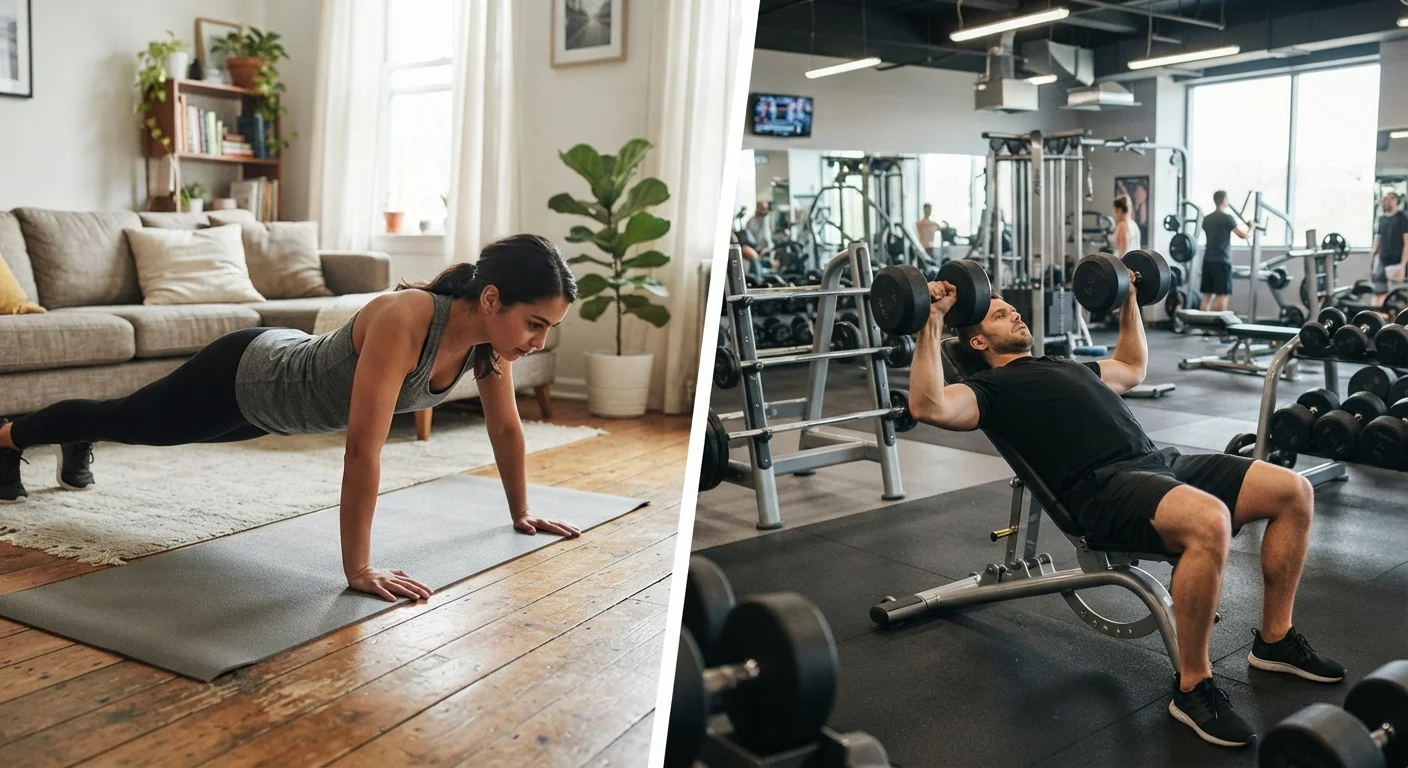
Key Takeaways
- Cost is one factor, but consistency, equipment access, and accountability often matter more for long-term fitness.
- Home workouts offer unmatched flexibility and eliminate commute time, which can make adherence easier for busy schedules.
- Gyms provide equipment variety and a social environment that some people need to stay motivated.
- Neither option is universally superior - the right choice depends on your training goals, personality, and lifestyle.
- Hybrid approaches combining home training and occasional gym use are common and practical for many Americans.
Our Verdict
Home workouts and gym memberships each support meaningful fitness progress - the difference lies in how well each environment fits your habits and goals. Cost matters, but consistency is the real determinant of results. Choosing the setting where you're most likely to show up regularly is the most important decision you can make.
| Best for | Recommended |
|---|---|
| Busy schedules with limited commute time | Home workouts |
| Those who need accountability and social motivation | Gym membership |
| Strength training requiring heavy progressive loading | Gym membership |
| People prioritizing flexibility and low ongoing cost | Home workouts |
The Variables Price Doesn't Capture
When comparing home workouts to gym memberships, most discussions anchor on the monthly fee. That framing misses the bigger picture. The environment where you train shapes your habits, motivation, psychological relationship with exercise, and ultimately whether you maintain a routine at all.
A gym membership that goes unused is more expensive than any home setup. Conversely, a spare bedroom with a resistance band and a yoga mat delivers zero value if you can't get yourself there consistently. Understanding what actually changes - beyond the price tag - is what makes this comparison genuinely useful.
For additional context on how trade-offs between in-person and at-home environments play out in other areas of life, see how similar choices unfold in learning.
Accountability and Motivation
One of the most consistent findings in behavioral research on exercise adherence is that environment matters. Gyms create external cues - other people working out, dedicated equipment, a social expectation of effort - that can lower the barrier to starting a session.
Home training removes those cues entirely. For self-directed individuals, that's freeing. For those who need external accountability, it can become a quiet obstacle that accumulates over weeks and months.
Neither disposition is a character flaw - they reflect real differences in how motivation works across people. Group fitness environments offer another layer of structure worth considering; group fitness classes carry their own trade-offs that sit somewhere between solo gym training and fully home-based routines.
Try a Hybrid Approach First
If you're unsure which environment suits you, consider testing a short-term gym pass while maintaining home sessions before committing to a long-term membership. Many people find that a mix of both - gym sessions for heavy lifting, home sessions for shorter recovery or cardio days - provides the best of each setting without the full cost or friction of either extreme.
Equipment Access and Training Goals
Your training goals significantly influence which setting serves you better. If progressive overload with heavy compound lifts is a priority, a commercial gym's range of barbells, cable machines, and adjustable weight stacks is genuinely difficult to replicate at home without substantial investment.
If your primary goals involve cardiovascular fitness, mobility, or bodyweight strength, a home setup can be fully adequate. Bodyweight training in particular is more versatile than many people assume - a structured bodyweight reference can help clarify what's achievable without equipment.
It's also worth thinking about how strength and cardio fit together in your overall plan. Balancing strength training and cardio is a separate but related decision that can help you determine which equipment priorities actually matter for your goals.
| Home Workouts | Gym Membership | |
|---|---|---|
| Ongoing cost | Low after initial setup | Monthly fee required |
| Equipment variety | Limited by space and budget | Extensive, maintained by facility |
| Commute time | None | Variable, often 15-30 min each way |
| Flexibility of schedule | Fully flexible, any hour | Limited by facility hours |
| Social motivation | Minimal to none | Built-in social environment |
| Distraction level | Higher (domestic environment) | Lower (dedicated space) |
| Heavy strength training | Difficult without investment | Well-supported |
| Bodyweight/cardio training | Fully supported | Supported with extras |
Flexibility, Commute, and Real-World Consistency
For many Americans, the largest invisible cost of a gym membership isn't the monthly fee - it's the round-trip commute. A 20-minute drive each way adds nearly an hour to every workout session. Over time, that friction quietly erodes consistency, especially during busy periods at work or at home.
Home training eliminates commute friction entirely. Workouts can fit into smaller windows - 25 minutes before work, during a lunch break, or after the kids are in bed. That flexibility isn't a compromise; for many people it's the factor that makes exercise sustainable over years rather than weeks.
Gyms, however, offer something home environments rarely replicate: separation from domestic distractions. Some people find it genuinely easier to focus when they've physically left the house and entered a space dedicated solely to training.
If your training incorporates mobility and recovery work - an increasingly important component of any fitness routine - those sessions adapt easily to either setting. Understanding the distinction between mobility and stretching can also help you design home sessions that are more complete.
This article is for general informational purposes only and does not constitute medical or fitness advice. Consult a qualified healthcare or fitness professional before beginning any new exercise program, particularly if you have existing health conditions.