

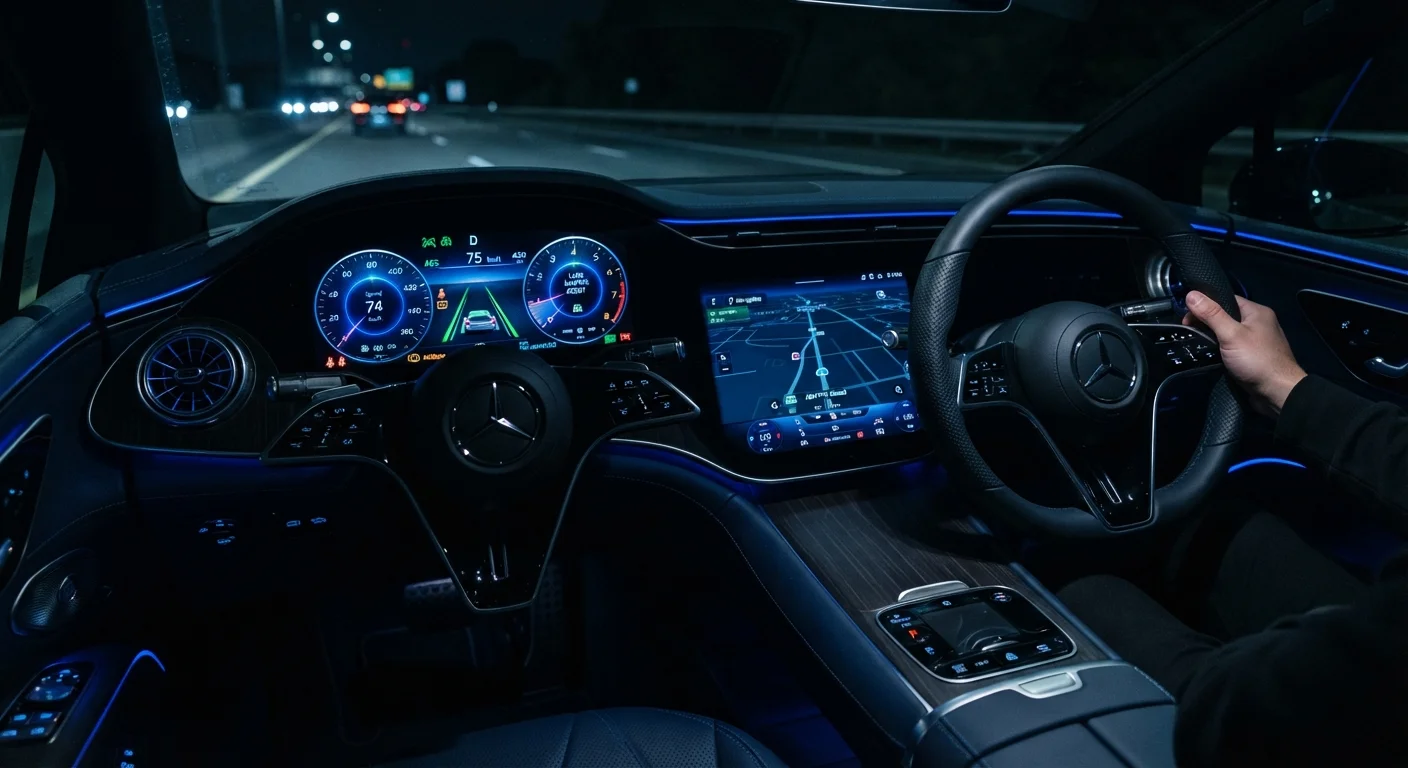
Key Takeaways
- ABS prevents wheel lockup during hard braking, helping drivers maintain steering control.
- Electronic Stability Control (ESC) has been federally mandated on all new US passenger vehicles since 2012.
- Automatic Emergency Braking (AEB) can apply the brakes before a driver reacts, reducing rear-end collisions.
- Passive systems like airbags and crumple zones work alongside active systems - both categories matter.
- Safety ratings from NHTSA and IIHS reflect how well a vehicle performs across multiple test scenarios.
Modern Car Safety Systems
Modern car safety systems are electronic and mechanical technologies built into vehicles to help prevent crashes and reduce injury when collisions occur. They fall into two broad categories: active systems that intervene in real time to help a driver avoid a crash, and passive systems that protect occupants when a crash is unavoidable. Most new vehicles sold in the US combine both types as standard or available equipment.
Active systems rely on sensor arrays - cameras, radar, and ultrasonic sensors - feeding data to an electronic control unit (ECU) that can apply brakes, adjust steering, or issue alerts faster than human reaction time allows.
The Foundation: ABS and Electronic Stability Control
Two systems form the backbone of modern active safety: Anti-lock Braking System (ABS) and Electronic Stability Control (ESC). Understanding what each one does - and what it doesn't - gives drivers a clearer picture of how their vehicle behaves under stress.
ABS monitors wheel speed during braking. If a wheel begins to lock up, the system rapidly pulses brake pressure to that wheel - sometimes dozens of times per second - to keep it rolling. This preserves steering capability during hard stops, which can be critical for avoiding an obstacle. Without ABS, a locked wheel causes the vehicle to slide straight, eliminating directional control entirely.
ESC goes further. It compares the driver's intended path (via steering input) against the vehicle's actual movement using yaw-rate and lateral-acceleration sensors. When it detects a skid or oversteer condition, it applies braking to individual wheels to help bring the car back in line. NHTSA data has consistently linked ESC adoption with significant reductions in single-vehicle fatal crashes - particularly rollovers - which is why it became federally mandated for all new passenger vehicles in the US starting with model year 2012.
What ABS Does Not Do
ABS reduces stopping distance on most surfaces, but it does not shorten stopping distance in every situation. On loose gravel or deep snow, a locked wheel can sometimes stop a vehicle faster due to material piling in front of the tire. ABS is optimized for the most common road surfaces and conditions drivers encounter - understanding its limits is part of using it effectively.
Automatic Emergency Braking: From Optional to Expected
Automatic Emergency Braking (AEB) uses forward-facing cameras and radar to monitor the road ahead. When the system calculates an imminent collision and the driver hasn't responded, it can first alert the driver, then - if no action is taken - apply the brakes autonomously. In some systems, partial braking reduces impact severity even when a full stop isn't possible.
AEB is now among the most widely studied and documented safety technologies in the US fleet. Major automakers committed to making it standard on new vehicles as part of a voluntary agreement with NHTSA and the Insurance Institute for Highway Safety (IIHS), and regulators have moved toward formalizing that requirement. The IIHS tests AEB performance in standardized scenarios and publishes results that consumers can reference when evaluating a vehicle - see how to read NHTSA and IIHS safety ratings for guidance on interpreting those scores.
~50%
Reduction in rear-end crashes attributed to AEB
IIHS research has estimated that forward collision warning with automatic braking can reduce rear-end police-reported crashes by approximately half in some vehicle categories.
2012
Year ESC became mandatory on all new US passenger vehicles
NHTSA's Federal Motor Vehicle Safety Standard 126 required Electronic Stability Control on all new light vehicles sold in the US starting with model year 2012.
6-10
Airbags typically found in modern vehicles
Contemporary passenger vehicles commonly include front, side, curtain, and knee airbags - a significant increase from the single driver-side airbags standard in the early 1990s.
Driver Assistance Technologies: Lane Keeping, Blind Spot, and More
Beyond braking-focused systems, modern vehicles increasingly include a suite of driver assistance tools. These don't take control of the car outright, but they extend a driver's awareness and reduce the margin for error.
- Lane Departure Warning (LDW) and Lane Keeping Assist (LKA): LDW alerts the driver when the vehicle drifts across lane markings without a turn signal. LKA takes it further by applying gentle steering torque to guide the vehicle back within the lane.
- Blind Spot Monitoring (BSM): Uses rear-facing radar to detect vehicles in adjacent lanes that may not be visible in mirrors. Most systems alert the driver through a light in or near the mirror, with some adding a haptic warning if the driver signals toward an occupied lane.
- Rear Cross-Traffic Alert: Detects vehicles approaching from the side while reversing - particularly useful in parking lots where sightlines are limited.
- Adaptive Cruise Control (ACC): Maintains a driver-set following distance by automatically adjusting speed relative to the vehicle ahead, reducing driver fatigue on long highway stretches.
These systems are most effective when maintained correctly. Cameras and radar sensors require proper calibration - especially after collision repairs or windshield replacement. This is a point worth keeping in mind as part of overall vehicle upkeep; our comprehensive car maintenance guide covers how system maintenance fits into the broader ownership picture.
Keep Sensors Clean and Calibrated
Cameras and radar units can be blocked by mud, ice, or road grime - and a dirty sensor can disable or degrade a safety system without warning. After any windshield replacement or front-end repair, have your vehicle's sensors professionally recalibrated. Skipping this step is one of the more common - and avoidable - ways safety systems are inadvertently compromised.
Passive Systems: The Safety Net When Crashes Happen
Active systems aim to prevent crashes. When they can't, passive systems take over. These include airbags, seatbelts with pretensioners, and crumple zones - each engineered to manage the energy of a collision in ways that protect occupants.
Modern vehicles typically deploy 6 to 10 airbags covering the front, side, curtain, and knee positions. Pretensioner seatbelts tighten at the moment of impact to secure occupants before the airbag fires. Crumple zones - designed sections of the vehicle's body that absorb and redirect collision energy - reduce the force transmitted to the passenger compartment.
For families, passive safety extends to child restraint compatibility. How a vehicle's seat architecture interacts with different car seat types is a separate but related consideration - child passenger safety covers this in detail.
Together, active and passive systems represent a layered approach to protection. Drivers who understand both are better positioned to evaluate their vehicle, maintain it properly, and make informed decisions - without over-relying on technology or dismissing it. For those looking at the cost side of ownership, reducing car ownership costs without cutting corners on safety offers practical perspective on keeping expenses in check while preserving vehicle integrity.