

Key Takeaways
- The Great Smoky Mountains is the most visited US national park, often surpassing 12 million visitors annually.
- No entrance fee is charged — one of very few national parks with this policy.
- The park sits within a day's drive of roughly one-third of the US population.
- Extraordinary biodiversity includes over 100 tree species, 240 bird species, and 19 species of salamander.
- Year-round accessibility, multiple road corridors, and diverse trail difficulty levels broaden its appeal significantly.
- Gateway towns like Gatlinburg and Cherokee provide infrastructure that reduces trip-planning friction for first-time visitors.
Great Smoky Mountains National Park
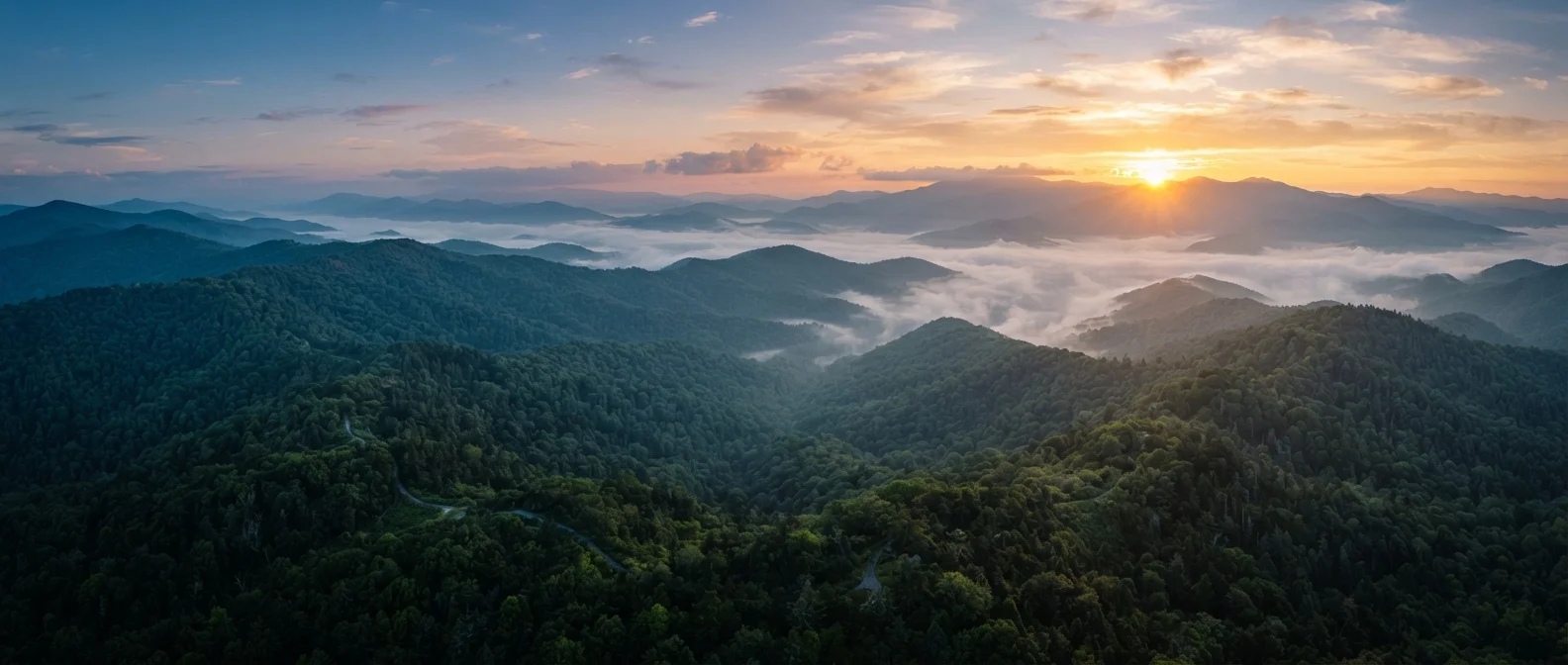
Great Smoky Mountains National Park is a federally protected wilderness straddling the border of North Carolina and Tennessee, covering roughly 522,000 acres of the southern Appalachian Mountains. It is the most visited national park in the United States, consistently drawing over 12 million visitors per year. Unlike most national parks, it charges no entrance fee, making it uniquely accessible to all Americans.
The park is a UNESCO World Heritage Site and International Biosphere Reserve, recognized for hosting one of the most diverse temperate-zone ecosystems on Earth, including more than 19,000 documented species.
The One Factor That Separates the Smokies From Every Other Park
Most US national parks charge an entrance fee — typically $35 per vehicle. The Great Smoky Mountains charges nothing. That single policy distinction, rooted in the park's founding agreements from the 1930s, removes the financial friction that keeps many Americans from visiting other parks. For families, frequent visitors, and budget-conscious travelers, the math is obvious.
But cost alone doesn't explain 12-plus million annual visits. Geography matters just as much. The park sits within a day's drive of roughly a third of the US population — accessible from Atlanta in under three hours, from Charlotte in about two, and reachable as a weekend trip from cities as far as Cincinnati, Nashville, and Washington, D.C. No other national park of comparable scale sits so squarely in the middle of such a dense population corridor.
12M+
Annual visitors to the Smokies
The National Park Service consistently records over 12 million recreation visits per year, roughly double the attendance of the second-most-visited parks.
$0
Park entrance fee
Great Smoky Mountains is one of the only major US national parks that charges no entrance fee, a policy rooted in its original founding agreements.
19,000+
Documented species in the park
The park's UNESCO and Biosphere Reserve status reflects its role as one of the most biodiverse temperate ecosystems on the planet.
522,000
Protected acres across two states
The park spans the North Carolina–Tennessee border, encompassing a range of elevations that support distinct ecological communities.
This combination — free access and geographic reach — creates a baseline visitation floor that parks in the American West simply can't match, even when their scenery rivals or exceeds the Smokies in spectacle. For a full comparison of what sets each major park apart, see our guide to America's national parks.
Biodiversity That Sets the Smokies Apart
The Smokies aren't merely popular — they're ecologically extraordinary. The park contains more than 100 native tree species, more than northern Europe combined. Its elevation range, spanning from around 875 feet in river valleys to 6,643 feet at Clingmans Dome, compresses multiple ecological zones into a relatively compact area. Walking from the base to the summit mimics traveling from the mid-Atlantic to the Canadian boreal forest.
This vertical diversity supports remarkable wildlife density. The park hosts an estimated 1,900 black bears — one of the highest concentrations in the eastern United States. Elk were successfully reintroduced in 2001 and now maintain a stable herd. Birders have documented over 240 species. And the park's reputation as the salamander capital of the world is scientifically grounded: 19 salamander species live here, a figure that reflects the park's clean, cold-water stream network.
The park's status as a UNESCO World Heritage Site and International Biosphere Reserve isn't ceremonial. It reflects the Smokies' role as a living reference point for understanding temperate forest ecosystems — which is part of why researchers, not just tourists, return repeatedly.
Year-Round Access and Gateway Infrastructure
Many celebrated national parks are seasonal destinations — limited by snowpack, road closures, or extreme heat. The Smokies operate year-round, with most roads and trails accessible in all four seasons. Winter in the park brings reduced crowds, dramatic ice formations along waterfalls like Laurel Falls, and the possibility of snow on the high-elevation balds — scenery that many visitors don't associate with Tennessee or North Carolina.
The gateway towns of Gatlinburg, Pigeon Forge, and Cherokee have developed substantial tourism infrastructure over decades. This means travelers can find lodging, dining, and services at virtually every price point, and can treat the park as a day-trip destination from a comfortable base. That model significantly lowers the barrier for families with young children or travelers who prefer not to camp.
Arrive Early to Beat Peak Congestion
Popular areas like Cades Cove, Laurel Falls trailhead, and the Clingmans Dome parking area fill quickly on weekends and fall foliage weekends. Arriving before 9 a.m. dramatically improves your chances of securing parking and finding quieter trail conditions. Weekday visits offer a noticeably different experience than weekend peaks.
Planning the logistics of a Smokies trip is more straightforward than many wilderness destinations, but some preparation still pays off. Our pre-trip checklist for national park visits covers what to verify before you go, including backcountry permits, parking, and gear. And if you're curious how the Smokies compare to the broader state park network, America's state parks offer a compelling and often overlooked complement to federal lands.