

Key Takeaways
- Schedule a pre-travel medical consultation at least 4–6 weeks before departure.
- Carry medications in original labeled containers with a signed letter from your physician.
- Verify destination-specific drug regulations — some common US medications are controlled or banned abroad.
- Ensure your travel insurance explicitly covers pre-existing conditions and emergency evacuation.
- Locate healthcare facilities at your destination before you arrive, not after an emergency.
- Time zone shifts can affect medication schedules — ask your doctor for an adjusted dosing plan.
What you will need
Why Medical Preparation Is Different for International Travel
Traveling abroad with a chronic or managed medical condition introduces layers of complexity that domestic travel does not. Healthcare systems vary enormously in structure, quality, and language. Medications are sold under different brand names — or may not be available at all. Insurance that covers you at home almost certainly will not automatically cover you overseas. And emergencies don't come with convenient timing: a flare-up during a 14-hour flight or a reaction in a country where you don't speak the language requires preparation that goes well beyond packing an extra inhaler.
This is not a reason to avoid international travel. Many people with managed conditions — diabetes, cardiovascular disease, autoimmune disorders, epilepsy, and others — travel internationally without incident. But the margin for improvisation is much smaller than at home. The steps below are designed to close that margin systematically.
For a broader pre-departure framework, see our international travel checklist for US citizens, which covers documents, money, and communications alongside health prep.
What you will need
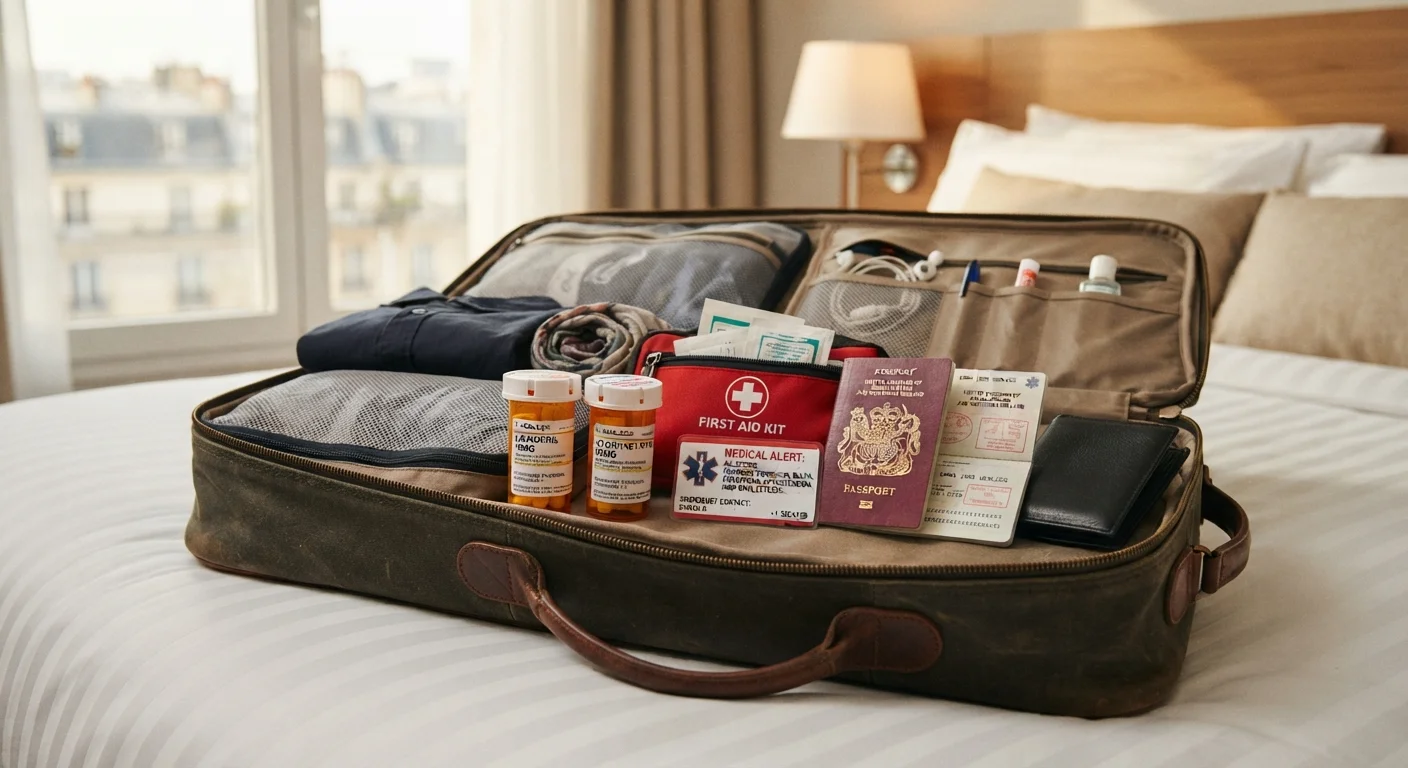
Physician travel letter
Official documentation signed by your doctor listing your conditions, medications, and medical necessity — required at many international borders.
Medical alert card or bracelet
Communicates critical health information to first responders if you are unable to speak for yourself.
Sufficient medication supply (plus a buffer)
Carry at least a 10-day surplus beyond your trip length to account for delays, loss, or schedule changes.
Travel health insurance policy
Covers emergency medical care, hospitalization, and medical evacuation abroad, particularly for pre-existing conditions.
Destination country's embassy or consulate contact
Needed to verify country-specific medication import rules and any required permits before travel.
Portable medication cooler or insulated case
Required for insulin, biologics, or other temperature-sensitive medications during long-haul transit.
What to Do If Something Goes Wrong Abroad
Even with thorough preparation, medical situations can arise. Knowing your response framework in advance — rather than trying to piece it together while ill — makes a significant difference in outcomes.
Your first call in a non-emergency situation should be to your travel insurance provider's 24-hour assistance line. Most comprehensive policies include a medical coordination service that can recommend vetted local providers, arrange translation, and help with billing directly so you aren't paying out of pocket and seeking reimbursement later.
If you lose medications, contact the nearest US Embassy or consulate — they can help connect you with local medical resources and may be able to assist if your documentation is lost. Note that they cannot supply medications or pay medical bills, but they can provide critical logistical support. The State Department's Smart Traveler Enrollment Program (STEP) is free and allows the Embassy to contact you in a crisis, which is worth doing before any international trip.
For a complete look at entry requirements and health documentation rules — including vaccination certificates that may be required at border crossings — verify with official sources well before your departure date.
This article is for general informational purposes only and does not constitute medical advice. Always consult a qualified healthcare provider before making decisions about your health, medications, or travel plans with a medical condition.