

Key Takeaways
- Older dogs can absolutely learn new behaviors — the idea that you 'can't teach an old dog new tricks' is a myth.
- Physical limitations like arthritis or hearing loss may require modified training techniques and cues.
- Short, frequent sessions of 5–10 minutes are more effective than long ones for adult and senior dogs.
- Positive reinforcement remains the most effective and humane approach at any age.
- A veterinary check-up before starting a new training program helps identify any hidden health factors.
- Patience and consistency matter more with older dogs, who may take longer to unlearn established habits.
What you will need
Why Older Dogs Deserve a Different Approach
The notion that adult and senior dogs can't be trained is one of the most persistent myths in pet care — and one of the most discouraging. In reality, dogs retain the ability to learn new behaviors throughout their lives. What changes isn't their capacity, but the context: their body, their history, and their pace.
An older dog comes with years of established habits, possibly some unlearned associations from previous training, and a physical condition that may not match the energy of a six-month-old puppy. Understanding these differences is what makes training effective. For a broader view of how dogs develop across life stages, our complete owner's training reference covers the full arc from puppyhood through adulthood.
Before beginning any new training program with an older dog, a visit to your veterinarian is strongly recommended. Conditions like arthritis, diminished vision, or early cognitive decline can all affect how a dog responds to training — and knowing about them early helps you adapt rather than inadvertently cause frustration or discomfort. For more on the physiological changes to expect, see our guide on aging pets and health changes.
Patience Is the Most Important Tool
Older dogs may take two to three times as long as puppies to consolidate a new behavior — that's not failure, it's normal. Resist the urge to rush or repeat cues rapidly. Give your dog several seconds to process before prompting again, and celebrate every small success genuinely. The relationship you build through patient, consistent training is itself deeply valuable.
Step-by-Step: How to Train an Older Dog Effectively
The following steps are designed for owners working with adult dogs (roughly 2–7 years) and senior dogs (generally 7 years and older, though this varies by breed and size). Adjust based on your individual dog's health, temperament, and prior training history.
What you will need
Schedule a veterinary check-up first
Before introducing new training routines, have your veterinarian assess your dog's overall health. Ask specifically about joint health, hearing, vision, and any signs of cognitive dysfunction. This information directly shapes how you'll train — for example, a dog with arthritis shouldn't be asked to perform repeated sit-to-stand repetitions, and a dog with hearing loss will need visual or tactile cues instead of verbal ones.
Choose the right rewards for your dog
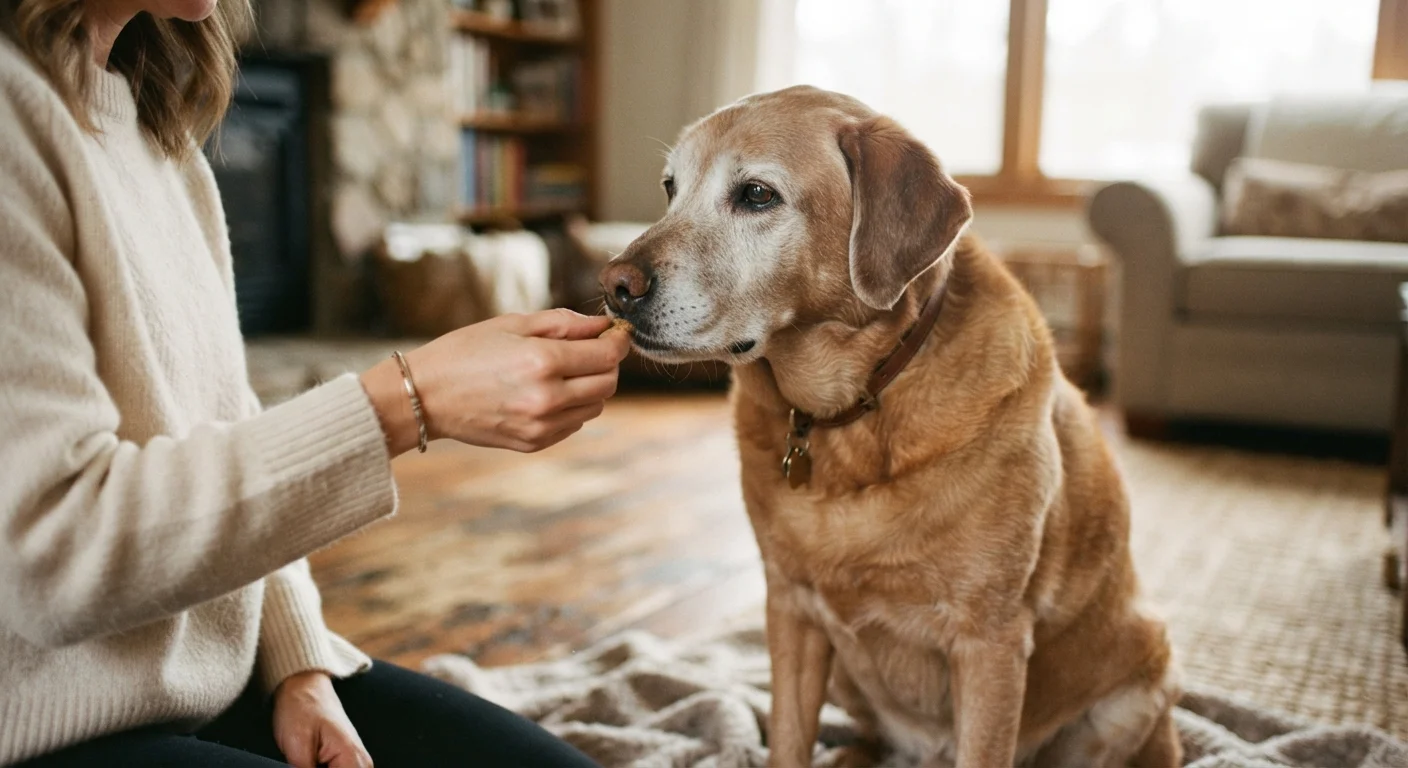
High-value food rewards — small, soft, and easy to chew — tend to work well with older dogs. Dry, crunchy treats may be harder to eat quickly for dogs with dental sensitivities. Identify what motivates your individual dog: some senior dogs respond equally well to praise and gentle petting. Keep rewards small to avoid adding unnecessary calories, especially if your dog has dietary restrictions.
Keep sessions short and consistent
Adult and senior dogs often have shorter attention spans or tire more quickly than puppies — and that's perfectly normal. Aim for 5–10 minute sessions, two to three times per day, rather than one long session. Ending while your dog is still engaged and succeeding leaves a positive impression and keeps them eager for the next session.
Adapt your cues to their senses
If your dog has reduced hearing, introduce hand signals or visual cues as primary markers. If vision is diminished, gentle tactile cues (a light touch on the shoulder, for instance) can communicate effectively. Pairing a new cue type with an already-understood one helps bridge the transition. Go slowly and reinforce every correct response generously as your dog adjusts.
Build on what they already know
Most older dogs have at least some training history — even informal patterns they've developed at home. Start from existing strengths. If your dog reliably sits for meals, use that as an anchor behavior and build outward: sit, then wait, then release. Reinforcing well-known behaviors first builds confidence and reestablishes a positive training dynamic before you introduce anything new.
Address old habits with patience, not pressure
Unlearning a long-standing habit — jumping at the door, pulling on the leash — takes more time in an older dog because those patterns are deeply ingrained. Punishment-based approaches are counterproductive at any age, but especially so for senior dogs who may become anxious or confused more easily. Instead, consistently reward the behavior you want to see and manage the environment to reduce opportunities for the unwanted behavior while the new one is forming.
Watch for Signs of Pain During Training
Reluctance to sit, difficulty lying down, or flinching at touch may signal pain rather than disobedience. If your older dog suddenly resists a behavior they previously performed reliably, consult your veterinarian before continuing. Training through pain causes distress and erodes trust. Always rule out a physical cause before assuming a behavioral one.
Common Challenges and How to Work Through Them
One of the most frequent frustrations owners face is a dog that seems to have "forgotten" a command or simply ignores it. Recall is a common sticking point — if your older dog is disregarding the "come" command, it may have developed a negative association over time. Our article on why dogs ignore the come command explores how to rebuild that response without punishment.
For dogs new to structured training altogether, the foundational work before your first session matters. A thorough preparation checklist for new owners can help you set up the right environment and mindset before you begin.
Finally, keep perspective: progress with an older dog may look different than with a puppy, but it is no less meaningful. Even small behavioral improvements — a calmer greeting at the door, a more reliable sit before meals — add up to a genuinely better quality of life for both of you. The goal isn't perfection; it's a stronger, more trusting bond.
This article is for general informational purposes only and is not a substitute for professional veterinary or behavioral guidance. If your dog shows signs of pain, disorientation, or sudden behavioral changes, consult a licensed veterinarian.