

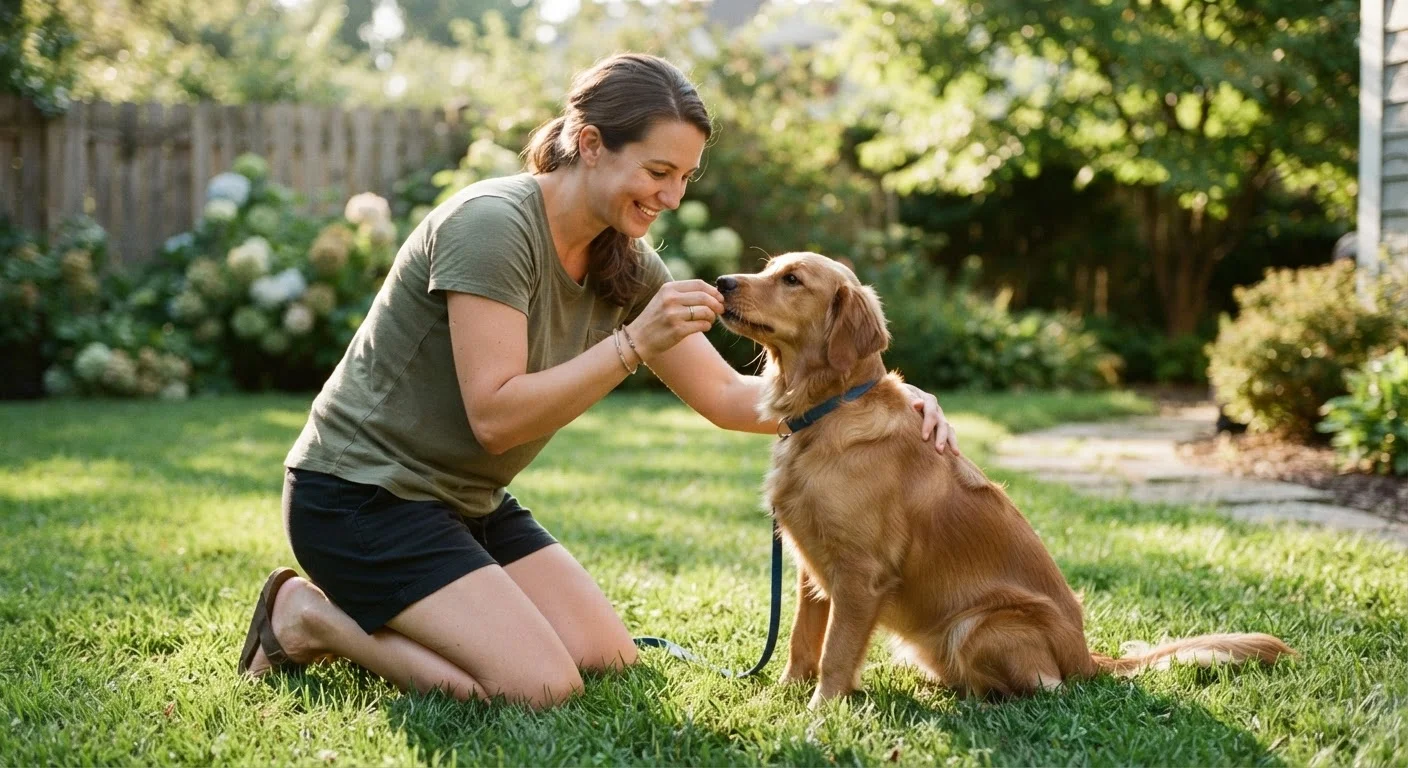
Key Takeaways
- Short, frequent training sessions outperform occasional marathon practices for lasting habit formation.
- Positive reinforcement — rewarding desired behavior — is backed by behavioral science as the most effective training approach.
- Tracking small wins helps owners stay motivated and spot when methods need adjusting.
- Every household member using the same cues and rules prevents confusion and speeds progress.
- Ending each session on a success keeps both pet and owner eager to return the next day.
Why Structure Is the Secret Ingredient
Most pet owners begin training with enthusiasm, only to find momentum fading within a few weeks. The culprit is rarely a lack of love or effort — it's the absence of a reliable structure. Professional trainers understand that habits form through repetition in predictable contexts, not through occasional bursts of intensity.
Think of it the way fitness coaches frame steady effort: consistency beats intensity for durable results. The same principle applies to pet training. A five-minute session every day will almost always outperform a thirty-minute session held once a week, because your pet's brain is building and reinforcing neural pathways each time a behavior is practiced and rewarded.
Structure also reduces decision fatigue for the owner. When training is scheduled at the same time and place — say, before the morning walk or right after dinner — it stops feeling like a chore and starts becoming a natural part of the day.
Keep sessions short and end on a success
Animals — particularly dogs — have limited attention spans for structured learning. Sessions that run too long often end in frustration, which can create a negative association with training. Finishing while your pet is still engaged and succeeding at a task preserves their eagerness for the next session.
Use a consistent cue-response-reward sequence
Predictable sequences help animals understand exactly what is being asked and what the payoff will be. Varying the cue word, tone, or timing of the reward introduces ambiguity that slows learning and can cause the behavior to break down under real-world conditions.
Raise criteria gradually, not all at once
Attempting too many new challenges in a single session overwhelms the animal and stalls progress. Trainers apply a principle similar to progressive overload in strength training: increase difficulty in one dimension at a time — duration, distance, or distraction — before combining them.
Track progress in a simple log or journal
Memory is unreliable over weeks of training. A brief written record of what was practiced, how the animal responded, and what adjustments were made creates a feedback loop that lets you spot plateaus early and celebrate genuine progress that might otherwise feel invisible.
Align all household members on cues and rules
Mixed signals from different people are one of the most common reasons training stalls. When every person in the home uses the same words, gestures, and reward timing, the animal receives a coherent message and can generalize the behavior reliably.
The Core Practices Professional Trainers Rely On
Skilled trainers don't improvise their way through sessions. They follow a repeatable framework that keeps animals engaged and learning. The practices below reflect widely accepted, positive-reinforcement-based methods supported by animal behavioral science.
Maintaining a log — even a simple notebook entry after each session — reveals patterns that are invisible in the moment. You might notice your dog learns new cues fastest in the morning, or that your cat engages more readily after play. That kind of insight lets you refine your approach rather than repeatedly hitting the same walls.
Keeping the Whole Household on the Same Page
One of the most overlooked factors in training success is household consistency. If one family member uses "down" to mean lie flat, while another uses it to mean get off the furniture, your pet faces an impossible puzzle. Professional trainers routinely advise establishing a short shared vocabulary — agreed-upon cues, hand signals, and reward rules — before anyone begins practicing with the animal.
When to Involve a Professional Trainer
Most everyday manners and enrichment behaviors can be shaped at home using positive reinforcement. However, behaviors rooted in fear, anxiety, or aggression — such as resource guarding, separation distress, or reactivity toward other animals or people — benefit significantly from assessment by a certified professional animal trainer (CPDT-KA) or a veterinary behaviorist. Early intervention typically produces better outcomes than waiting for a problem to escalate.
This is especially important in multi-pet households, where animals can reinforce or undermine each other's learning depending on how sessions are structured. Working with each pet individually before attempting group practice gives each animal a fair chance to build confidence in a behavior before adding distraction.
Staying consistent with training is not unlike sustaining any meaningful long-term habit. If you've ever worked to build a new physical routine from scratch, you'll recognize the same principles: small incremental steps, regular check-ins, and celebrating progress without demanding perfection.
This article provides general guidance for pet owners and is not a substitute for advice from a certified professional animal trainer or veterinary behaviorist. For animals displaying fear, aggression, or other complex behavioral challenges, please consult a qualified professional.