

| Top reported toxin category | Human medications (ASPCA Animal Poison Control Center, annual reports) |
| Calls to US veterinary poison control annually | Hundreds of thousands (ASPCA Animal Poison Control Center) |
| Species most at risk from lilies | Cats (even small exposures can be fatal) (Veterinary toxicology consensus) |
| Dangerous sweetener in sugar-free products | Xylitol — toxic to dogs (FDA and ASPCA guidance) |
| Antifreeze active ingredient | Ethylene glycol — sweet taste, highly toxic to dogs and cats (Veterinary toxicology literature) |
| Emergency resource | ASPCA Animal Poison Control Center Hotline (Available 24/7; fees may apply) |
Why Household Toxins Are a Leading Pet Health Concern
Each year, veterinary poison control centers in the United States receive hundreds of thousands of calls related to pet exposure to toxic substances — and the majority of those exposures happen at home. Pets explore their environment through smell and taste, which means even a well-intentioned, tidy household can harbor real risks.
This reference is designed to help pet owners quickly identify the most common toxin categories, understand why they're dangerous, and know what to do if exposure occurs. It is not a substitute for veterinary care. If you suspect your pet has ingested or contacted a toxic substance, contact your veterinarian or a veterinary poison control hotline immediately.
For a broader grounding in everyday pet wellness, see our guide for first-time pet owners, which covers health observation alongside feeding, hygiene, and enrichment.
| Top reported toxin category | Human medications (ASPCA Animal Poison Control Center, annual reports) |
| Calls to US veterinary poison control annually | Hundreds of thousands (ASPCA Animal Poison Control Center) |
| Species most at risk from lilies | Cats (even small exposures can be fatal) (Veterinary toxicology consensus) |
| Dangerous sweetener in sugar-free products | Xylitol — toxic to dogs (FDA and ASPCA guidance) |
| Antifreeze active ingredient | Ethylene glycol — sweet taste, highly toxic to dogs and cats (Veterinary toxicology literature) |
| Emergency resource | ASPCA Animal Poison Control Center Hotline (Available 24/7; fees may apply) |
The Most Common Toxin Categories at Home
Understanding which categories of household items pose the greatest risk helps you organize your environment proactively.
Human Medications
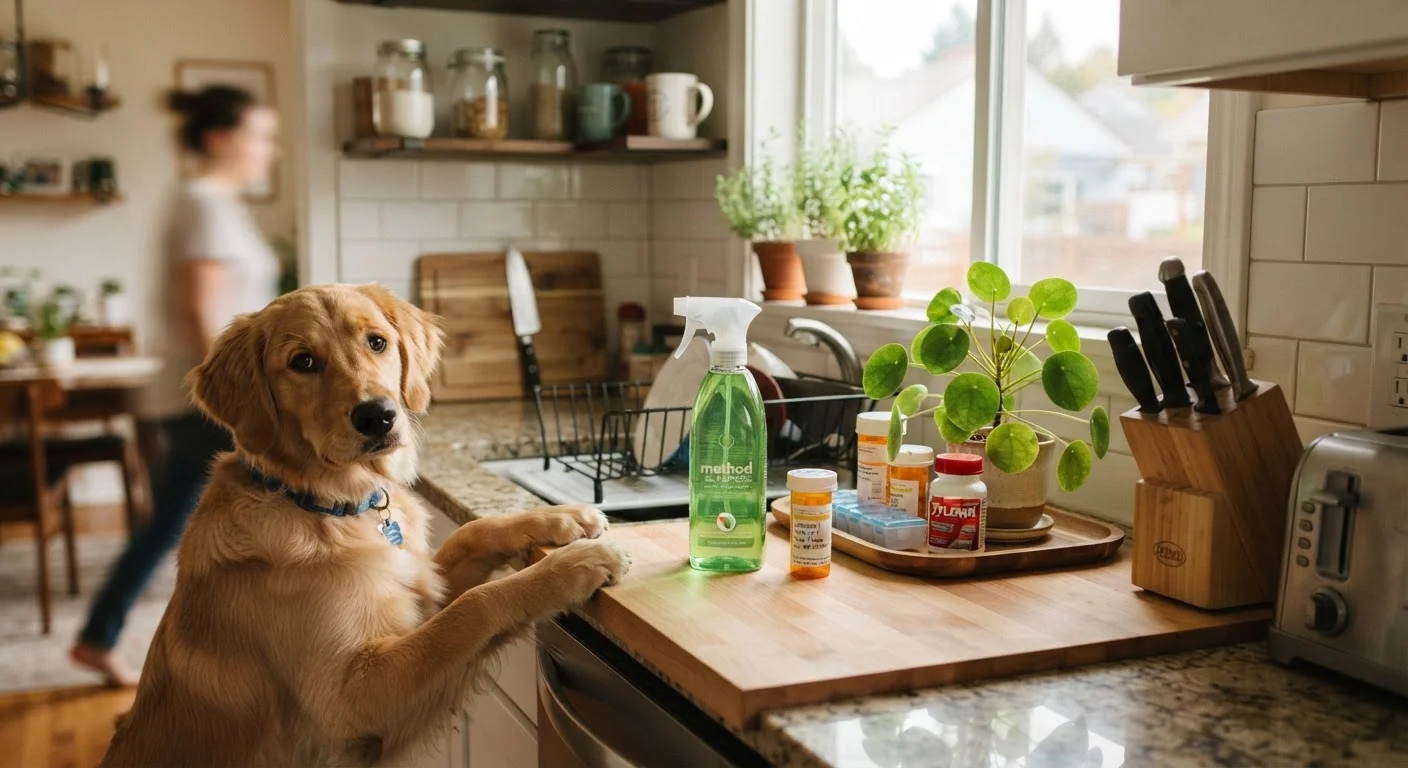
Over-the-counter and prescription drugs are among the most frequently reported sources of pet poisoning. Pain relievers such as acetaminophen and ibuprofen are particularly dangerous — acetaminophen can cause severe liver damage in dogs and is especially toxic to cats, even in very small amounts. Anti-depressants, sleep aids, and cardiac medications also pose serious risks if accidentally ingested. Keep all medications — including vitamins and supplements — stored in closed cabinets out of reach.
Foods Toxic to Pets
Several common human foods are genuinely harmful to dogs and cats. Grapes and raisins have been associated with acute kidney failure in dogs, though the exact mechanism is not fully understood. Xylitol, an artificial sweetener found in many sugar-free gums, candies, and baked goods, can cause a dangerous drop in blood sugar in dogs and has been linked to liver failure. Onions, garlic, and related alliums damage red blood cells in both dogs and cats. Dark chocolate contains theobromine, which dogs metabolize poorly, making it a well-documented hazard. For a nuanced look at what's genuinely harmful versus overstated, see our article on feeding pets table scraps.
Household Plants
Many popular houseplants and garden varieties are toxic to pets. Lilies (particularly true lilies in the Lilium and Hemerocallis genera) are highly toxic to cats and can cause fatal kidney failure even after minor exposure. Sago palms are extremely toxic to both dogs and cats, causing liver failure. Other commonly encountered toxic plants include pothos, philodendron, dieffenbachia, and oleander. The ASPCA maintains a searchable database of toxic and non-toxic plants that can help you evaluate what's in your home.
Cleaning Products and Household Chemicals
Many standard cleaning agents — bleach-based cleaners, drain openers, toilet bowl cleaners, and certain surface disinfectants — can cause chemical burns, respiratory irritation, or systemic toxicity if ingested or inhaled. Concentrated products and undiluted solutions present the highest risk. Antifreeze (ethylene glycol) has a sweet taste that attracts animals, yet even a small amount can cause fatal kidney failure in both dogs and cats.
Pest Control Products
Rodenticides (rat and mouse poisons) are particularly dangerous because they're designed to be palatable and often contain ingredients that cause internal bleeding or seizures. Insecticides and certain flea products formulated for dogs can be acutely toxic to cats — always verify species-specific labeling before use.
Theobromine
A naturally occurring compound in cacao that acts as a stimulant. Dogs metabolize it much more slowly than humans, allowing it to reach toxic levels in the body even after modest chocolate consumption.
Xylitol
An artificial sweetener widely used in sugar-free gums, candies, and baked goods. In dogs, it triggers a rapid release of insulin that can cause dangerously low blood sugar, and has also been linked to liver failure.
Ethylene glycol
The active ingredient in most automotive antifreeze products. It has a sweet flavor that can attract pets, and even small ingested amounts can cause acute, often fatal kidney failure in both dogs and cats.
Rodenticide
A category of pesticide designed to kill rodents. Many formulations are made to taste appealing to animals, making accidental ingestion by pets a significant risk. Common types interfere with blood clotting or affect the neurological system.
Allium
A plant genus that includes onions, garlic, leeks, and chives. Compounds in these plants can damage red blood cells in dogs and cats, potentially leading to anemia, even when cooked or in powdered form.
Hepatotoxicity
Toxicity that specifically damages the liver. Several common pet toxins — including sago palm, xylitol, and acetaminophen — can cause hepatotoxicity, which may be life-threatening if not treated promptly.
Recognizing Signs of Toxin Exposure
Symptoms of poisoning can vary widely depending on the substance involved, the amount ingested, and the individual animal's size and health. Common warning signs include:
- Vomiting or diarrhea, sometimes with blood
- Excessive drooling or difficulty swallowing
- Tremors, seizures, or muscle weakness
- Lethargy, sudden collapse, or loss of coordination
- Rapid, labored, or unusual breathing
- Pale, yellow, or bluish gums
- Sudden changes in thirst or urination
Some toxins act quickly; others cause delayed symptoms that can appear hours or days after exposure. This is why prompt contact with a veterinarian — even if your pet appears fine — is always the right call when exposure is known or suspected. Do not attempt to induce vomiting or administer any treatment at home without direct veterinary guidance, as some interventions can worsen the situation depending on the substance involved.
Pet behavior that seems off can sometimes be difficult to interpret. Our article on distinguishing anxiety from a clinical concern may help you recognize when behavioral changes warrant a closer look.
Building a Safer Home Environment
Prevention is far more effective than responding to an emergency. A few practical habits can meaningfully reduce risk:
- Audit your plants: Cross-reference every plant in your home and yard against a reliable toxic plant database before bringing a new animal home, or when adding new plants.
- Store medications securely: Use child- and pet-proof containers; never leave pills loose on counters or in open bags.
- Secure food storage: Keep grapes, raisins, xylitol-containing products, chocolate, and alliums out of reach, including compost bins.
- Lock up chemicals: Store cleaning products, antifreeze, and pesticides in latched cabinets. Clean up spills — including antifreeze drips in the garage — immediately.
- Read pesticide labels carefully: Never use a dog-labeled flea or tick product on a cat.
- Keep emergency contacts accessible: Post your veterinarian's number, the nearest emergency animal hospital, and a veterinary poison control number in an easy-to-find location.
This article is for general informational purposes only and is not a substitute for professional veterinary advice. If you believe your pet has been exposed to a toxic substance, contact your veterinarian or a veterinary poison control service immediately.