

Key Takeaways
- Brushing, light bathing, and basic ear checks are generally safe for owners to do at home.
- Nail trimming, anal gland expression, and breed-specific haircuts carry real risks if done incorrectly.
- Professional groomers offer trained eyes that can spot early signs of skin or coat problems.
- Your pet's breed, temperament, and health history should guide how you divide grooming responsibilities.
- A hybrid approach — routine care at home, periodic professional sessions — works well for most pets.
Our Verdict
Neither home grooming nor professional grooming is universally superior. The right balance depends on your pet's coat type, temperament, and specific health needs. Most owners benefit from handling frequent, low-risk tasks themselves while relying on professionals for anything that requires precision, specialized tools, or carries injury risk.
| Best for | Recommended |
|---|---|
| Owners with short-haired, low-maintenance pets and steady handling confidence | Home grooming |
| Owners of double-coated, curly, or breed-specific coat dogs requiring regular haircuts | Professional grooming |
| Most pet owners across breeds and experience levels | Hybrid approach |
| Pets with anxiety, skin conditions, or health complications | Professional grooming with vet coordination |
Why the Grooming Question Matters More Than Most Owners Realize
Grooming isn't cosmetic — it's a core part of your pet's health maintenance. Regular coat care prevents painful matting, skin infections, and parasite infestations. Nail care affects how your pet walks and bears weight. Ear hygiene can prevent chronic infections. Done poorly, however, grooming can cause cuts, anxiety, and lasting aversion to handling.
The question isn't really "home or professional?" — it's "which tasks belong where?" That distinction matters enormously for your pet's wellbeing and your own peace of mind. Our guide to grooming routines new owners often skip explores what gets neglected and what the consequences look like over time.
Tasks That Are Generally Safe to Handle at Home
Many routine grooming tasks are well within reach for a patient, prepared owner. These generally include:
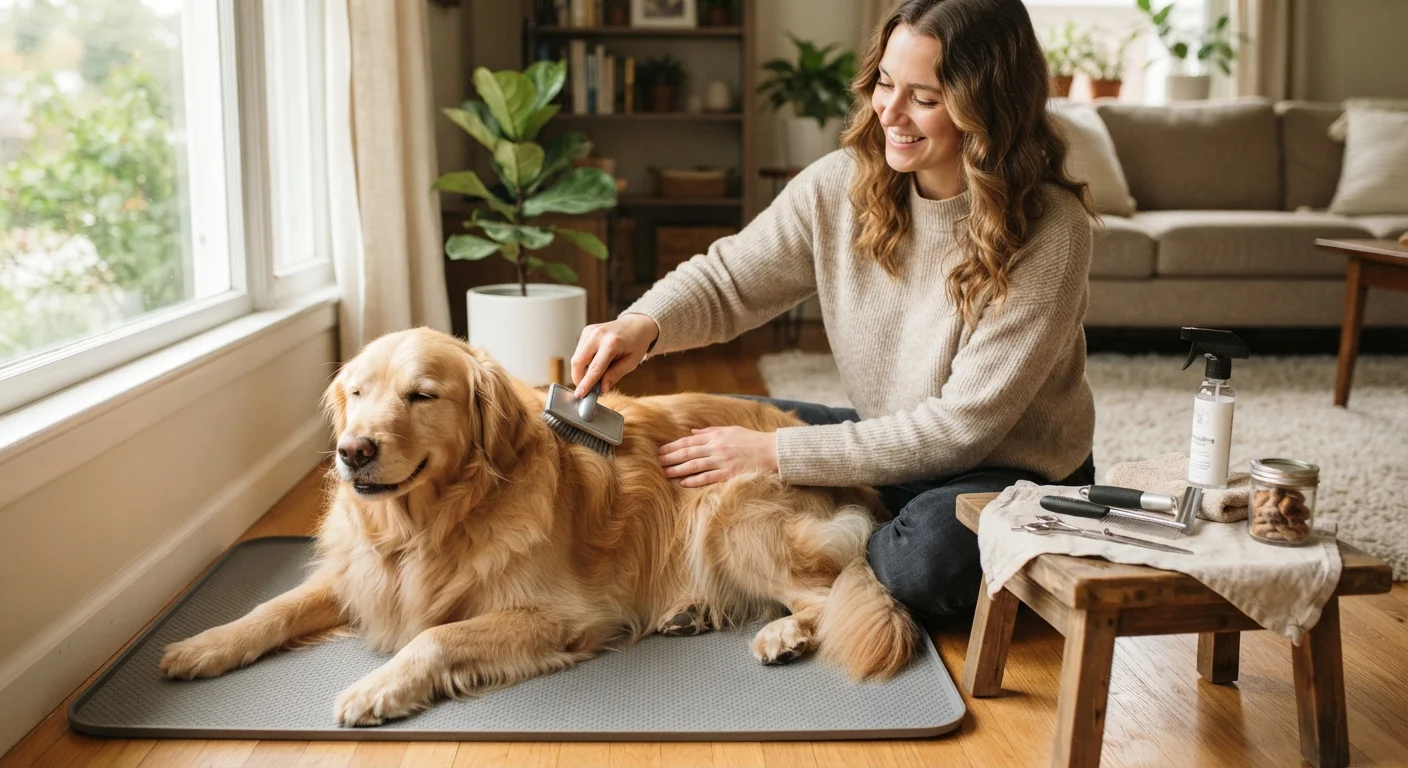
- Brushing and detangling: Daily or weekly brushing keeps most coats manageable and is low-risk when you use the right tool for your pet's coat type. It also gives you regular physical contact that helps you spot lumps, rashes, or parasites early.
- Light bathing: For most dogs, a bath every four to six weeks using a pet-appropriate shampoo is manageable at home. Use lukewarm water, protect the ears, and rinse thoroughly to avoid skin irritation.
- Basic ear checks: Gently looking into your pet's ears for debris, odor, or redness costs nothing and takes seconds. Cleaning with a vet-recommended solution — following your veterinarian's guidance — is also something many owners do safely at home.
- Eye area wiping: For breeds prone to tear staining, gentle daily wiping with a damp cloth prevents buildup and discomfort.
These tasks work best when introduced gradually. Pets that are accustomed to handling from a young age tend to tolerate grooming far more cooperatively. See our weekly pet care routine guide for a practical framework to build these habits into your schedule.
Start Handling Early for Lifelong Cooperation
If you have a young pet, begin gentle grooming-style handling — touching paws, ears, and mouth — as early as possible. Associating handling with calm, positive experiences makes every future grooming session easier, whether at home or with a professional. Even a few minutes daily can make a meaningful difference over time.
Where Professional Grooming Is the Safer Choice
Some grooming tasks involve real risk — to your pet's physical safety or emotional wellbeing — when performed without proper training or equipment.
| Home Grooming | Professional Grooming | |
|---|---|---|
| Cost | Low ongoing cost | Regular session fees apply |
| Frequency flexibility | As often as needed | Appointment-dependent |
| Skill required | Low to moderate for basic tasks | Trained for complex techniques |
| Risk of injury | Moderate if tools misused | Lower with experienced groomer |
| Health observation | Good if owner is attentive | Professional second opinion |
| Suitability for anxious pets | Variable — familiar setting helps | Groomers trained in handling |
Nail trimming is one of the most commonly misjudged home tasks. Cutting too close to the quick causes pain and bleeding; repeated bad experiences can make your pet permanently avoidant of nail handling. Groomers and veterinary staff are trained to work quickly and confidently, which reduces stress for the animal.
Breed-specific haircuts require pattern knowledge and the right clipper blades. Incorrect cuts on double-coated breeds, for example, can damage the undercoat's ability to regulate temperature — a condition sometimes called "clipper alopecia."
Anal gland expression should generally only be performed by a groomer or veterinarian unless your vet has specifically shown you how and confirmed it's necessary for your pet. Done incorrectly, it can cause impaction or rupture.
Professional groomers also provide a second set of experienced eyes. They may notice skin changes, lumps, or coat abnormalities you've grown accustomed to overlooking — a meaningful benefit for your pet's broader health monitoring.
How to Evaluate What's Right for Your Specific Pet
No two pets are the same, and grooming decisions should reflect your individual animal's needs. Consider these factors:
- Coat type and length
- Single, short coats (like Beagles or domestic shorthair cats) are far more manageable at home than long, double, or curly coats that mat easily or require pattern cutting.
- Temperament and anxiety
- A pet that becomes distressed during handling may need a professional who has experience with anxious animals and access to calming techniques. Forcing grooming on a fearful pet can worsen behavioral issues over time.
- Health status
- Pets with skin conditions, joint pain, or ear infections need grooming that accommodates their limitations. Always coordinate with your veterinarian before making grooming decisions for a pet with a known health condition.
- Your own comfort and skill level
- Honest self-assessment matters. If you're uncertain about a task, it's worth paying a professional rather than risking an injury — to your pet or yourself.
This article is for general informational purposes only and is not a substitute for professional veterinary advice. Always consult your veterinarian about grooming decisions specific to your pet's health.