

| Emergency Fund Target | 3–6 months of essential living expenses (Consumer Financial Protection Bureau (CFPB) guidance) |
| Sinking Fund Horizon | Weeks to several years, depending on the goal |
| Cash Reserve Typical Size | 1–3 months of business or household operating costs (General personal finance guidance) |
| Recommended Account Type | High-yield savings or money market account |
| Who Needs All Three | Self-employed individuals and households with variable income |
| Primary Purpose Difference | Unplanned shocks vs. planned costs vs. income smoothing |
Three Savings Buffers, Three Distinct Jobs
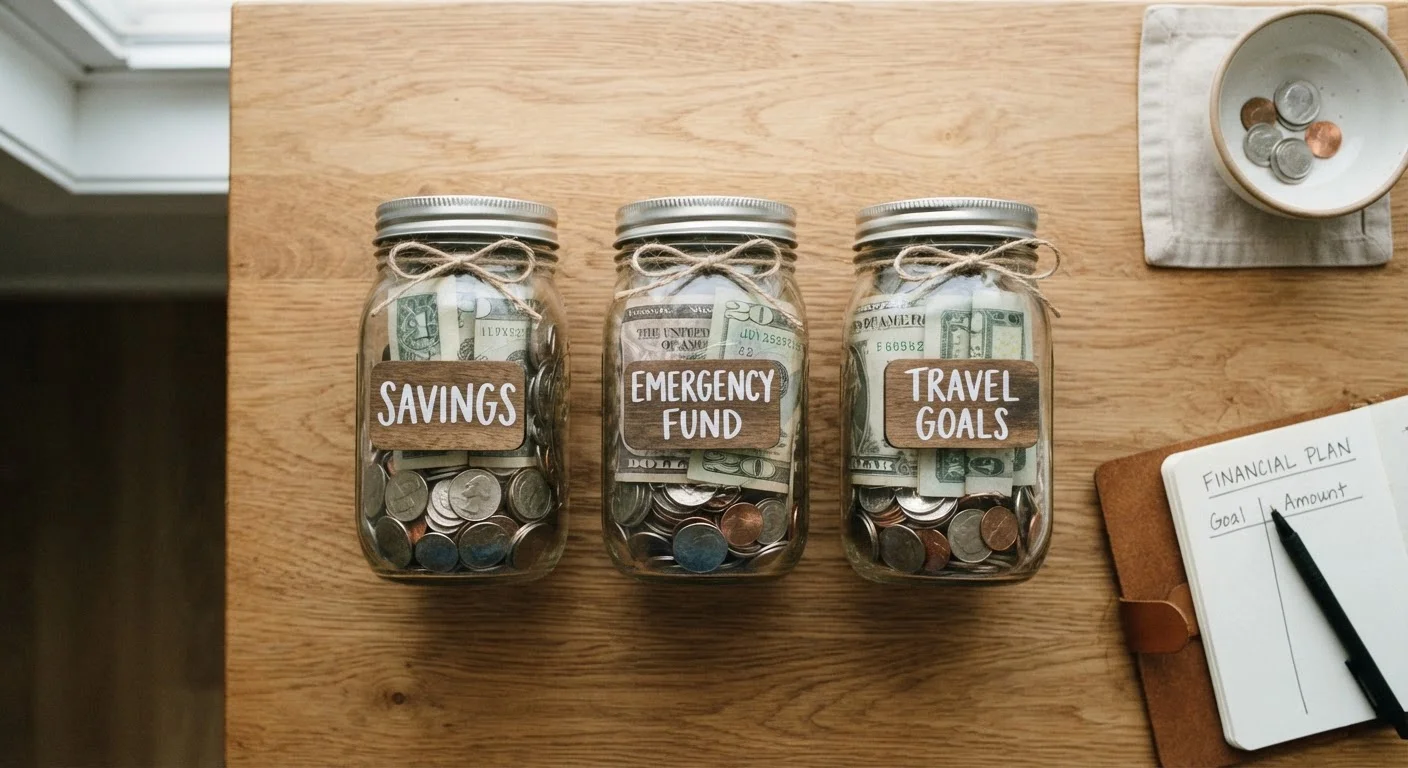
Many households lump all their savings into a single account and label it loosely as a "rainy day fund." That works until life sends three different kinds of rain at once — an unexpected job loss, a predictable car registration renewal, and a month where freelance invoices came in late. Each of those scenarios calls for a different financial tool.
Understanding the purpose of an emergency fund, a sinking fund, and a cash reserve helps you allocate savings intentionally — so you're not raiding the wrong bucket at the wrong time. See the Budgeting Basics hub for broader context on how savings fit into a household spending plan.
| Emergency Fund Target | 3–6 months of essential living expenses (Consumer Financial Protection Bureau (CFPB) guidance) |
| Sinking Fund Horizon | Weeks to several years, depending on the goal |
| Cash Reserve Typical Size | 1–3 months of business or household operating costs (General personal finance guidance) |
| Recommended Account Type | High-yield savings or money market account |
| Who Needs All Three | Self-employed individuals and households with variable income |
| Primary Purpose Difference | Unplanned shocks vs. planned costs vs. income smoothing |
Emergency Fund: Your Shield Against the Unexpected
An emergency fund exists for one purpose: covering genuine financial shocks that you could not have planned for. Think sudden job loss, an unplanned medical expense, or a furnace that quits in January. The defining characteristic is that the expense is unplanned and urgent.
~57%
US adults who cannot cover a $1,000 emergency with savings
According to a Bankrate survey, a majority of American adults would need to borrow or charge an unexpected $1,000 expense.
3–6 months
Recommended emergency fund coverage
The CFPB and most financial educators recommend covering three to six months of essential expenses.
The Consumer Financial Protection Bureau (CFPB) recommends saving enough to cover three to six months of essential living expenses — housing, food, utilities, minimum debt payments, and transportation. Households with variable income, a single earner, or dependents often aim for the higher end of that range.
Keep emergency funds in a liquid, low-risk account — a high-yield savings account or money market account is commonly used — where the money is accessible within a business day or two but not so convenient that you're tempted to tap it casually. For a side-by-side comparison of how emergency funds differ from sinking funds, see Sinking Funds vs. Emergency Funds: Two Savings Tools With Different Jobs.
Sinking Fund: Saving Ahead for What You Know Is Coming
A sinking fund is essentially the opposite of an emergency fund in one important way: it covers predictable costs. You know your car registration renews every year. You know the holiday season brings gift expenses. You know your roof will eventually need replacing. A sinking fund lets you spread those lump-sum costs into smaller, manageable monthly contributions so the expense doesn't feel like a crisis when it arrives.
Common sinking fund categories include: annual insurance premiums, vehicle maintenance, home repairs, vacations, holiday gifts, and large appliances. You can maintain multiple sinking funds simultaneously — many budgeters use separate labeled sub-accounts or budgeting software to track each goal. Learn more about setting these up in our guide on sinking funds as a budgeting tool.
The mechanics are simple: divide the total anticipated cost by the number of months until you need it, and contribute that amount monthly.
Cash Reserve: A Buffer for Irregular Income
A cash reserve serves a third and often overlooked function: income smoothing. It's most relevant for self-employed individuals, freelancers, gig workers, commission-based employees, or any household where monthly income varies significantly.
While an emergency fund handles true shocks and a sinking fund handles planned expenses, a cash reserve bridges the gap between a slow-income month and your fixed obligations — rent, utilities, loan payments. Rather than waiting for a crisis, you draw from the reserve during lean months and replenish it during strong ones.
This Is General Financial Education
The information in this article is for educational purposes only and does not constitute personalized financial advice. Everyone's financial situation is different. For guidance specific to your circumstances, consult a qualified financial professional.
A general guideline is to hold one to three months of operating costs in a cash reserve, though households with highly variable income or irregular contract work may need more. This amount is separate from — not a substitute for — your emergency fund. Some households with stable salaried income may find a cash reserve unnecessary, while it can be essential for others. For a fuller picture of how these tools fit into long-term planning, see our article on building a financial plan that holds up over time.
This article provides general financial education and is not personalized financial advice. Consult a qualified financial professional for guidance tailored to your specific situation.