

Key Takeaways
- Yellowing grass is always a symptom of an underlying problem, not a problem in itself.
- The pattern and location of yellow patches helps narrow down the likely cause.
- Nitrogen deficiency and overwatering are among the most common culprits for home lawns.
- Soil pH outside the 6.0–7.0 range can prevent nutrient uptake even when fertilizer has been applied.
- Some causes, like fungal disease or grub damage, require different treatment strategies than nutrient problems.
- A soil test is the most reliable starting point before applying any corrective treatment.
Lawn Yellowing (Chlorosis)
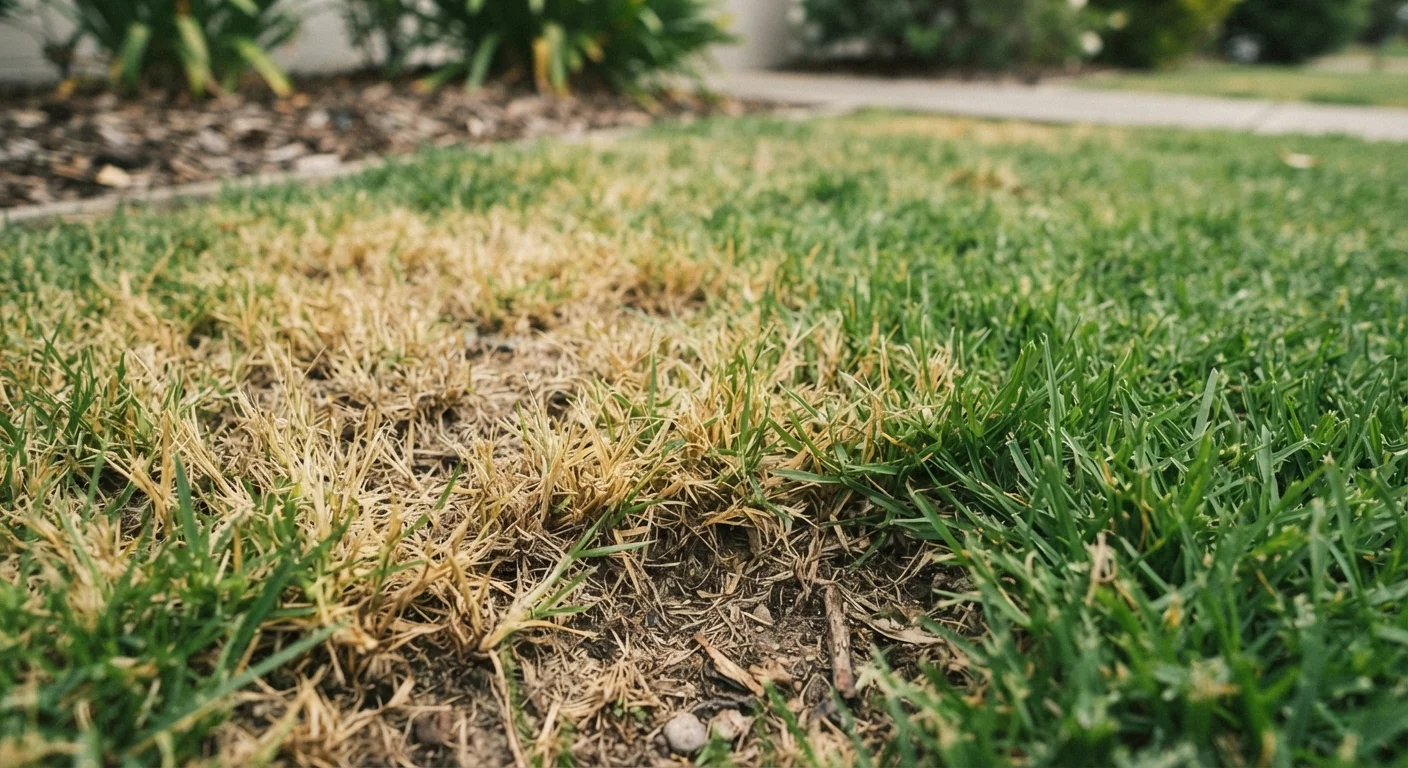
Lawn yellowing — sometimes called chlorosis — happens when grass blades lose their green color, typically because the plant can't produce enough chlorophyll. It's a symptom, not a disease itself, and the underlying cause can range from a nutrient shortage to too much water, soil pH problems, or fungal infection. Diagnosing the pattern and timing of the yellowing is the most reliable way to pinpoint what's going wrong.
Chlorophyll production depends on several micronutrients, particularly iron and manganese, whose availability is heavily influenced by soil pH. Even if nutrients are present in the soil, grass may not be able to absorb them if pH is outside the optimal range of roughly 6.0–7.0.
Reading the Pattern: What Yellow Grass Is Telling You
Before reaching for fertilizer or adjusting your sprinkler schedule, spend a few minutes observing where and how the yellowing appears. The pattern is your most useful diagnostic clue.
- Uniform, overall fading: When the whole lawn gradually loses its deep green, the most likely cause is a nitrogen deficiency — especially if growth has also slowed.
- Striped or streaky yellow lines: These often follow the path of a fertilizer spreader, pointing to uneven application or fertilizer burn from over-application.
- Circular or irregular patches: Distinct patches with defined edges — particularly during warm, humid weather — suggest a fungal disease such as brown patch or dollar spot.
- Yellow near sidewalks or driveways: Salt runoff from de-icing products in winter, or heat reflected from paving, can scorch grass along edges.
- Random, scattered dead spots: Irregular dead areas that pull up easily from the soil can indicate grub damage to roots — look for white grubs just beneath the surface.
Once you've identified the pattern, you can move toward the most likely cause with much more confidence.
The Most Common Causes of Yellowing Grass
Most lawn yellowing traces back to one of a handful of issues. Here's how to distinguish them:
~40%
Of lawn problems linked to soil pH imbalance
University extension specialists frequently note that pH-related nutrient lockout is one of the most underdiagnosed causes of poor lawn health in residential yards.
6.0–7.0
Optimal soil pH range for most lawn grasses
Most turfgrass species — including Kentucky bluegrass, fescues, and bermudagrass — perform best within this pH window for nutrient availability.
1 inch/week
General weekly water guideline for established lawns
The commonly cited baseline from turfgrass researchers is approximately one inch of water per week, from rain or irrigation combined, though actual needs vary by grass type and climate.
Nitrogen Deficiency
Nitrogen is the nutrient most responsible for the rich green color in grass. When it runs low — either because it hasn't been replenished or because heavy rain has leached it from the soil — blades turn a pale yellow-green, starting with older growth. This is one of the most common causes in established lawns that haven't been fertilized recently. See our guide to fertilizer facts and myths before adding more product.
Overwatering and Poor Drainage
Roots need oxygen as much as water. Soggy soil drives oxygen out, leading to root suffocation and a yellowing turf that may also smell slightly musty. If your lawn stays wet for more than a day after rain or irrigation, drainage — not drought — is likely the issue.
Underwatering and Drought Stress
Grass under prolonged drought stress first turns dull and gray-green, then yellow, and eventually goes dormant (straw-brown). If the lawn doesn't spring back after being walked on, it's under significant moisture stress.
Soil pH Imbalance
Even if nutrients are present, grass can't absorb them if soil pH is too acidic or too alkaline. Most lawn grasses perform best in a pH range of 6.0 to 7.0. A simple soil test — available through many cooperative extension offices — will tell you where your soil stands.
Fungal Disease
Diseases like brown patch, dollar spot, and red thread create distinctive yellowing or dying patches, often with subtle color variations at the blade tips or edges. These typically emerge during humid, warm weather and spread quickly if conditions remain favorable.
Starting With a Soil Test
A soil test takes the guesswork out of lawn diagnosis. It measures pH, nitrogen, phosphorus, potassium, and sometimes secondary nutrients, giving you a clear picture of what your soil actually needs — rather than what you might assume it needs.
Test Before You Treat
A soil test costs relatively little and can save you from applying the wrong amendment. Contact your local cooperative extension office — many US states offer testing through land-grant universities at low or no cost. Results typically arrive within a few weeks and come with region-specific recommendations.
Many US state cooperative extension services offer low-cost soil testing. Results typically include specific amendment recommendations based on your grass type and region. Applying corrective measures without this baseline — whether lime to raise pH or sulfur to lower it — risks making things worse.
Once you know your soil's status, you're in a much stronger position to choose a targeted fix rather than a scattershot approach. For a full picture of when and how to address lawn nutrition across the year, our seasonal lawn care guide breaks down timing by month.
Mowing and Maintenance Habits That Contribute to Yellowing
Sometimes the cause of yellowing isn't in the soil or irrigation system — it's in how the lawn is being maintained. Mowing too low, known as scalping, removes too much of the leaf blade at once and exposes the crown of the plant to stress and sunburn. A dull mower blade tears rather than cuts cleanly, leaving ragged edges that dry out and turn yellow.
Proper mowing technique — maintaining the right height for your grass type and keeping the blade sharp — can prevent a surprising amount of stress-related yellowing. A general rule of thumb is never to remove more than one-third of the grass blade in a single mowing session.
Soil compaction is another overlooked contributor. When soil becomes densely packed — often from foot traffic or heavy clay content — roots struggle to penetrate deep enough to access water and nutrients. Core aeration, typically done in fall for cool-season grasses or late spring for warm-season types, can help relieve compaction and improve both drainage and root health.